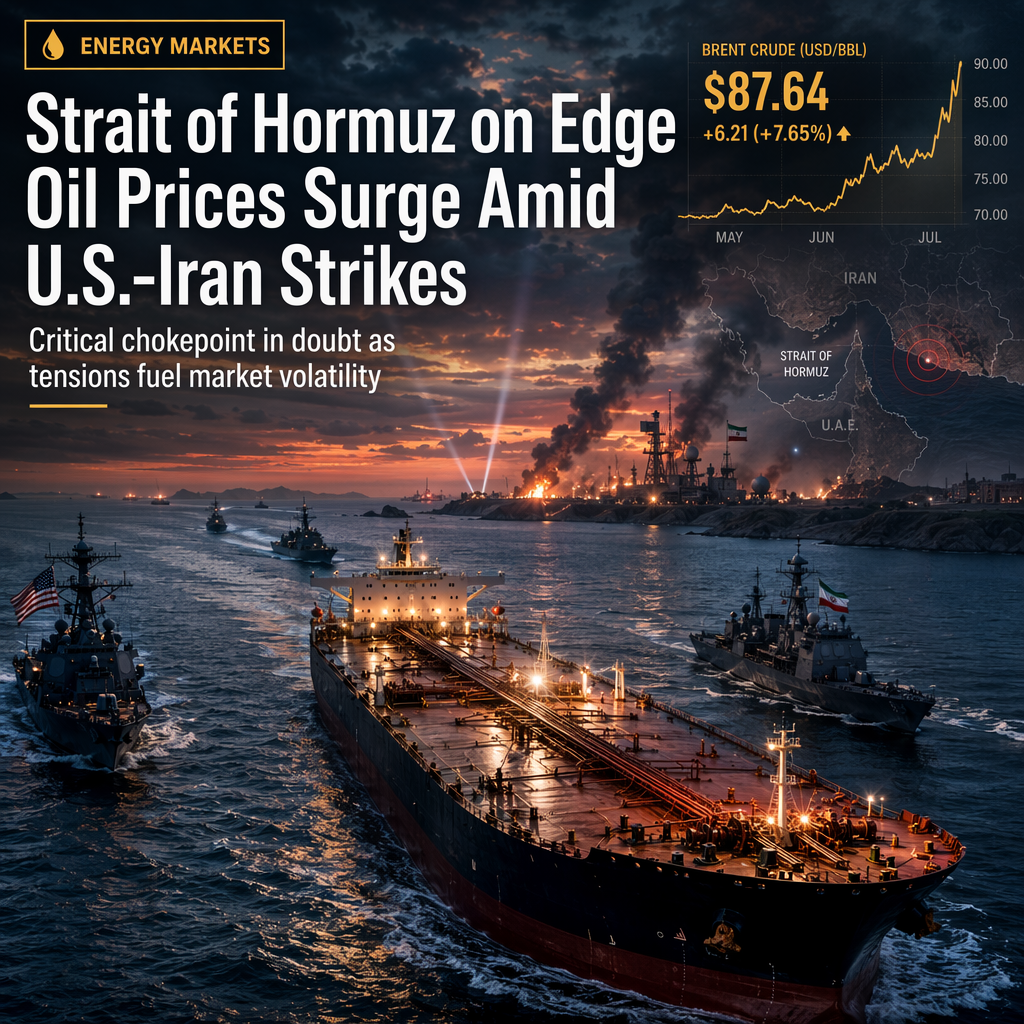
U.S. and Iranian forces exchanged strikes over the weekend, escalating tensions in the Gulf region and casting uncertainty over the status of the Strait of Hormuz, a critical global energy chokepoint that typically handles around 20% of the world's oil traffic [1]. Iran's state media reported that its strikes targeted American military bases in Kuwait, Bahrain, Jordan, Oman, and Qatar as retaliation for renewed U.S. bombings [1]. The Islamic Revolutionary Guard Corps (IRGC) specifically stated it had targeted U.S. military facilities in Bahrain and radar systems in Oman [1].
In response, U.S. Central Command announced that American forces had successfully hit dozens of targets at multiple locations, including Iranian military air-defense systems, coastal radar sites, missile and drone capabilities, and small boats [1]. Notably, the U.S. used one-way attack sea drones for the first time in these operations [1]. Both sides issued conflicting statements regarding whether the Strait of Hormuz remains open to shipping, further heightening market uncertainty [1].
The latest military exchange follows the signing of an interim peace agreement last month, which aimed to reopen the Strait of Hormuz and end the ongoing conflict after 60 days of negotiations [1]. However, the renewed hostilities have cast doubt on the future of this agreement [1]. Sirens sounded for the third time in Bahrain on Monday, according to the country's interior ministry, as reported by Reuters [1].
Oil markets reacted sharply to the developments. International benchmark Brent crude futures with September delivery surged 4% to $79.02 per barrel, while U.S. West Texas Intermediate futures with August delivery rose 4.1% to $74.27, reflecting renewed fears of disruption to oil flows through the Strait [1]. Iran's parliament speaker Mohammad Bagher Ghalibaf declared, "The era of one-sided deals is OVER. We told you: keep your word or pay the price. Reality is knocking," underscoring the heightened rhetoric and uncertainty surrounding the situation [1].
CONCLUSION
The exchange of strikes between the U.S. and Iran has significantly escalated tensions in the Gulf, leading to a sharp rise in oil prices and uncertainty over the security of the Strait of Hormuz. With both sides issuing conflicting statements about the waterway's status and the future of the recent peace agreement in doubt, markets are bracing for further volatility.