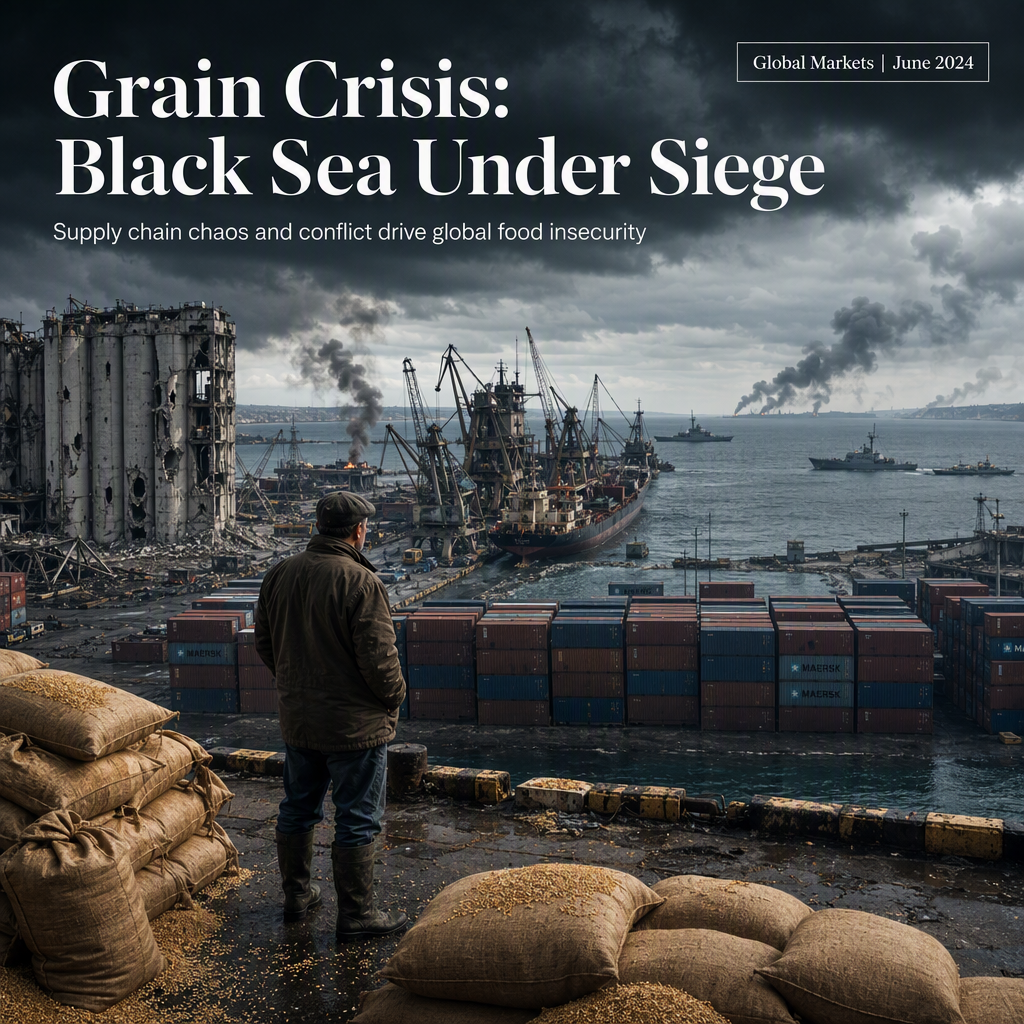
Russian and Ukrainian strikes on port infrastructure in the Black Sea region are driving up wheat prices and intensifying concerns about global food security, according to analysts cited by CNBC. The ongoing conflict has made it increasingly difficult for shipping firms to secure insurance for vessels, leading many to avoid Black Sea ports altogether. This disruption is significant, as Russia and Ukraine together account for around a quarter of the world's grain exports, having shipped nearly 100 million metric tons of grain in the year to June, based on customs figures. While diplomatic agreements had previously allowed shipments to continue despite the war, recent military actions targeting grain export facilities, oil tankers, and other vessels have severely hampered exports [1].
Alternative land routes for Ukrainian grain are also facing challenges, including low water levels on the Danube river and rail maintenance issues in Eastern Europe. Additional disruptions are occurring due to the blockade of the Strait of Hormuz and depleted waterways such as Germany's Rhine, which are further complicating agricultural shipments and driving up the price of key inputs like fertilizer [1].
Soaring costs for farmers—including fertilizer, diesel, and labor—are threatening the profitability of crop production worldwide. CoBank's lead economist Jacqui Fatka noted that higher fertilizer prices have become 'structural' due to tight chemical supplies linked to Middle East conflicts. Fatka emphasized that U.S. farmers are struggling to balance the risk of under-fertilization, which could reduce yields, against the burden of higher input costs. She also highlighted that 'cash is tight at the farm gate,' with some growers unable to secure products for the next crop year until they obtain additional financing or working capital [1].
In Europe, there are fears that farmers in Russia, Ukraine, and other regions may reduce winter planting due to profitability concerns and difficulties in accessing financing, according to trade and agriculture analyst Noel Fryer. Extreme weather events, including heatwaves, unseasonable downpours, and the anticipated El Niño, are further complicating the outlook for global food supply [1].
CONCLUSION
The combination of ongoing conflict in the Black Sea, supply chain disruptions, and rising input costs is creating a 'perfect storm' for global food supply, with wheat prices soaring and food security at risk. Analysts warn that unless financing and profitability improve for farmers, next year's crop output could be severely impacted, exacerbating market volatility and food shortages.