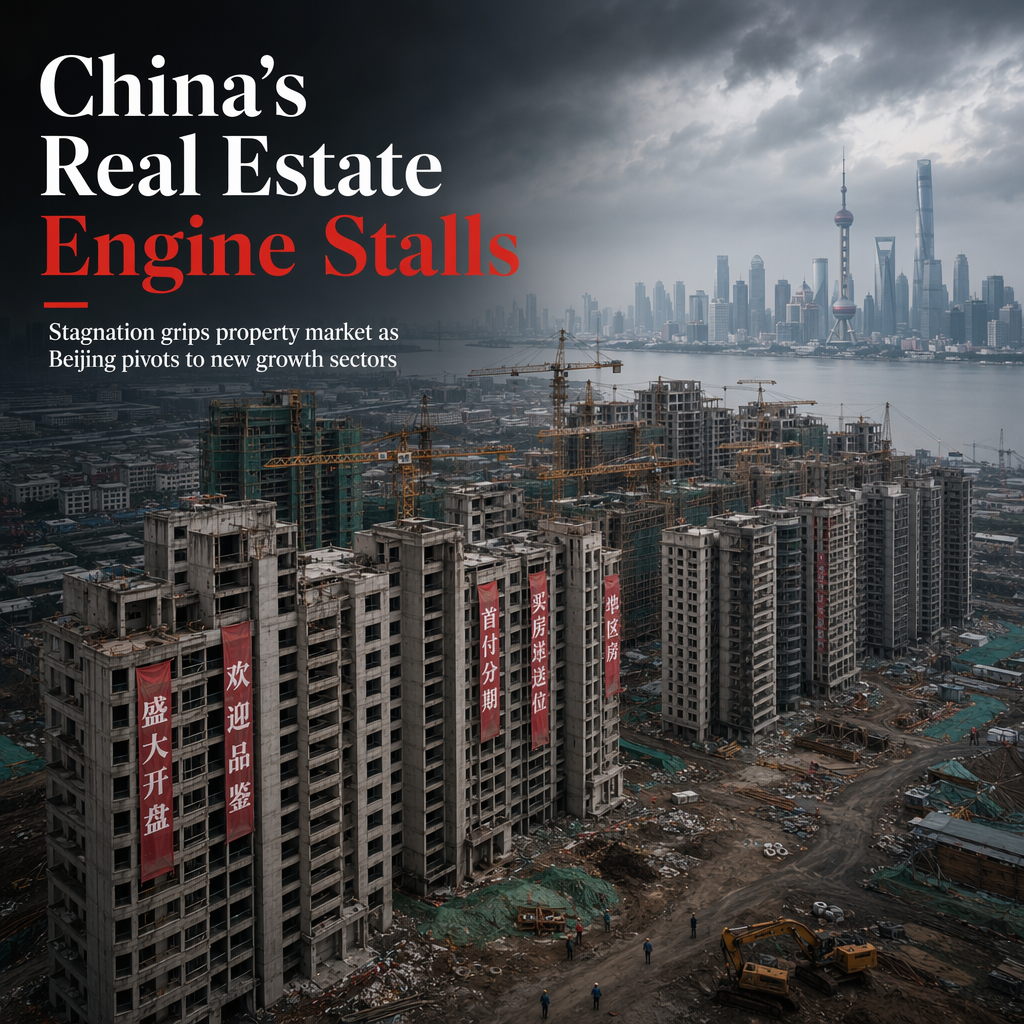
According to Commerzbank’s Dr. Henry Hao, China's housing market remains in a state of structural stagnation five years after the onset of the Evergrande crisis, with national property prices following an L-shaped trajectory and a K-shaped divergence between Tier-1 and lower-tier cities [1]. Real estate investment is currently at just 53 percent of its July 2021 peak, while housing starts have dropped dramatically to only 24 percent of their former levels, indicating that the sector will continue to act as a drag on the broader economy [1]. Housing completions have shown some resilience, standing at 55 percent of previous levels, but this is attributed entirely to policy interventions rather than organic market recovery [1].
Beijing has implemented measures such as lowering mortgage rates, reducing down payments, and encouraging local governments to purchase unsold homes in an effort to manage the sector's decline. However, these policies have had limited impact due to deeper structural constraints, including weak demand, tighter funding conditions, and unfavorable demographic trends [1]. The historic wave of rural-to-urban migration has largely ended, and declining birthrates are shrinking the pool of first-time homebuyers, further entrenching the stagnation [1].
Dr. Hao notes that, unlike previous crises that saw rapid rebounds, China's property market is experiencing a prolonged adjustment period similar to Spain's long digestion phase following its own real estate crisis [1]. As a result, the era of real estate serving as China's primary growth engine is considered definitively over. In response, Beijing is redirecting capital toward emerging sectors such as green technology, electric vehicles, and advanced industrial equipment in an effort to foster new drivers of economic growth [1].
CONCLUSION
China's property market is expected to remain in structural stagnation, with real estate investment and housing starts far below previous peaks. Policymaker interventions have only partially cushioned the decline, and the government is now focusing on new sectors to drive growth. The shift marks a significant change in China's economic model, with lasting implications for both domestic and global markets.