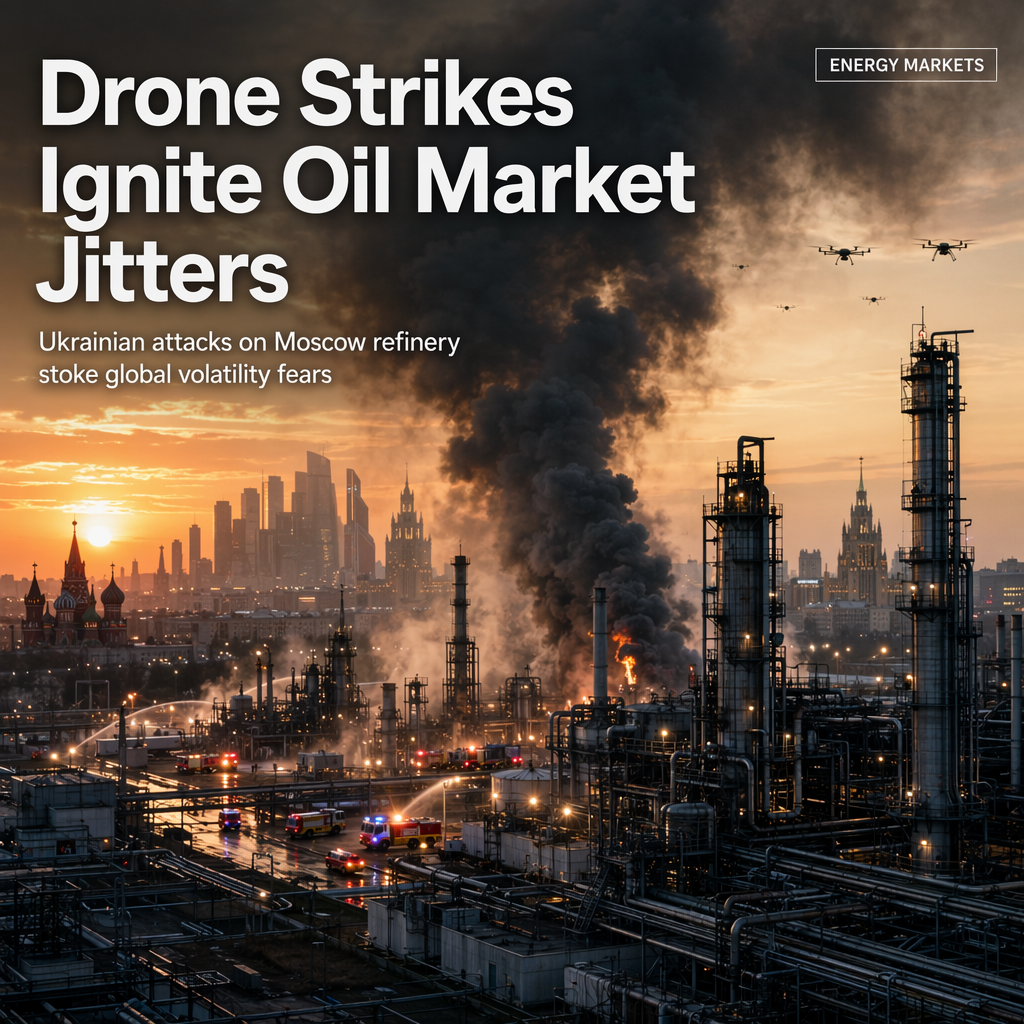
On June 18, 2026, waves of Ukrainian drones targeted a major oil refinery in Moscow for the second time within a week, resulting in thick black smoke over the city. Ukraine described the attacks as retaliation for strikes on a historic monastery, which had previously drawn international condemnation [1]. The ongoing series of drone attacks on Russia's energy infrastructure has heightened concerns about potential disruptions to oil supply and increased volatility in global energy markets [1].
While no immediate estimates of financial damage or reductions in refinery output have been released, traders and analysts are closely monitoring official statements to determine whether the facility will need to suspend operations [1]. Historically, similar attacks on Russian refineries have led to temporary spikes in oil prices, with Brent crude sometimes rising by $1–$2 per barrel due to supply concerns [1].
Technical analysts have identified $85 per barrel as a key resistance level for Brent crude, with support near $81.50. A sustained move above resistance could indicate further price increases, particularly if geopolitical tensions escalate and supply fears intensify. However, some traders remain cautious, noting the potential for rapid price reversals if the refinery quickly resumes normal output [1].
Market sentiment is currently mixed. Some energy analysts are advising short-term traders to be alert for headline-driven volatility, while longer-term investors are encouraged to monitor ongoing developments in the Russia-Ukraine conflict for signals that could impact broader energy market trends [1].
CONCLUSION
The Ukrainian drone attacks on a major Moscow oil refinery have injected uncertainty into global energy markets, with analysts warning of potential price volatility. While immediate impacts on refinery output remain unclear, traders are watching for further developments that could influence oil prices and market sentiment.