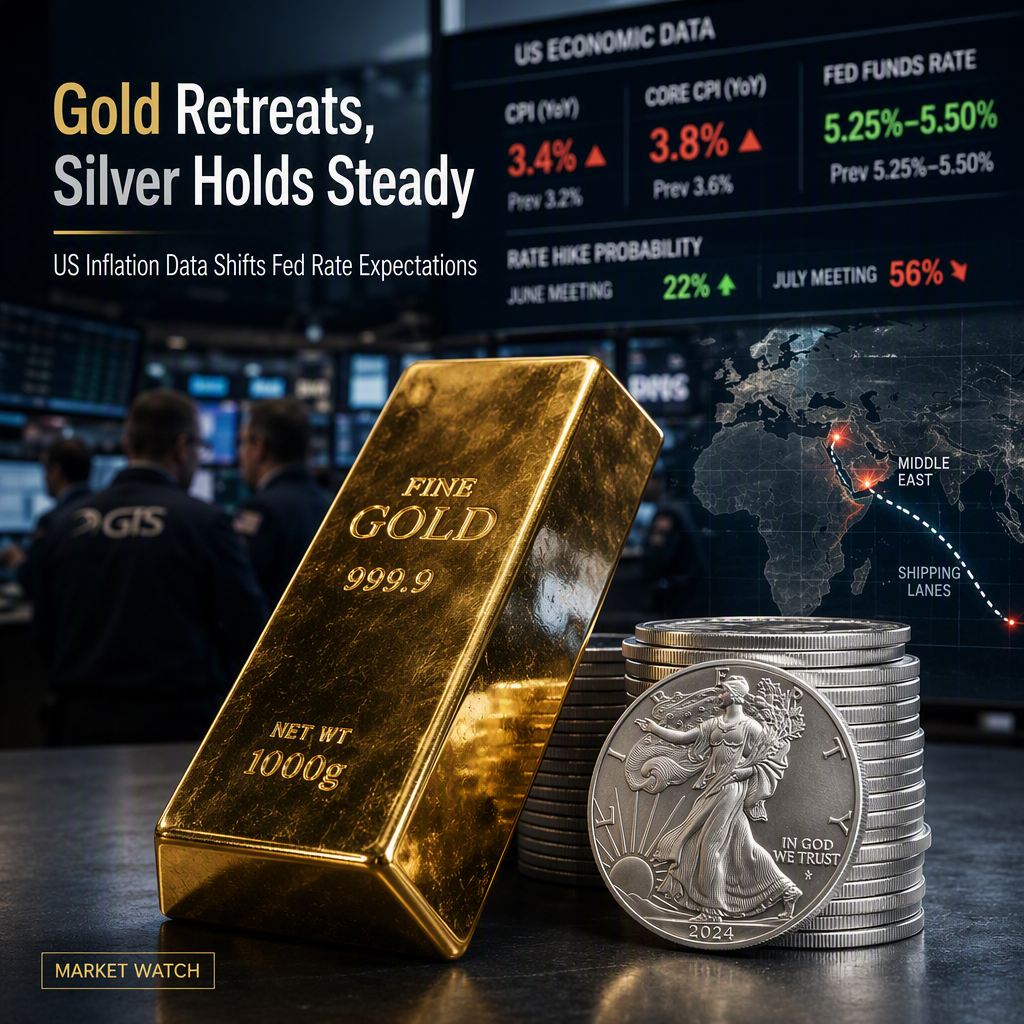
Gold (XAU/USD) retreated after reaching a fresh high since June 5, trading near the $4,450 area during the Asian session on Thursday, and is now positioned near the lower end of its daily range [1]. This pullback follows an initial positive reaction to signs of moderating US inflation, as the US Bureau of Labor Statistics reported that headline Consumer Price Index (CPI) eased from 3.5% to 3.4% year-on-year in July, with core CPI rising 2.5% year-on-year, both matching consensus estimates [1][2]. However, expectations that higher energy prices could rekindle inflationary pressures, combined with bets that the US Federal Reserve (Fed) may deliver at least one interest rate hike by the end of the year, have prompted profit-taking in gold and strengthened the US Dollar [1].
Silver (XAG/USD), meanwhile, traded in a tight range around $65.40 during the Asian session, with its outlook improving on the back of the same US inflation data [2]. The easing of price pressures has reduced fears of imminent Fed rate hikes, with the CME FedWatch tool indicating that the odds of the Fed holding policy rates steady in September have increased to almost 60% from 30.4% a month ago [2]. This scenario is generally supportive for non-yielding assets like silver [2].
Geopolitical tensions, particularly the US-Iran standoff and attacks by Iran-backed Houthis in the Red Sea and Bab el-Mandeb Strait, have led to increased war-risk premiums and supported crude oil prices, fueling inflation fears and backing the case for potential Fed tightening [1]. According to the CME Group's FedWatch Tool, traders are pricing in a nearly 80% chance that the US central bank will raise borrowing costs in 2026 [1].
Looking ahead, investors are awaiting Thursday's US Producer Price Index (PPI) data and weekly Initial Jobless Claims, as well as speeches from influential FOMC members, which are expected to influence USD demand and precious metals prices [1][2]. Technical analysis for gold shows a bullish bias above key moving averages, while silver remains above its 20-day EMA at $61.66, with potential to test the June 16 high at $71.19 if it breaks above $66.59 [1][2].
CONCLUSION
Both gold and silver markets are being shaped by moderating US inflation data and shifting expectations for Federal Reserve policy. While gold has retreated on renewed rate hike bets and a stronger US Dollar, silver remains steady with a constructive near-term outlook as the likelihood of a September rate hike diminishes. Upcoming US economic data and ongoing geopolitical developments are expected to drive further volatility and trading opportunities in precious metals.