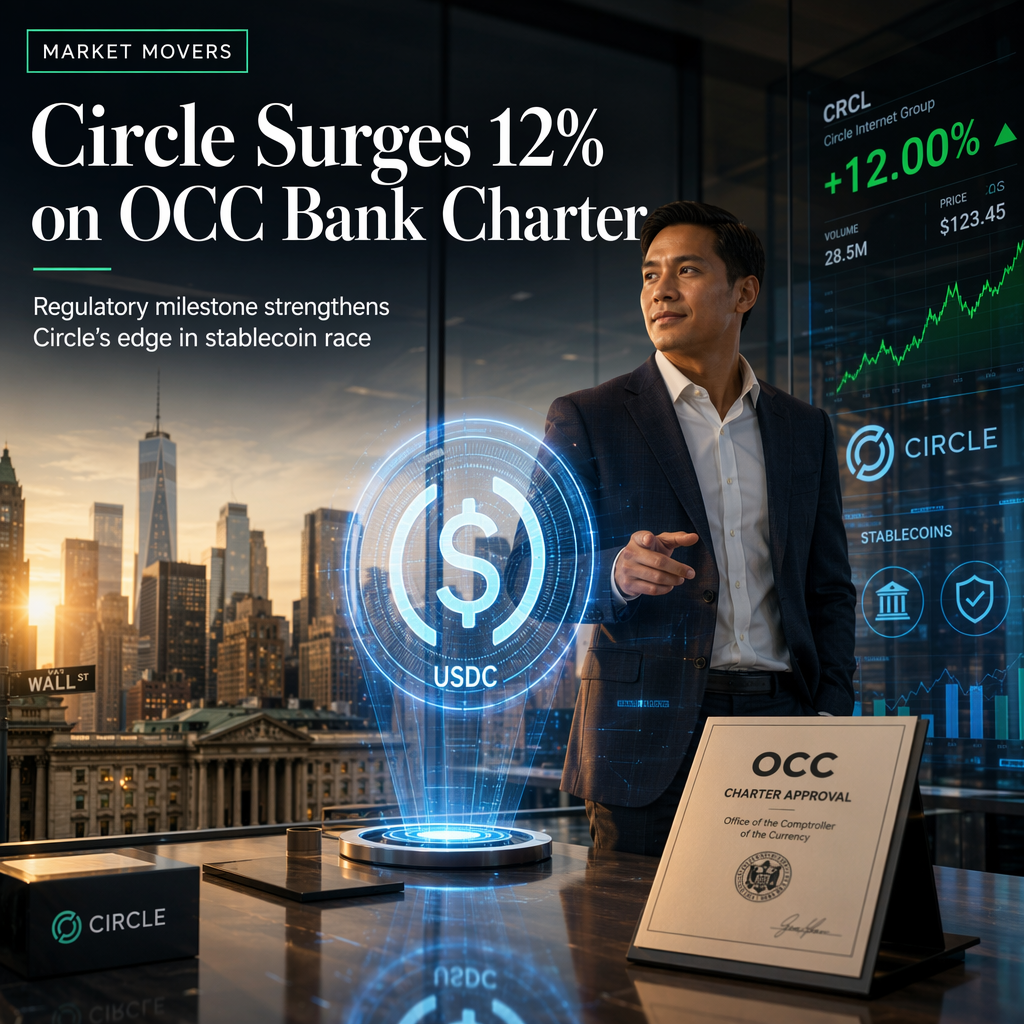
Circle, a leading stablecoin issuer, received approval from the U.S. Office of the Comptroller of the Currency (OCC) to operate as a trust bank, according to the company. This regulatory milestone led to a surge in Circle's shares, which gained more than 12% in early trading following the announcement [1]. The OCC charter allows Circle to directly manage reserves for its regulated stablecoins, primarily USDC, which currently has over $73 billion in circulation [1]. Previously, Circle relied on third-party banks and custodians to hold the cash and Treasury assets backing USDC [1].
The new entity, Circle National Trust, will not function as a commercial bank and is not authorized to take deposits or make loans [1]. Instead, the charter positions Circle under a national bank regulator, alleviating the burden of navigating state-based regulations—a significant challenge for fast-growing fintech firms [1]. This move is part of a broader trend in the crypto industry, with companies like Coinbase, BitGo, Fidelity Digital Assets, Ripple, and Paxos also seeking or receiving OCC approvals as they transition from financial applications to core financial infrastructure [1].
The competitive landscape for stablecoins has intensified, especially after the GENIUS Act was enacted nearly a year ago, providing federal regulatory clarity for payment stablecoins [1]. Traditional financial institutions are increasingly interested in issuing their own stablecoins to capture payment flows and deepen customer relationships, posing a growing challenge to Circle's USDC [1]. However, Circle's new OCC charter strengthens its position as a regulated infrastructure provider for institutional clients [1].
CONCLUSION
Circle's OCC trust bank charter marks a significant regulatory and strategic advancement, boosting its shares and reinforcing its role as a key player in the stablecoin market. The move positions Circle to better compete as traditional financial firms enter the space, while alleviating regulatory burdens and enhancing its institutional appeal.