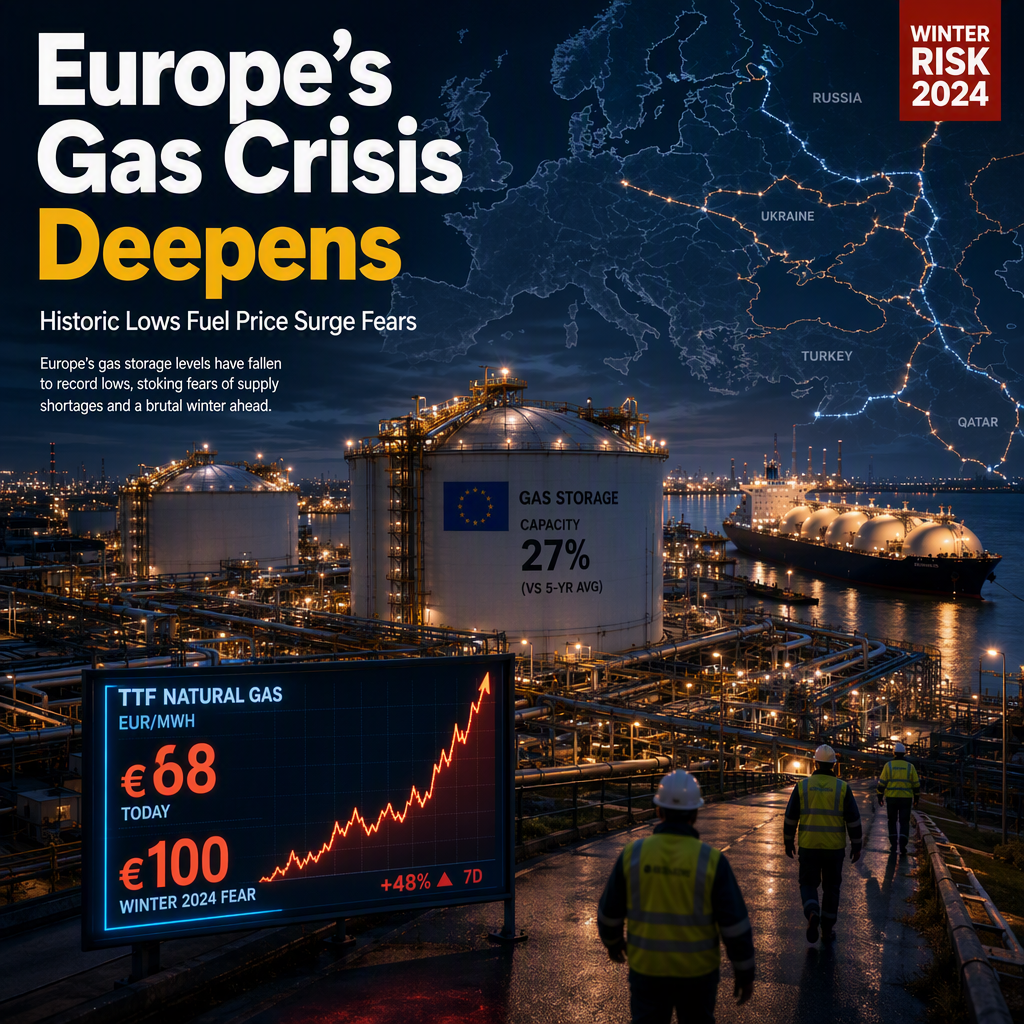
European natural gas stores are at historically low levels for this time of year, raising concerns among analysts that prices could surge above €100 per megawatt-hour this winter if LNG flows remain tight [1]. Disruptions to Middle East gas flows via the Strait of Hormuz have sharply curtailed LNG exports from key Gulf producers such as Qatar during Europe's gas-storage refill season, exacerbating the supply crunch [1]. As a result, European benchmark Dutch TTF futures climbed above €68 per megawatt-hour on Tuesday, marking the highest level since early 2023, before easing slightly [1].
According to data from Gas Infrastructure Europe, EU gas stores are at about 63%, which is roughly 18 percentage points below the five-year average and one of the lowest levels on record for this time of year [1]. Extreme weather has further strained the energy landscape, with a sweltering summer boosting demand for air conditioning and causing a fall in nuclear generation and weak wind power output across the region [1]. Gas remains crucial, accounting for around a sixth of the EU's electricity generation [1].
Analysts at Goldman Sachs noted that if Middle East LNG exports "normalize only gradually through 2027," natural gas futures would need to rise above €100 per megawatt-hour to curb Asian demand enough for Europe to manage its storage levels through winter [1]. Tancrede Fulop, senior equity analyst at Morningstar, suggested that a cold winter combined with continued supply constraints could send prices to between €90 and €120 per megawatt-hour [1]. Matt Drinkwater, head of European Gas at Energy Aspects, warned that Europe is on track to start the winter with an inadequate storage buffer against late winter cold, especially since the amount that can be withdrawn from storage on peak demand days diminishes as storage empties [1].
There is some hope that a strengthening El Niño weather event could create a mild early winter in northeast Asia, potentially reducing demand, but it also raises risks for Europe [1].
CONCLUSION
Europe faces a high-risk winter with gas storage at historic lows and benchmark prices already climbing. Analysts warn that prices could exceed €100 per megawatt-hour if supply constraints persist, with significant implications for industry and consumers. The market is bracing for volatility, and the situation remains highly sensitive to weather and global LNG flows.