
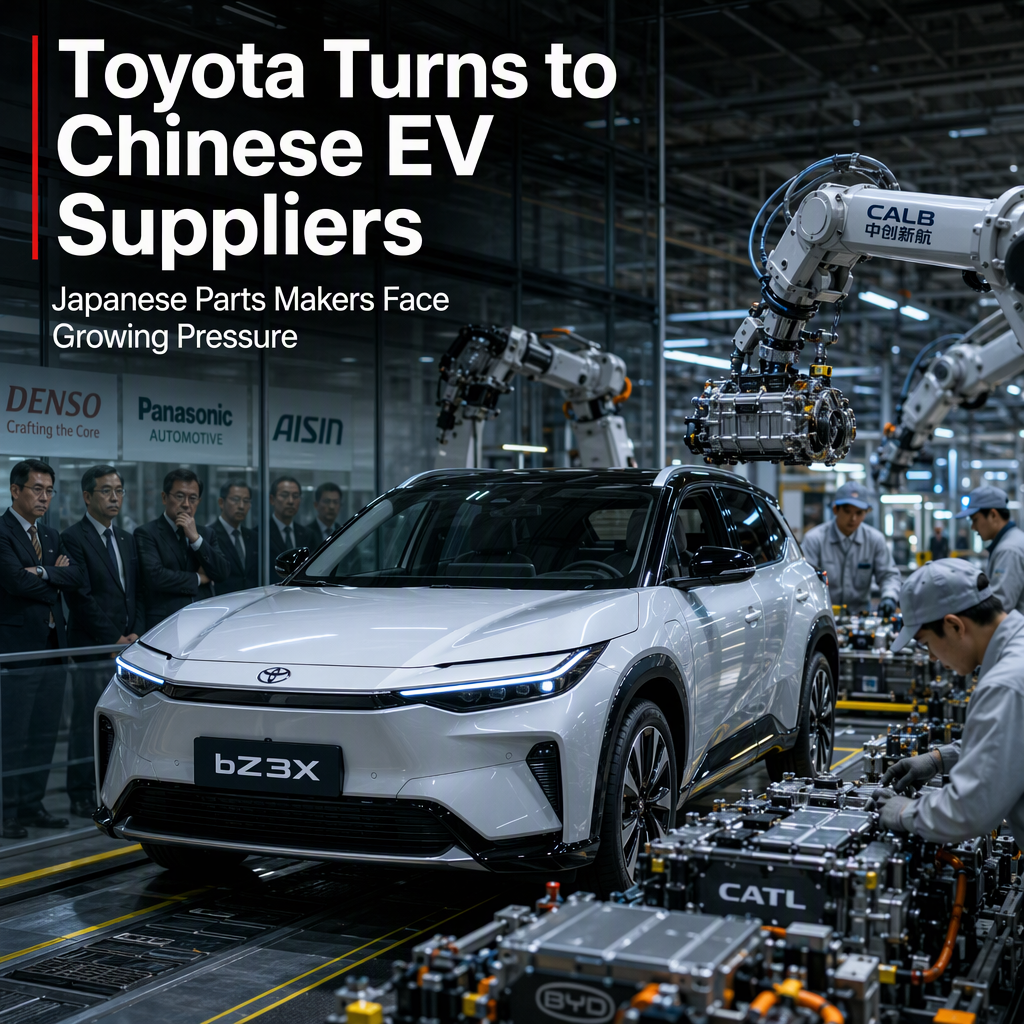
Toyota Motor has initiated a significant shift in its supply chain strategy by opting for Chinese parts makers for its upcoming luxury electric sport utility vehicle (SUV), the bZ3X, which is scheduled to be built in China starting from 2027 [1]. The bZ3X SUV, introduced in China in March 2025, is believed to incorporate numerous Chinese-made components, including battery systems, electric motors, and key digital parts sourced from leading Chinese companies [1]. This move comes as Toyota seeks to achieve aggressive cost targets and accelerate development cycles in the rapidly evolving Chinese EV market [1].
Japanese suppliers, who have traditionally enjoyed stable and close business relationships with Toyota, are now facing mounting pressure as the automaker prioritizes lower costs and local procurement in China, the world's largest EV market [1]. Industry observers note that this marks a turning point for Japan's auto supply chain, which has struggled to compete with the pricing and innovation offered by Chinese rivals [1]. A manager at a major Japanese parts supplier commented, 'We have to strengthen our cost competitiveness, or we risk being left behind,' highlighting the urgency for Japanese firms to adapt [1].
Analysts warn that unless Japanese suppliers can quickly improve their competitiveness, they risk losing significant market share not only in China but globally, as automakers increasingly seek cost-effective solutions [1]. The shift also underscores the growing technological prowess of Chinese suppliers, who are now able to compete on both quality and price [1].
The Japanese auto industry, once renowned for its supply chain excellence, now faces a critical juncture as electrification accelerates and China solidifies its dominance in EV technology and manufacturing. Traditional suppliers must innovate or risk obsolescence in the rapidly changing automotive landscape [1].
CONCLUSION
Toyota's decision to source key components for its China-built EV from Chinese suppliers signals a major shift in the global automotive supply chain. Japanese parts makers face heightened competition and must adapt quickly to maintain relevance, as the rise of Chinese suppliers reshapes industry dynamics and threatens traditional business relationships.