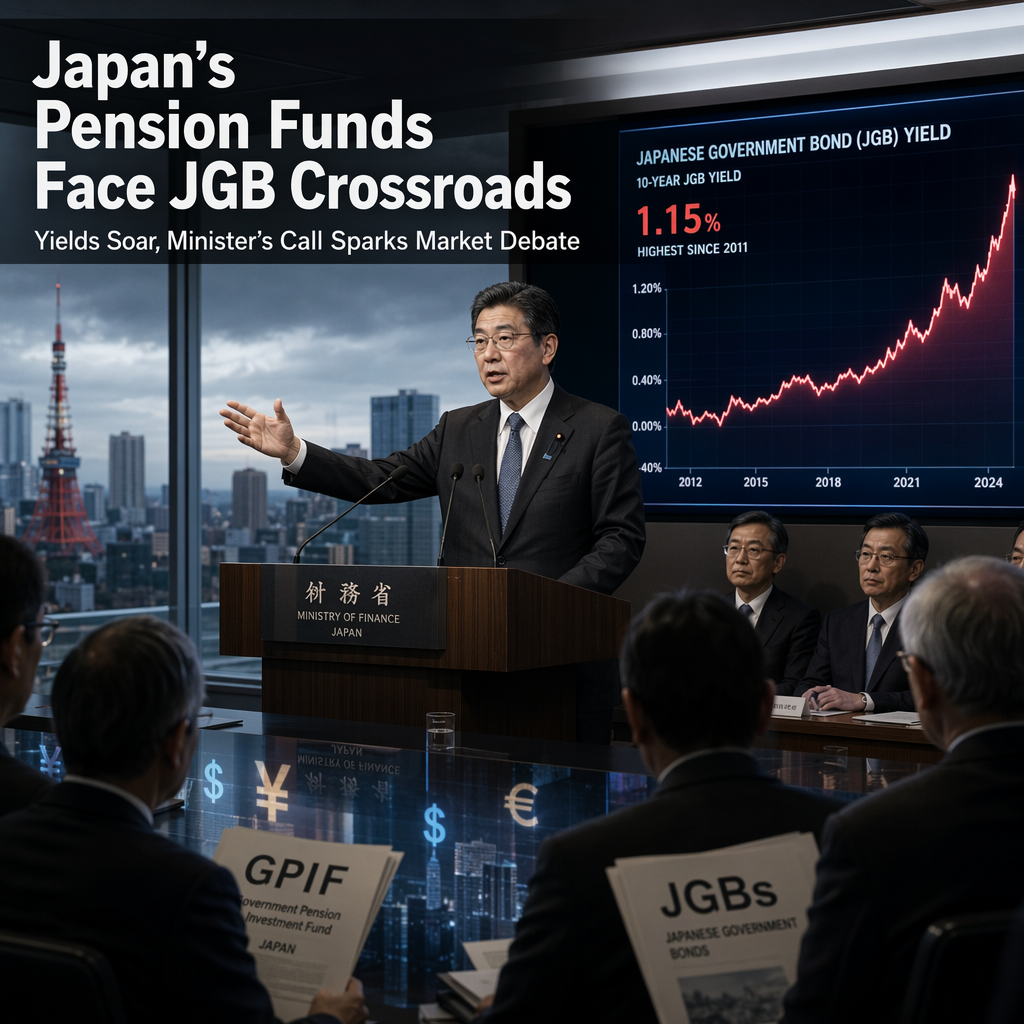
Japanese Finance Minister Satsuki Katayama recently called on the Government Pension Investment Fund (GPIF) to increase its investment in Japanese government bonds (JGBs), a move that has generated significant speculation and debate within the country's bond market [1]. Katayama's remarks, made on July 10, have led to market reactions, including a decline in JGB yields and a strengthening of the yen, as investors anticipate potential increased demand for domestic bonds from major pension funds [1]. The GPIF, recognized as one of the world's largest institutional investors, is at the center of this discussion, with market participants closely monitoring for any official changes in its investment policy [1].
Recent data highlights the dramatic rise in Japanese bond yields, with the benchmark 10-year JGB yield reaching 2.901% last Thursday and currently trading at 2.781%, marking an increase of over 70 basis points since the start of the year [2]. The 20-year JGB yield also hit a high of 3.901% last week [2]. These levels represent multi-decade highs, with the 10-year yield not seen at such levels since 1996 [2]. The surge in yields has been attributed to policy normalization by the Bank of Japan, which ended its yield curve control program in March 2024, and concerns over Prime Minister Sanae Takaichi's spending plans [2].
Market analysts are divided on the implications of Katayama's push and the current attractiveness of JGBs. While some, like Meiji Yasuda Life, have announced plans to double JGB purchases in response to government signals [1], others remain skeptical about the likelihood of a significant shift in GPIF's asset allocation, given its global diversification strategy and history of reducing domestic bond exposure as yields rise [1]. Masahiko Loo of State Street Investment Management noted that JGBs are becoming 'investable' again for global investors due to higher yields [2]. Charles Gave of Gavekal described Japanese bonds, especially long-dated ones, as 'the most attractive bond market in the world today,' recommending a balanced portfolio with a significant allocation to Japanese bonds [2]. Gave also predicted that Japanese yields would soon fall and the yen would appreciate, making long-duration JGBs likely to outperform gold in yen terms [2].
However, not all analysts share this optimism. Henning Potstada of DWS argued that European bonds remain more attractive due to higher policy rates and better debt sustainability, noting Japan's debt-to-GDP ratio exceeds 200% compared to the EU's 81.7% [2]. Potstada advised investors to maintain or increase European bond holdings, citing concerns over Japan's fiscal outlook [2].
Overall, Katayama's call has injected new uncertainty and speculation into the Japanese bond market, with traders and analysts watching closely for any concrete policy shifts from major pension funds. The debate underscores the tension between government efforts to stabilize the bond market and the cautious approach of institutional investors amid rising yields and fiscal concerns [1][2].
CONCLUSION
Japan's finance minister's push for pension funds to buy more JGBs has stirred significant debate and market activity, with yields at multi-decade highs and analysts split on the outlook for Japanese bonds. While some see renewed investment opportunities, skepticism remains about the scale of pension fund participation and Japan's fiscal sustainability. The market is likely to remain volatile as investors await concrete policy moves from major institutional players.