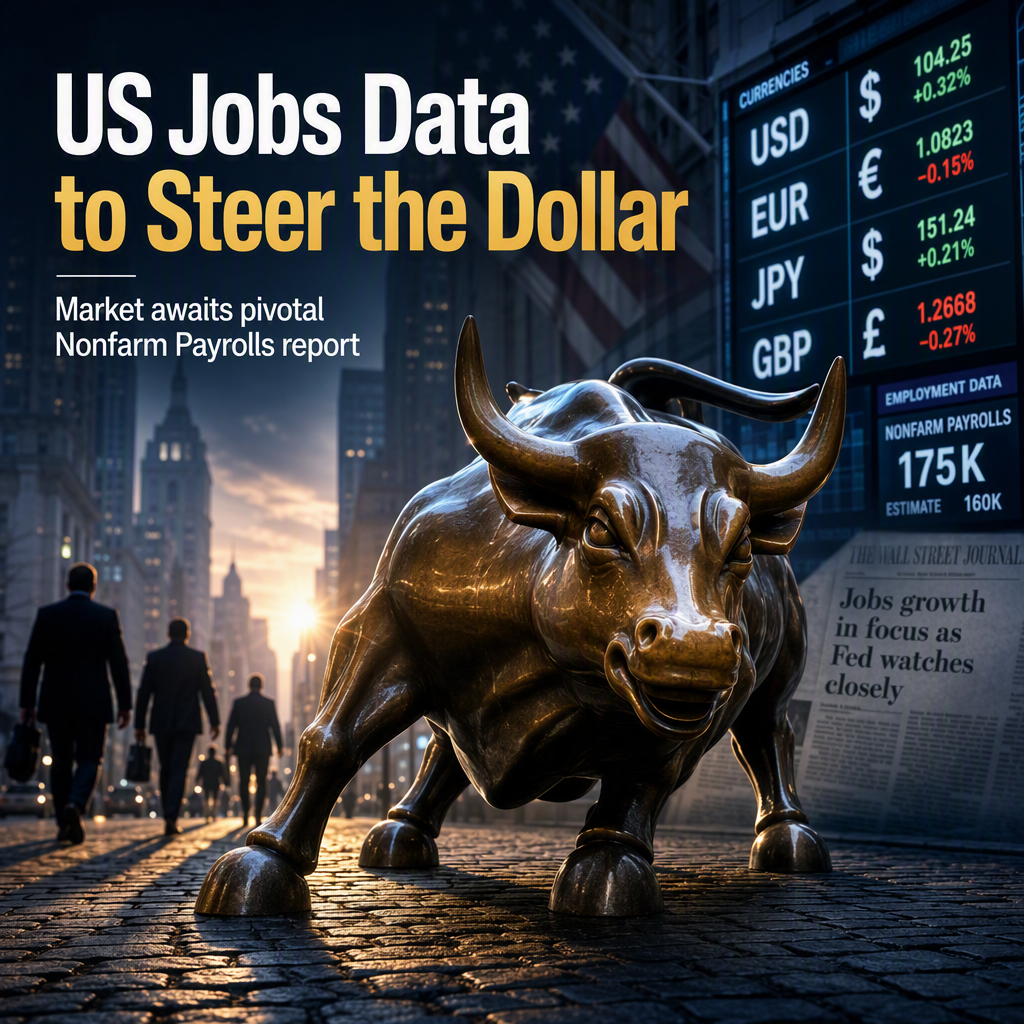
The upcoming week is set to be pivotal for the US Dollar as investors shift their attention from recent central bank decisions to a series of key economic data releases, with July's Nonfarm Payrolls (NFP) report taking center stage. The US Dollar Index (DXY) is currently trading near 99.90, following a sell-off in the last week of July. Market participants are closely watching whether the dollar can recover, with the direction likely to be determined by Friday's employment report. Expectations are for the US economy to add 91,000 jobs in July, up from 57,000 in June, while the Unemployment Rate is forecast to edge higher to 4.3% [1].
In addition to the NFP, other important US data releases this week include ISM Manufacturing, ISM Services, JOLTS Job Openings, and ADP Employment figures, all of which will provide further insight into labor market momentum and overall economic activity. According to the article, stronger-than-expected data could reinforce the Federal Reserve's hawkish stance, while weaker figures may revive expectations of policy easing [1].
On the currency front, the US Dollar was the strongest against the Swiss Franc, gaining 0.35%, but showed mixed performance against other major currencies, such as a 0.06% decline against the Euro and a 0.14% drop against the British Pound. The EUR/USD pair is holding gains near the 1.1530 region, with next week's outlook influenced by a busy economic calendar, including June Retail Sales, final Manufacturing PMIs, Services PMIs, and Producer Price Index data [1].
In Europe, investors will be watching for signs of easing inflationary pressures through Producer Price Index, Retail Sales, and Factory Orders data. Meanwhile, China's upcoming PMI and trade figures could impact commodity-linked currencies, particularly the Australian Dollar [1].
CONCLUSION
The US labor market data in the coming week is expected to play a crucial role in determining the direction of the US Dollar and shaping market expectations for Federal Reserve policy. With a busy economic calendar ahead, investors are likely to remain cautious, awaiting confirmation of economic strength or signs of weakness that could influence future monetary policy decisions.