
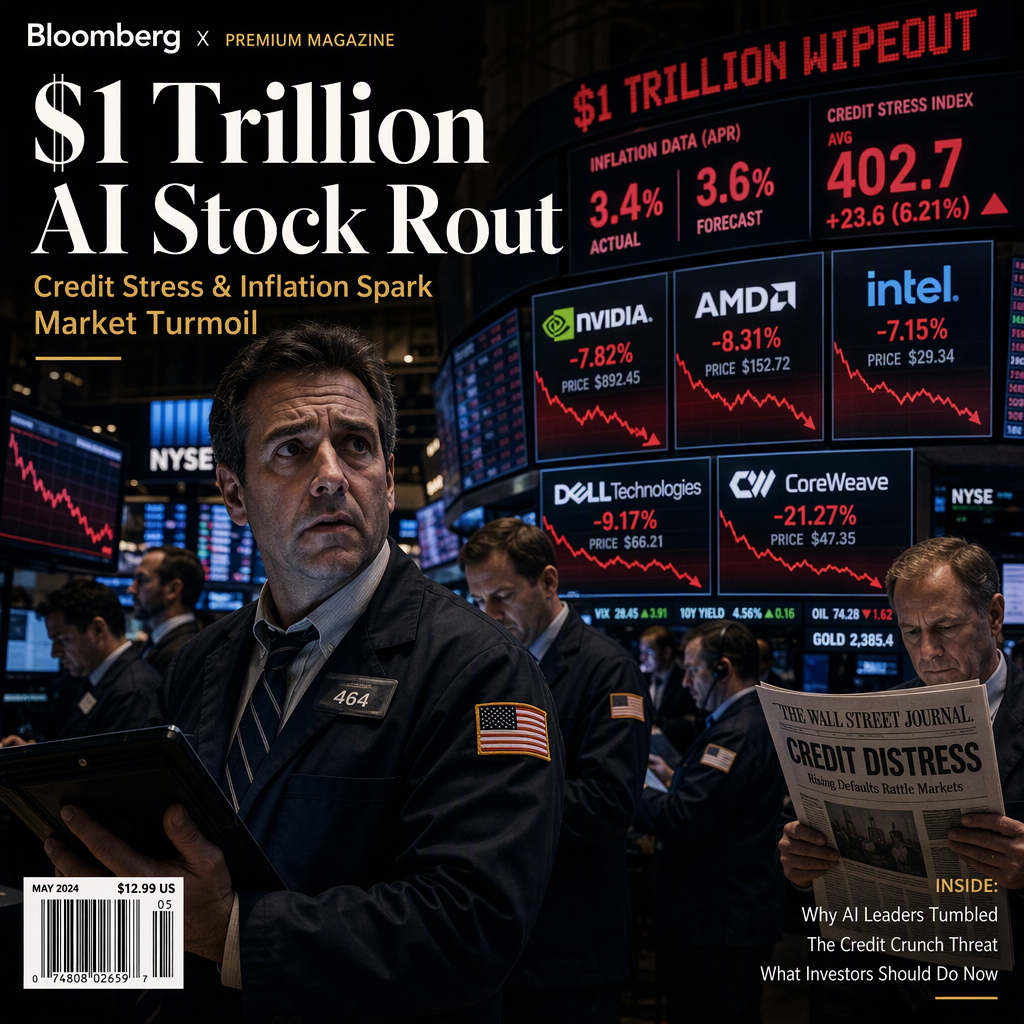
The AI and semiconductor sector experienced a significant downturn this week, with 20 of the world's largest AI and semiconductor stocks collectively losing more than $1 trillion in market value [1]. This sell-off was driven by intensifying credit stress at CoreWeave, concerns over the sustainability of corporate AI spending, and a hotter-than-expected U.S. inflation report. CoreWeave's financial distress became a focal point as its five-year credit-default swap spread briefly exceeded 1,140 basis points, a level that S&P Global Market Intelligence's Gavan Nolan described as indicative of credit distress. The yield to maturity on CoreWeave's 9.75% bond due in 2031 surged to 15.78%, reflecting heightened investor concerns about the company's creditworthiness [1].
Major AI-related stocks were hit hard: Nvidia fell 1.84%, AMD dropped 1.5%, Intel declined about 2.8%, and Dell Technologies sank 6.8% [1]. The broader market sentiment was negatively impacted by rising interest rates, challenges in AI financing, and intensifying competition within the sector. Additionally, U.S. producer prices rose 6.3% annually, surpassing expectations and adding to inflationary pressures that weighed on investor confidence [1].
Amid these financial concerns, Nvidia CEO Jensen Huang emphasized the importance of international cooperation on AI safety, stating that the company "absolutely must" work with Chinese AI businesses to manage risks associated with the technology. Huang's comments come as discussions around AI safety have intensified, with calls from researchers at AI labs such as OpenAI and Anthropic for a slowdown in the development of advanced AI systems [1].
Despite the sector-wide sell-off, TSMC reported a sixth consecutive quarter of record profit and projected 58% annual revenue growth for the fourth quarter, highlighting some resilience among leading semiconductor manufacturers [1].
CONCLUSION
The AI and semiconductor sector faced a sharp market correction this week, driven by credit stress, inflation concerns, and questions about the sustainability of AI investments. While some companies like TSMC continue to post strong results, the overall sentiment has turned cautious, with investors closely monitoring credit conditions and regulatory discussions around AI safety.