
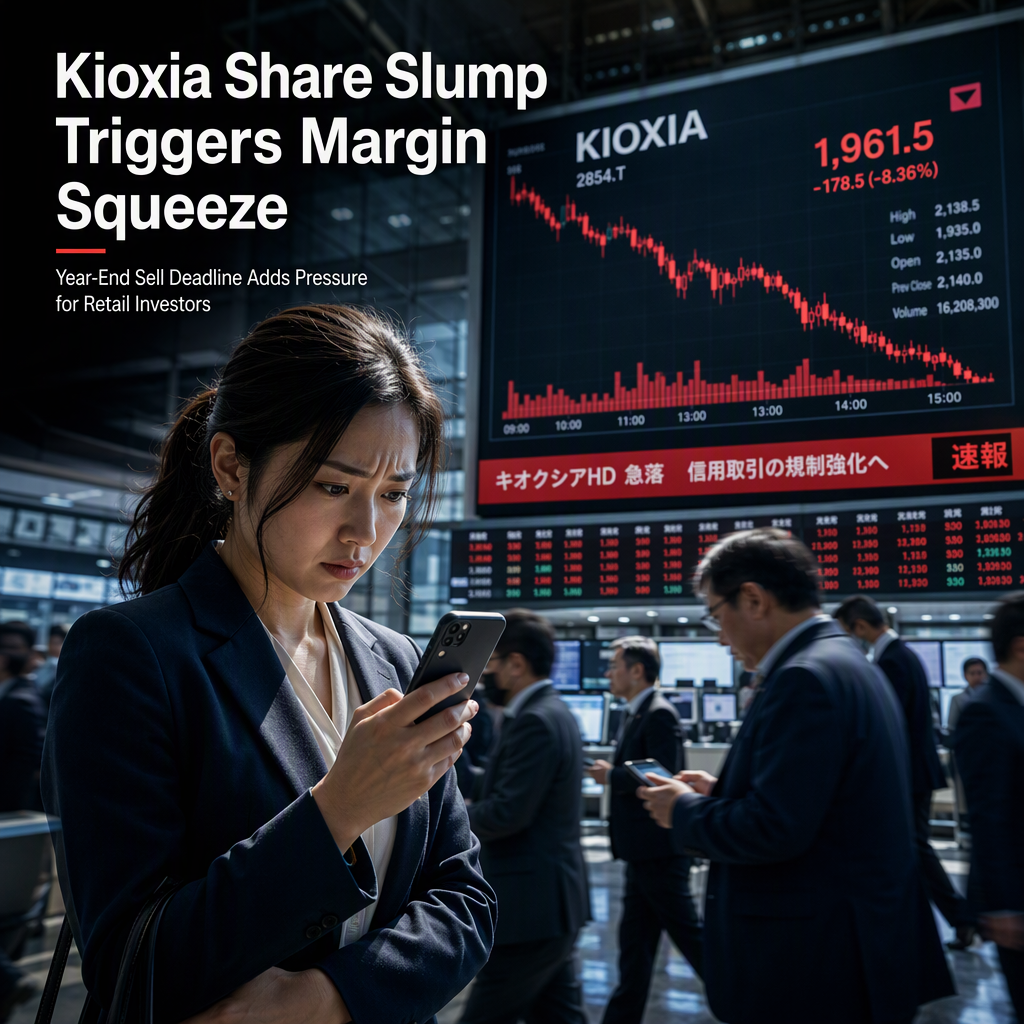
Shares of Japanese chipmaker Kioxia Holdings, which previously played a pivotal role in driving the Nikkei Stock Average to record highs, have experienced a sharp decline, causing significant paper losses for retail investors who purchased the stock on margin near its peak [1]. Many of these investors are facing a looming deadline to close out their margin positions by the end of the year, intensifying the pressure to sell and potentially exacerbating the downward trend in Kioxia's share price [1].
The initial surge in Kioxia's stock was fueled by excitement surrounding the semiconductor sector and robust demand for memory chips, but the recent reversal has highlighted the risks associated with margin trading during periods of high volatility [1]. Traders and analysts are monitoring key technical support levels, warning that further declines could trigger additional forced selling among margin traders if the price falls below certain thresholds, possibly leading to a wave of stop-loss orders and a deeper sell-off [1].
Market sentiment has shifted from optimism to caution, with some market participants advising retail investors to closely monitor their positions and consider adjusting their strategies in response to the ongoing downtrend [1]. The impending year-end margin close-out deadline is expected to add further downward pressure, as investors may rush to sell in order to avoid realizing greater losses [1]. Technical analysis indicates that unless Kioxia can reclaim key resistance levels in the coming weeks, the negative trend may persist, underscoring the volatility of the semiconductor sector and the risks faced by leveraged retail traders [1].
CONCLUSION
Kioxia's share price decline has placed retail margin investors in a precarious position ahead of the year-end sell deadline, with market sentiment turning cautious. The risk of further forced selling and stop-loss triggers could intensify the downward momentum, making it crucial for investors to closely monitor their positions and market developments.