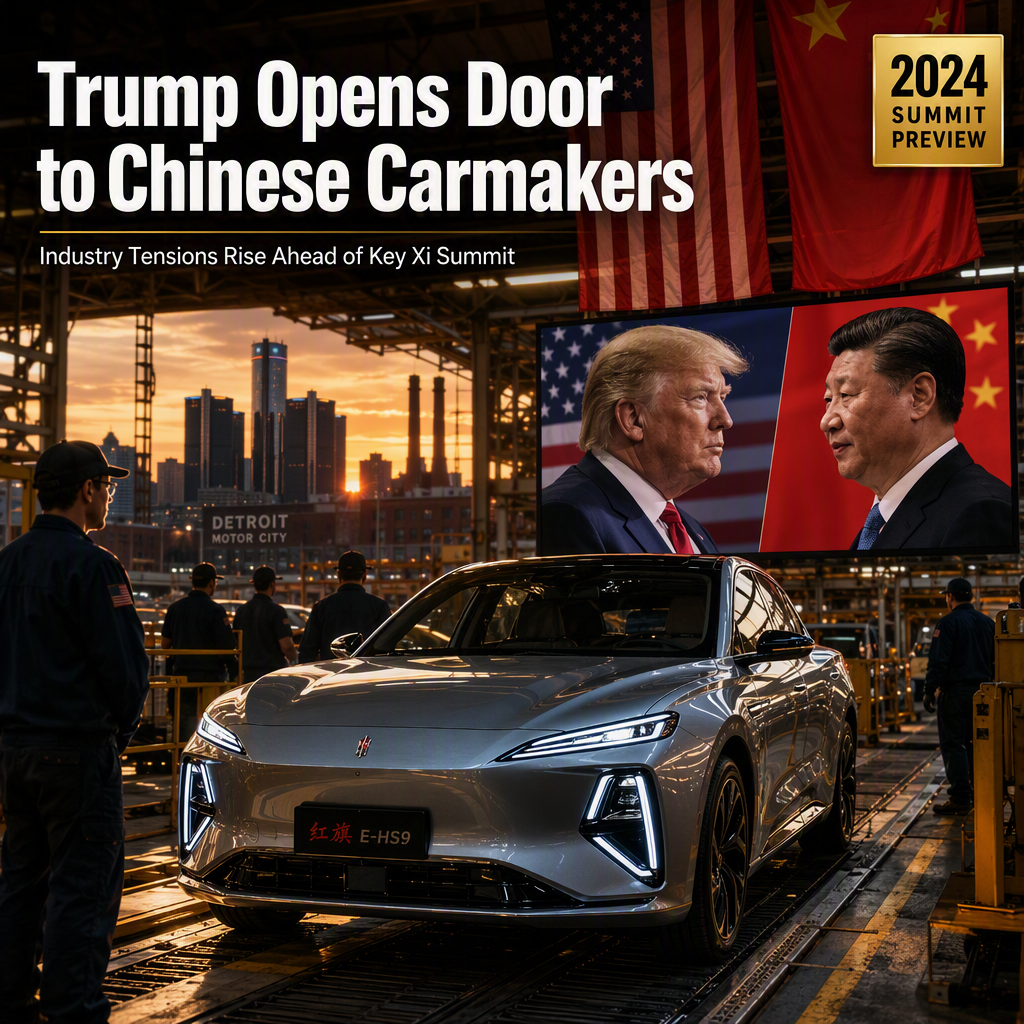
U.S. President Donald Trump has indicated that his administration is not closing the door to Chinese carmakers establishing manufacturing operations in the United States, despite significant opposition from the U.S. auto industry and lawmakers concerned about the impact on domestic automakers and jobs, especially in key swing states with large manufacturing bases [1]. Trump denied rumors that he would approve the sale of Chinese cars in the American market ahead of his upcoming meeting with Chinese President Xi Jinping [1].
Industry groups and policymakers have raised concerns about technology transfer, pricing pressures, and national security risks associated with Chinese automotive entrants [1]. Despite these warnings, the Trump administration has not announced any new restrictions or tariffs targeting Chinese carmakers seeking to invest in U.S. manufacturing [1]. During a recent press briefing, Trump stated, "We're not closing the door," emphasizing that any decisions would prioritize the interests of American workers and the economy [1].
Analysts suggest that permitting Chinese carmakers to operate in the U.S. could intensify competition in the electric vehicle (EV) sector, potentially lowering prices and fostering innovation. However, they caution that this could also increase pressure on domestic manufacturers, who are already grappling with rising costs and evolving consumer preferences [1].
No specific financial figures, market forecasts, or policy changes have been released by the administration, but industry observers are closely monitoring developments in anticipation of the summit between Trump and Xi Jinping [1].
CONCLUSION
President Trump's openness to Chinese carmakers investing in U.S. manufacturing has sparked debate among industry stakeholders and policymakers, with concerns about domestic jobs and competition. While no concrete policy changes have been announced, the upcoming summit with Xi Jinping is expected to be closely watched for potential market-moving developments. The situation remains fluid, with analysts highlighting both risks and opportunities for the U.S. auto sector.