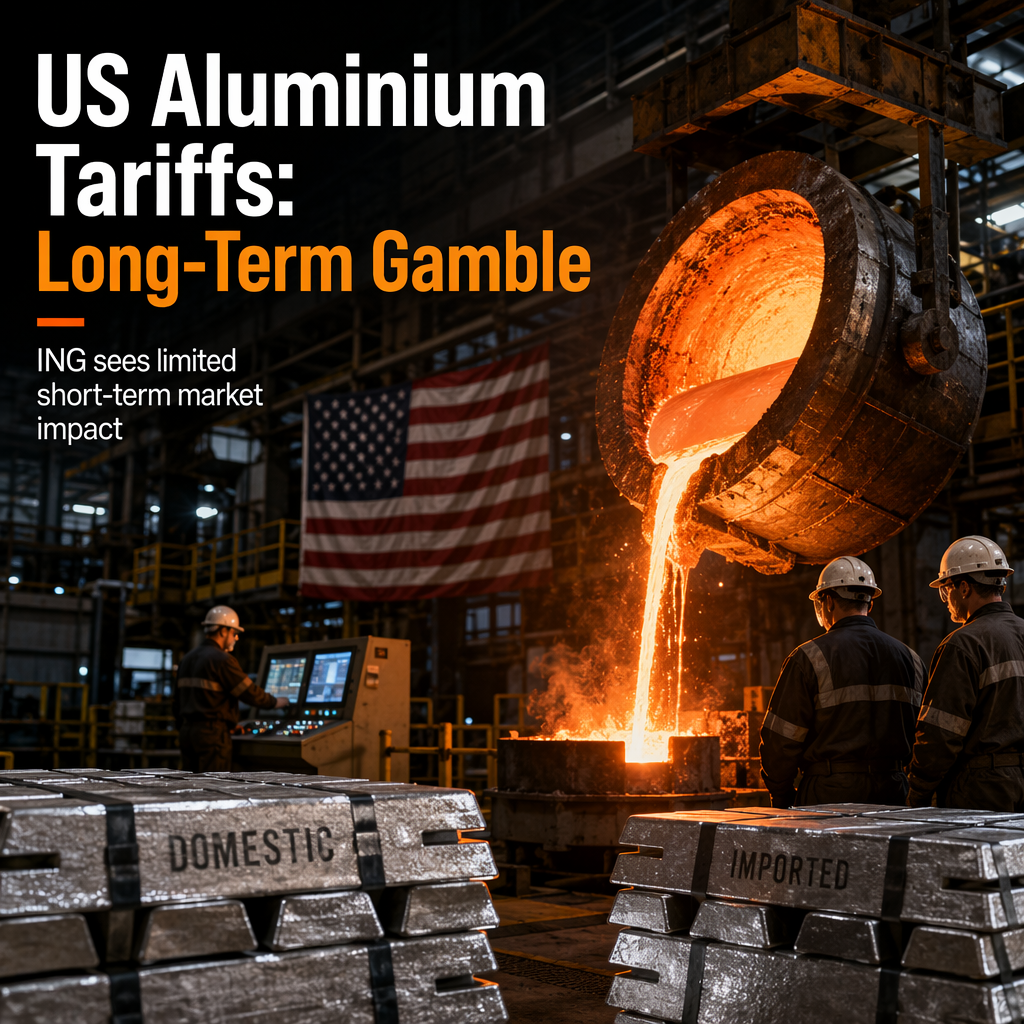
The US government has amended Section 232 aluminium tariffs, allowing companies that build, expand, or refurbish domestic smelting capacity to import qualifying aluminium volumes at a reduced tariff rate of 25%, compared to the standard 50% rate. ING analysts emphasize that this policy change is designed to incentivize investment in US aluminium smelting and should be viewed as a long-term industrial strategy rather than a measure with immediate market effects [1].
Despite years of tariff protection, US primary aluminium production has continued to decline, with only four operating primary aluminium smelters remaining in the country. This has left the US market structurally reliant on aluminium imports, which in turn supports elevated Midwest premiums [1].
ING analysts note that the recent tariff adjustments are unlikely to materially alter the US aluminium market in the near term. The programme's success depends on the development of meaningful new domestic capacity, which would take time to come online. Until then, the US is expected to remain dependent on imports, maintaining current market dynamics [1].
CONCLUSION
The US government's tariff adjustments are intended to encourage long-term investment in domestic aluminium smelting, but ING analysts see little immediate impact on the market. With only four primary smelters operating, the US will remain reliant on imports and elevated Midwest premiums in the near future.