
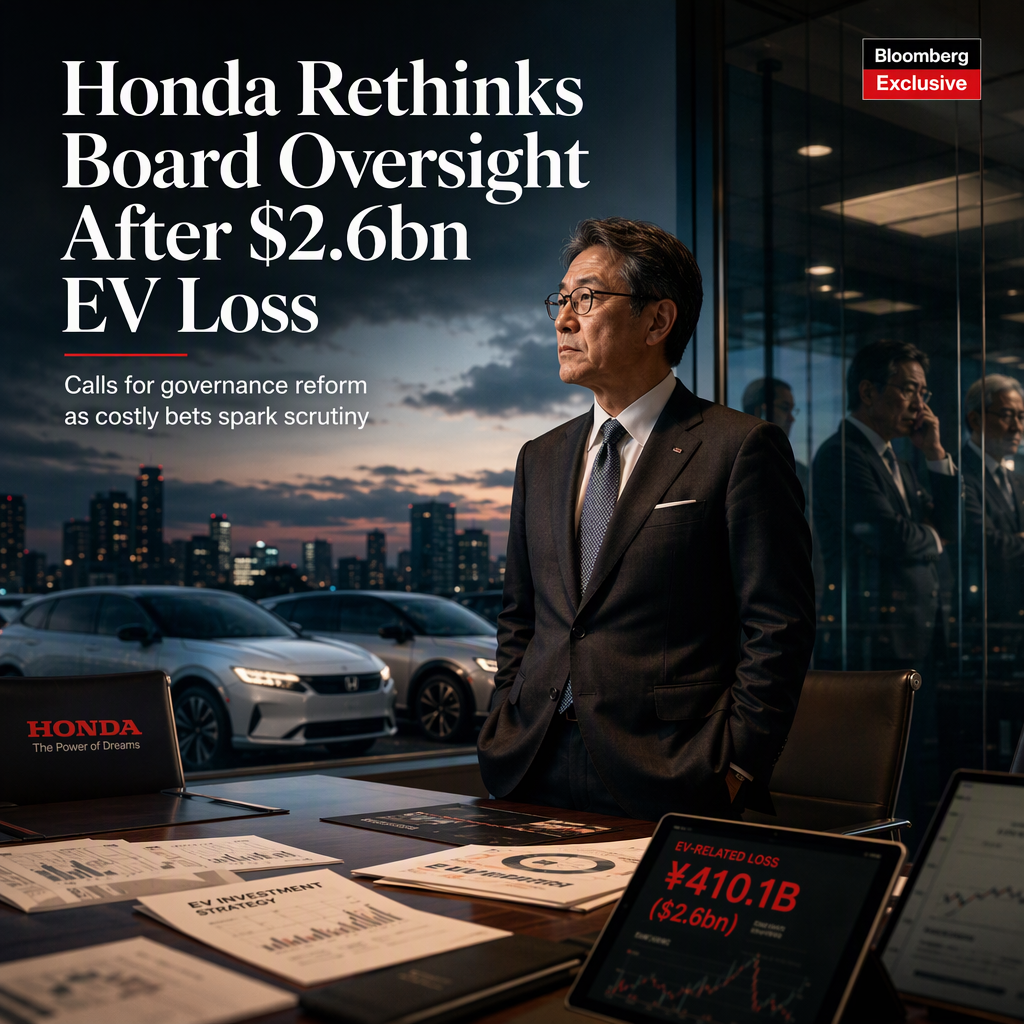
Honda Motor's board chair has publicly acknowledged that the company's governance structure limited the board of directors' ability to scrutinize major investment decisions, particularly those related to electric vehicle (EV) initiatives [1]. The chair, who is an outside director, stated that the board was overly constrained by a 'monitoring' mentality, which hindered active involvement in evaluating large-scale investments before they were finalized [1].
This admission comes in the wake of Honda reporting a $2.6 billion annual loss, a figure that has raised concerns about the effectiveness of the company's oversight and decision-making processes for significant investments [1]. The losses are closely tied to Honda's recent and costly bet on electric vehicle technology, which has placed the company's strategic direction under increased scrutiny [1].
The board chair emphasized the need for a 'change in mindset' within the board, advocating for more thorough examination and active scrutiny of major proposals prior to execution [1]. This call for strengthened governance is seen as crucial as Honda faces mounting pressure to adapt its strategy in the rapidly evolving and competitive automotive market [1]. The chair highlighted the importance of balancing risk and opportunity to ensure that future investments are better aligned with the company's long-term interests [1].
CONCLUSION
Honda's board chair has called for significant governance reforms following a $2.6 billion annual loss linked to electric vehicle investments. The company's oversight and decision-making processes are under scrutiny, with a push for more active board involvement in major strategic decisions. This development signals potential changes in Honda's investment approach as it navigates a challenging industry landscape.