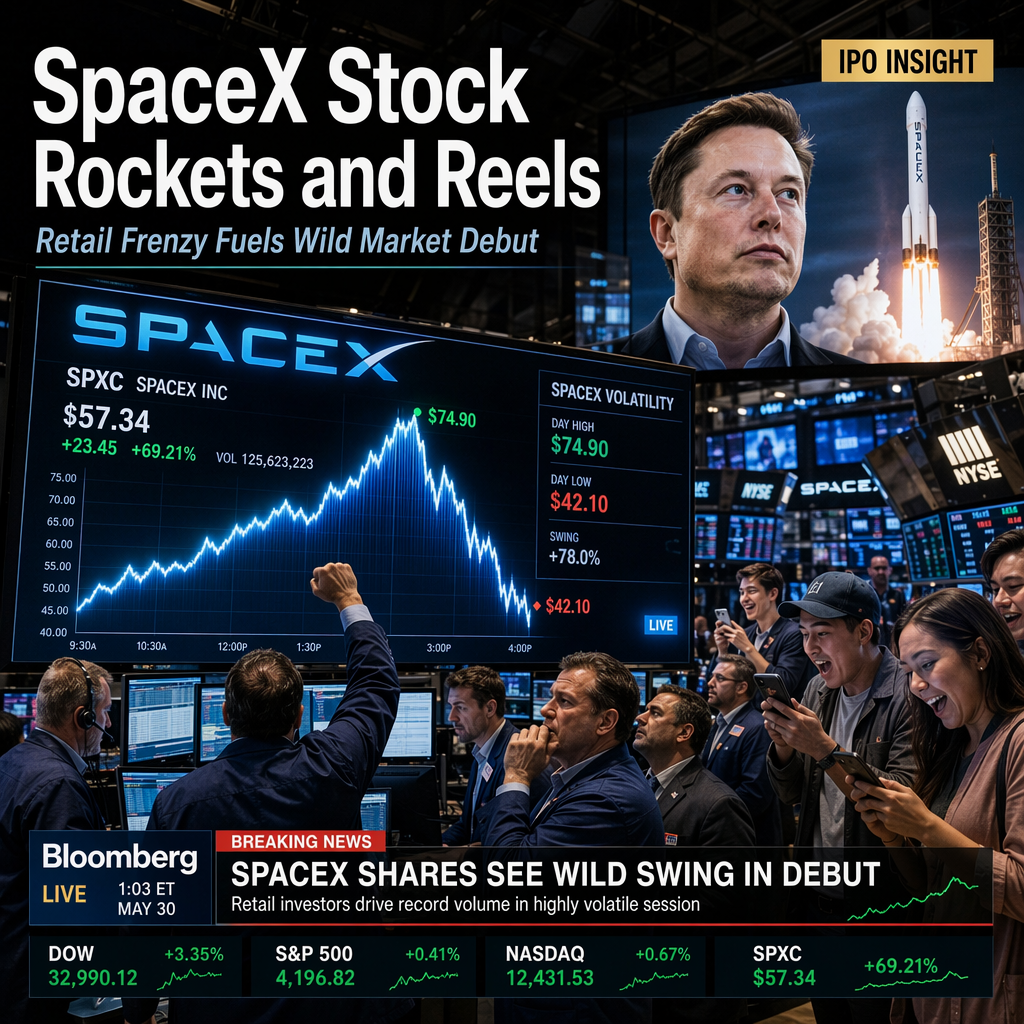
SpaceX experienced significant volatility in its first two weeks as a public company, with its stock price surging more than 60% above the initial share offering price of $135 following a record-breaking IPO. At its peak, SpaceX briefly overtook both Amazon and Microsoft in terms of market capitalization, highlighting the intense excitement and media attention surrounding the company and its founder, Elon Musk [1].
However, the initial rally was followed by sharp declines, including daily drops of 5% and 4%, and a notable 16% slump as market jitters set in. The stock then stabilized with smaller single-point moves in either direction, reflecting the whipsaw nature of a story-driven stock [1].
Retail investors played a significant role in the stock's early performance, purchasing a net $405 million of SpaceX shares in the first five trading sessions. This marked the strongest retail IPO debut in recent history, according to research firm Vanda. Analysts attribute this enthusiasm to SpaceX's transformational technology narrative, bold vision, celebrity founder, and unparalleled media attention, all of which have historically resonated with retail investors [1].
Despite the initial bullishness, some analysts expressed caution. Morningstar analysts, for example, wrote before the IPO that SpaceX was worth less than half of its $1.75 trillion target valuation. As the initial hype faded, fundamentals began to play a larger role in the stock's price movements, leading to what one analyst described as a 'hangover.' Elon Musk has continued to promote ambitious revenue growth for the company in the coming years [1].
CONCLUSION
SpaceX's public debut has been marked by extreme volatility, driven by retail investor enthusiasm and the company's ambitious narrative. While the stock saw record-breaking gains and strong retail participation, analysts warn that fundamentals may temper future performance. The market remains highly attentive to both SpaceX's execution and Elon Musk's forward-looking statements.