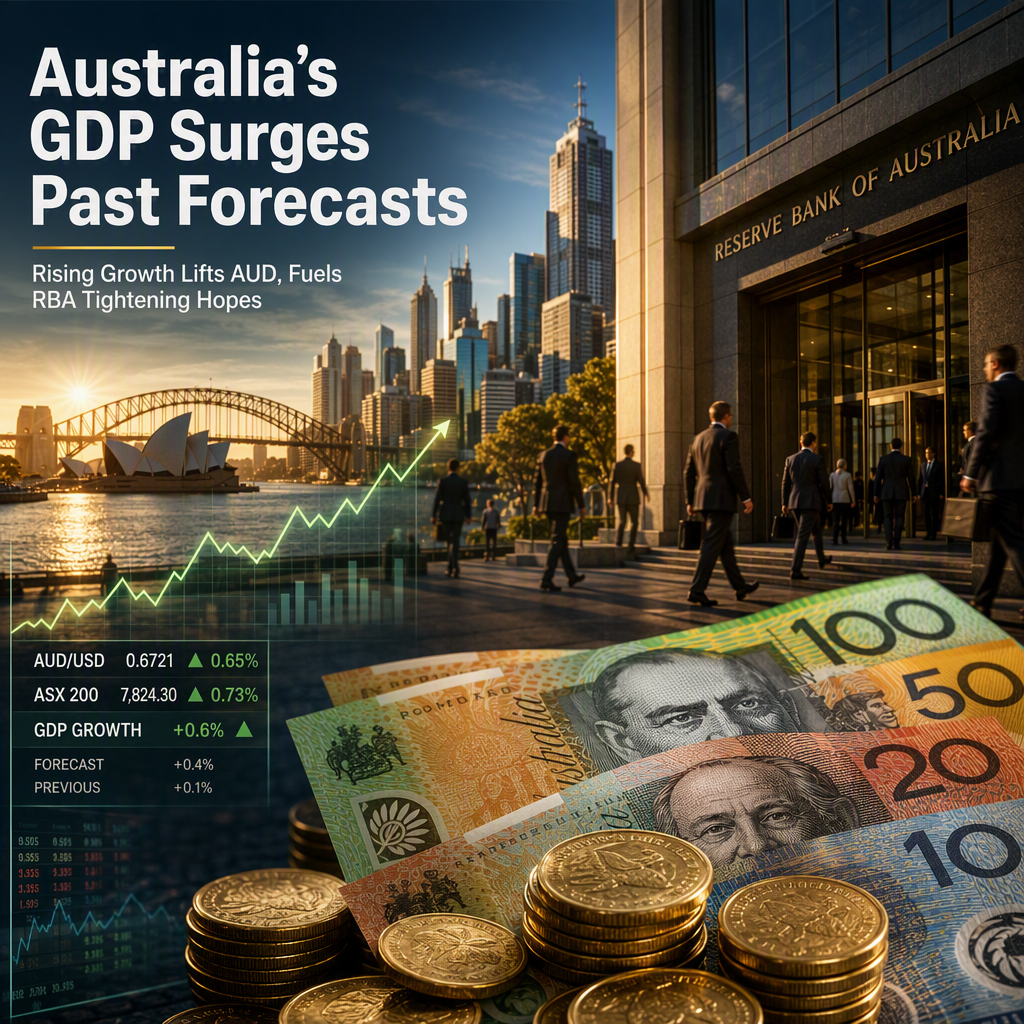
Australia's Gross Domestic Product (GDP) expanded by 0.4% quarter-on-quarter in the second quarter of 2026, surpassing both the previous quarter's growth of 0.3% and market expectations of 0.3% [1][2][3]. Year-on-year, GDP grew by 2.1%, which, while slower than the 2.5% recorded in Q1, exceeded consensus forecasts of 1.8% [1][2][3]. The Australian Bureau of Statistics attributed the slight quarterly growth to private demand and mining exports, noting that household spending remained subdued, rising just 0.4% as consumers reduced fuel consumption and travel due to elevated prices stemming from the Middle East conflict [3].
Following the upbeat GDP report, the Australian Dollar (AUD) attracted buyers, with the AUD/USD pair trading at 0.7151 and gaining 0.09% on the day [2]. The appreciation was further supported by the GDP data, although the upside for AUD/USD was restrained by a strengthening US Dollar, driven by rising US bond yields and surging oil prices amid escalating hostilities between the US and Iran, which raised risks of energy flow disruptions [1]. A global bond selloff pushed the US 10-year Treasury yield to 4.80%, its highest level since early 2025 [1].
The stronger-than-expected GDP print provides the Reserve Bank of Australia (RBA) with room to proceed with policy tightening as it seeks to curb inflation [3]. At its last meeting, some RBA board members considered additional tightening, citing persistently high inflation. Australia's July inflation reading came in at 3.5%, above the forecast of 3.3% [3]. The RBA projects that inflation will decline only gradually, returning to the midpoint of its 2%-3% target range by late 2027 [3].
Strategists at Brown Brothers Harriman noted that while the US Dollar's strength is supported by the outperformance of US Treasuries, rising US fiscal risk could make the USD more vulnerable to periods of fiscal stress [1].
CONCLUSION
Australia's Q2 GDP growth exceeded expectations, supporting the Australian Dollar and providing the RBA with justification for further policy tightening. However, subdued household spending and persistent inflation suggest ongoing challenges. Market sentiment is moderately positive for the AUD, but global factors such as US Dollar strength and geopolitical risks may temper gains.