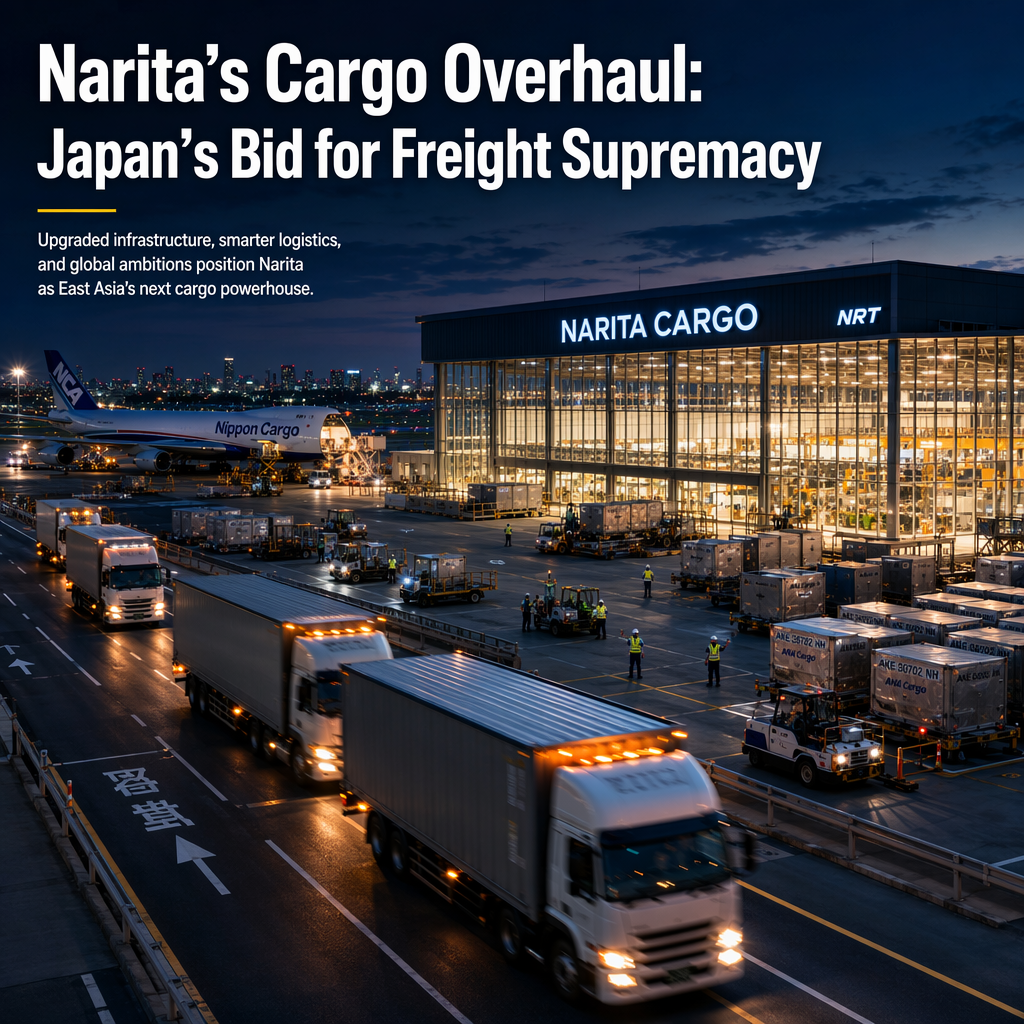
Narita Airport, located near Tokyo, has announced a reorganization of its cargo facilities with the goal of reducing the number of necessary trips within the airport and streamlining cargo transport operations. This initiative is aimed at making Narita more attractive to international freight carriers and positioning the airport as a leading East Asian cargo hub, in direct competition with regional rivals such as Incheon Airport in South Korea and Taoyuan Airport in Taiwan, both of which have experienced significant growth in transshipment cargo volumes [1].
Currently, Narita's cargo operations involve multiple transfers between different facilities, resulting in increased vehicle trips and handling times. The planned integration and reorganization of these facilities are expected to lower logistics costs for carriers and forwarders by reducing handling time and the number of vehicle movements required [1].
Industry experts cited in the article emphasize that improving the efficiency of ground operations is essential for attracting major logistics providers and maintaining Narita's competitiveness in the region. Airport officials have indicated that this reorganization is only the initial phase, with further infrastructure investments planned to support anticipated growth in air freight volumes [1].
While the article does not provide specific financial figures or technical indicators, it highlights that Narita's efforts are a strategic response to evolving market dynamics and increased competition in the East Asian air cargo sector [1].
CONCLUSION
Narita Airport's streamlining of cargo operations marks a strategic move to enhance its competitiveness in the East Asian air freight market. By focusing on operational efficiency and future infrastructure investments, Narita aims to attract more transshipment traffic and logistics providers. The market impact is expected to be medium, reflecting the airport's proactive response to regional competition.