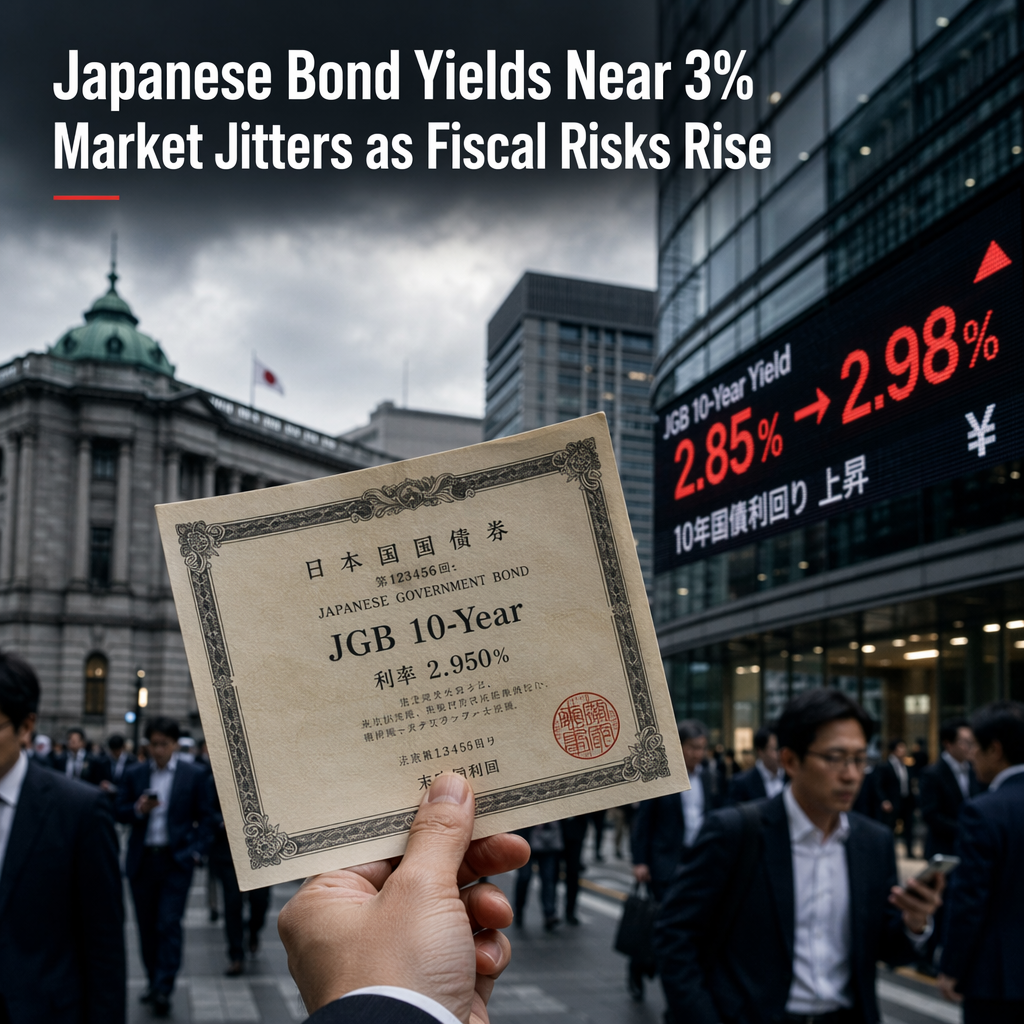
Yields on Japanese government bonds (JGBs) have resumed their upward trajectory, with the 10-year benchmark yield rising above 2.8% as of July 7, 2026, driven by escalating concerns over Prime Minister Sanae Takaichi's pro-growth fiscal agenda and its implications for Japan's public finances [1]. Investors are increasingly uneasy about the sustainability of government debt, especially as expectations mount for further government spending under the current administration [1].
Market participants are closely monitoring the Bank of Japan (BOJ) for any policy signals, with speculation intensifying that the central bank may be compelled to tighten monetary policy sooner than previously anticipated [1]. The 10-year JGB yield is now approaching the 3% mark, a level not seen in decades, which technical analysts identify as a key psychological resistance point [1]. A decisive break above this threshold could trigger additional selling by investors worried about the long-term trajectory of Japanese government debt and rising inflation expectations [1].
Traders and analysts warn that continued fiscal stimulus and any indication from the BOJ of a shift away from its accommodative stance could exert further upward pressure on yields [1]. One Tokyo-based bond strategist noted, "The market is nervous about both the government's fiscal trajectory and the BOJ's next moves" [1]. The rising yields are also prompting domestic institutions, including some banks and life insurers, to hesitate in increasing their JGB holdings due to concerns about potential capital losses in a rising rate environment [1].
The bond market remains volatile, with participants bracing for further fluctuations as fiscal and monetary policy developments continue to unfold [1].
CONCLUSION
Japanese government bond yields are climbing rapidly, reflecting market anxiety over fiscal expansion and the potential for tighter monetary policy. With the 10-year yield nearing 3%, investors are increasingly cautious, and the market is poised for heightened volatility as policy signals emerge.