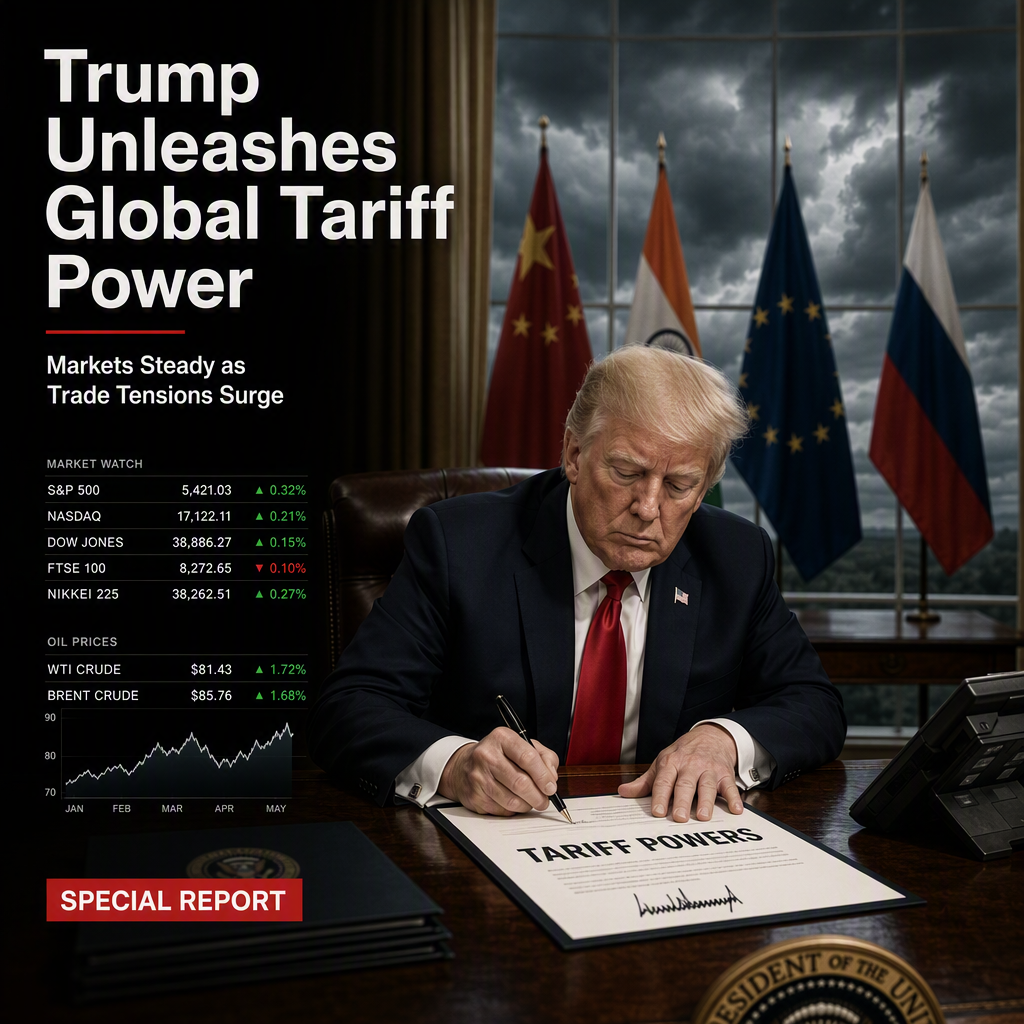
U.S. President Donald Trump has been granted new statutory authority by Congress to impose tariffs of up to 100% on countries purchasing Russian oil, following the passage of a Russia sanctions bill in the House. This move comes as BRICS leaders, including China and India—both among the top five buyers of Russian crude—recently rejected unilateral secondary sanctions, placing them directly in the scope of potential U.S. trade actions. Trade policy expert Deborah Elms noted that the new law enables Trump to 'strike hard and quickly at any time for any reason' [1].
In parallel, European Commission President Ursula von der Leyen proposed an 'Alliance for the Future' with Canada as the first associate member, a move welcomed by Canadian Prime Minister Mark Carney but dismissed by Trump as 'laughable.' Trump warned of heavy tariffs on Europe if the alliance was not formed in good faith, labeling Canada a 'terrible' trade partner. Carney, however, emphasized Canada's commitment to open markets and resilience, stating, 'We do not seek power to dominate others ... We are pursuing resilience so that no one can control our open markets' [1].
On the geopolitical front, Trump expressed optimism that the nearly seven-month-long war with Iran may be nearing its end, stating, 'Well, hopefully we are toward the end of the war. They want to make a deal, we'll see how that works out,' and confirmed he had spoken with Tehran directly. Despite this, fighting continues to escalate between Saudi Arabia and the Iran-backed Houthis in Yemen, highlighting ongoing regional instability [1].
Market reactions were muted, with U.S. stock futures little changed Thursday night after a day of gains following the Federal Reserve's first rate hike in three years. Asian markets opened higher as oil prices continued to decline for a third consecutive day. Investors are awaiting remarks from Federal Reserve Governor Michelle Bowman and Kansas City Fed President Jeffrey Schmid for further insights into the Fed's policy direction [1].
CONCLUSION
President Trump's expanded tariff authority marks a significant escalation in U.S. trade leverage, particularly targeting major buyers of Russian oil such as China and India. While markets have so far reacted calmly, the potential for rapid policy shifts and heightened global trade tensions remains high. Investors are closely monitoring central bank commentary and geopolitical developments for further market direction.