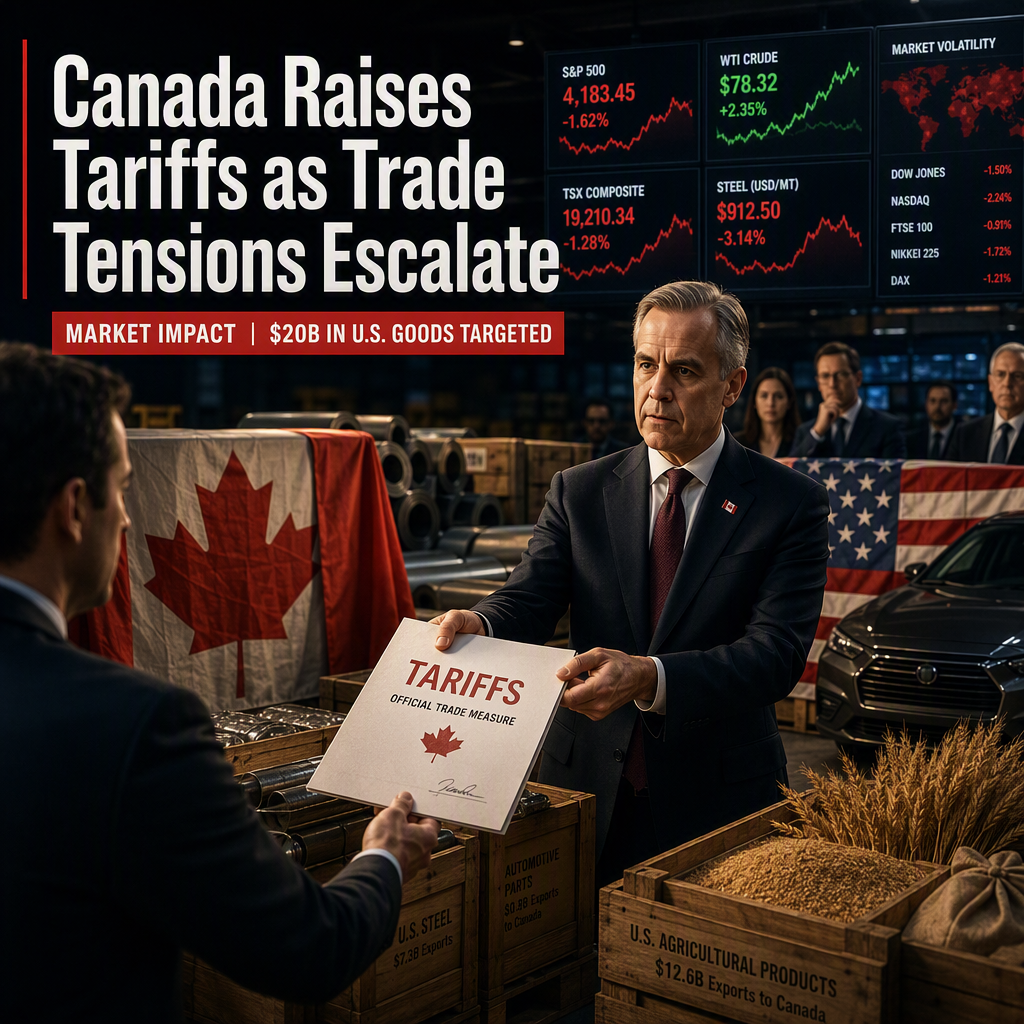
Canada has announced the implementation of new tariffs as trade tensions escalate, according to the Canadian government [1]. These measures include increased tariffs on steel imports, which are expected to impact U.S. producers and exporters [1]. The government has also imposed duties across a range of sectors, targeting a total of $20 billion worth of U.S. goods [1]. The targeted products include automobiles, agricultural goods, and manufactured items, with specific tariff rates varying based on the category [1].
The escalation of trade tensions follows the U.S. administration's announcement of higher tariffs on Canadian imports, including dairy, alcohol, and automobiles [1]. In response, Canada has taken steps to protect its industries by imposing retaliatory tariffs [1]. Financial analysts are closely monitoring the impact of these tariffs on commodity prices and major stock indices [1]. Steel producers in both countries are expected to face margin pressures, while automotive manufacturers may see increased costs passed on to consumers [1].
Market sentiment remains cautious, with investors awaiting further developments from ongoing trade negotiations [1]. Analysts note that the situation could trigger short-term volatility in both equity and commodity markets [1].
CONCLUSION
Canada's new tariffs mark a significant escalation in trade tensions with the U.S., affecting a wide range of industries and prompting concerns about increased costs and market volatility. Investors and analysts are closely watching for further developments as negotiations continue [1].