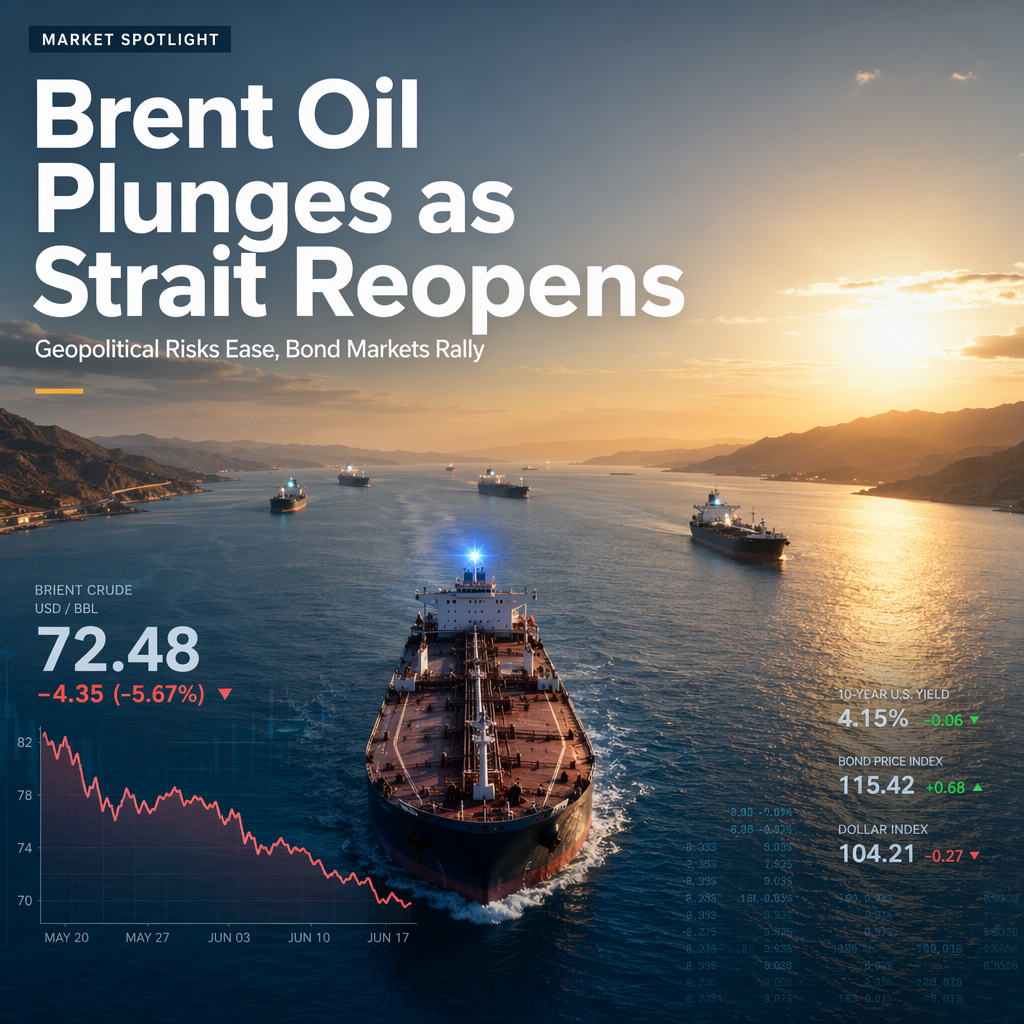
Commerzbank analysts Henry Hao and Moses Lim report that progress toward reopening the Strait of Hormuz has led to a sharp decline in Brent and WTI oil prices, significantly easing inflation risk premia in global bond markets [1]. The overnight market narrative was dominated by the acceleration in reopening the Strait, which resulted in a broad rally in global sovereign bonds [1]. More tankers have been crossing the waterway with their satellite signals switched on, indicating increased confidence among shipowners and traders [1].
Iran and Oman announced plans to begin work on an agreement covering the future administration of the strait, including transit costs [1]. The International Maritime Organization confirmed it had secured safety guarantees to evacuate more than 11,000 stranded seafarers, with the operation to be conducted in cooperation with Iran, Oman, and the US [1]. President Trump stated that any tolling arrangement on Hormuz shipping would be "unacceptable" to the US, marking a clear stance in ongoing negotiations [1].
These developments have collectively accelerated the decline in oil prices and reduced near-term inflation risk premia in bond markets, as improved shipping safety and political negotiations have lowered geopolitical risk premia in oil [1].
CONCLUSION
The reopening of the Strait of Hormuz has triggered a sharp drop in oil prices and a rally in global sovereign bonds, as geopolitical risks and inflation premia ease. Market participants are responding positively to improved shipping safety and ongoing political negotiations. The situation remains fluid, with further developments in transit agreements and US policy likely to influence future market movements.