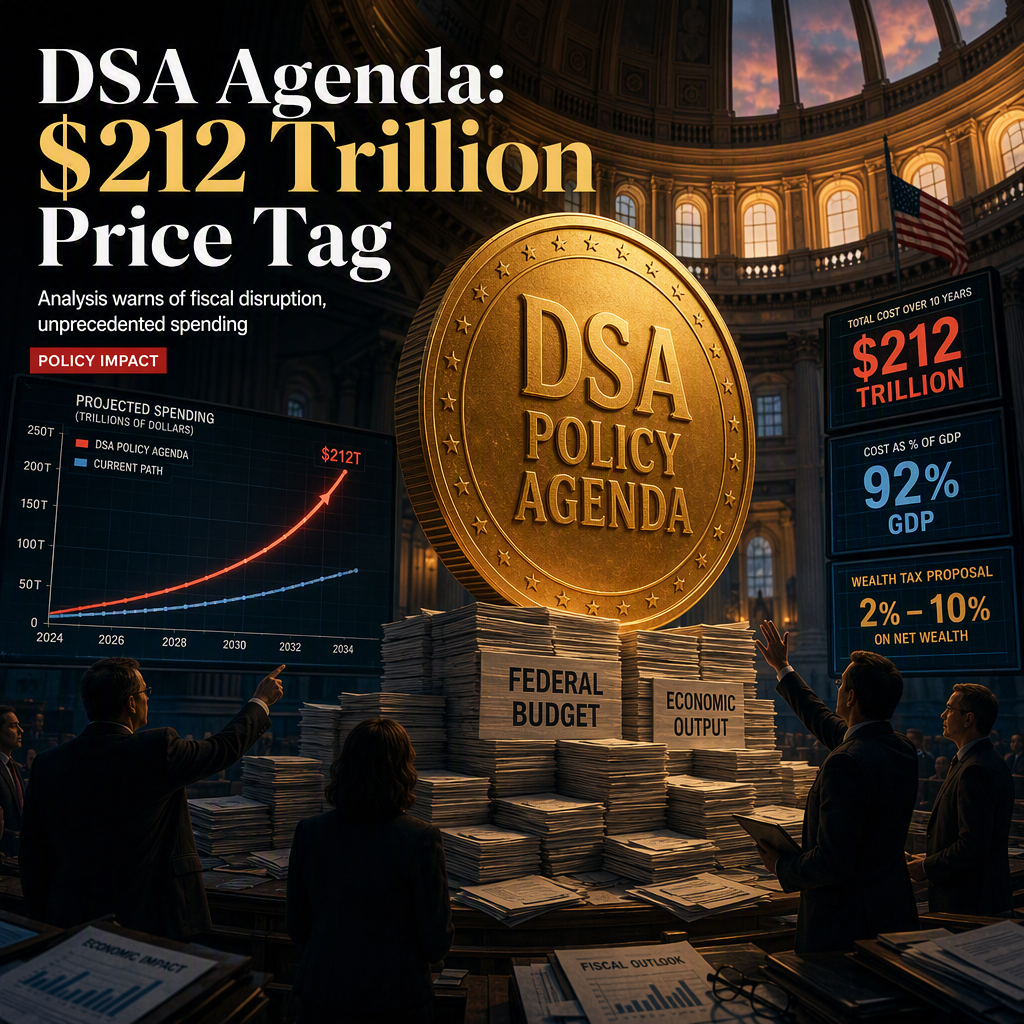
A new analysis has found that the policy agenda of the Democratic Socialists of America (DSA) could result in between $71 trillion and $212 trillion in additional federal spending over the next decade, should their platform be fully implemented [1]. The analysis, conducted by Adam Michel, director of tax policy studies at the Cato Institute, highlights that at the upper end of this estimate, total government spending would reach as high as 92% of U.S. economic output [1].
Key components of the DSA platform include universal healthcare, a federal jobs guarantee, and the elimination of rent or mortgages as part of a housing guarantee. Michel estimates that universal healthcare alone could cost between $40 trillion and $70 trillion over ten years, while a federal jobs guarantee could add up to $60 trillion in costs over the same period [1]. The elimination of rent or mortgages would also cost trillions, though a specific figure was not provided [1].
To fund these initiatives, the DSA platform proposes aggressive wealth taxes on the richest individuals and corporations. However, Michel argues that even with such measures, the revenue generated would likely fall short of covering the projected costs [1]. He notes that Washington is currently projected to collect about $70 trillion in federal taxes over the next decade, meaning the DSA agenda would require roughly doubling federal revenue at the low end and quadrupling it at the high end [1].
The analysis also points out that the 400 wealthiest billionaires in America were worth an estimated $6.6 trillion last year, suggesting that taxing only the ultra-wealthy would not be sufficient to fund the DSA's proposed spending increases [1].
CONCLUSION
The analysis suggests that the DSA's policy platform would require unprecedented increases in federal spending and revenue collection, far exceeding current tax projections. Market participants may view the implementation of such policies as highly disruptive to fiscal stability and economic output.