
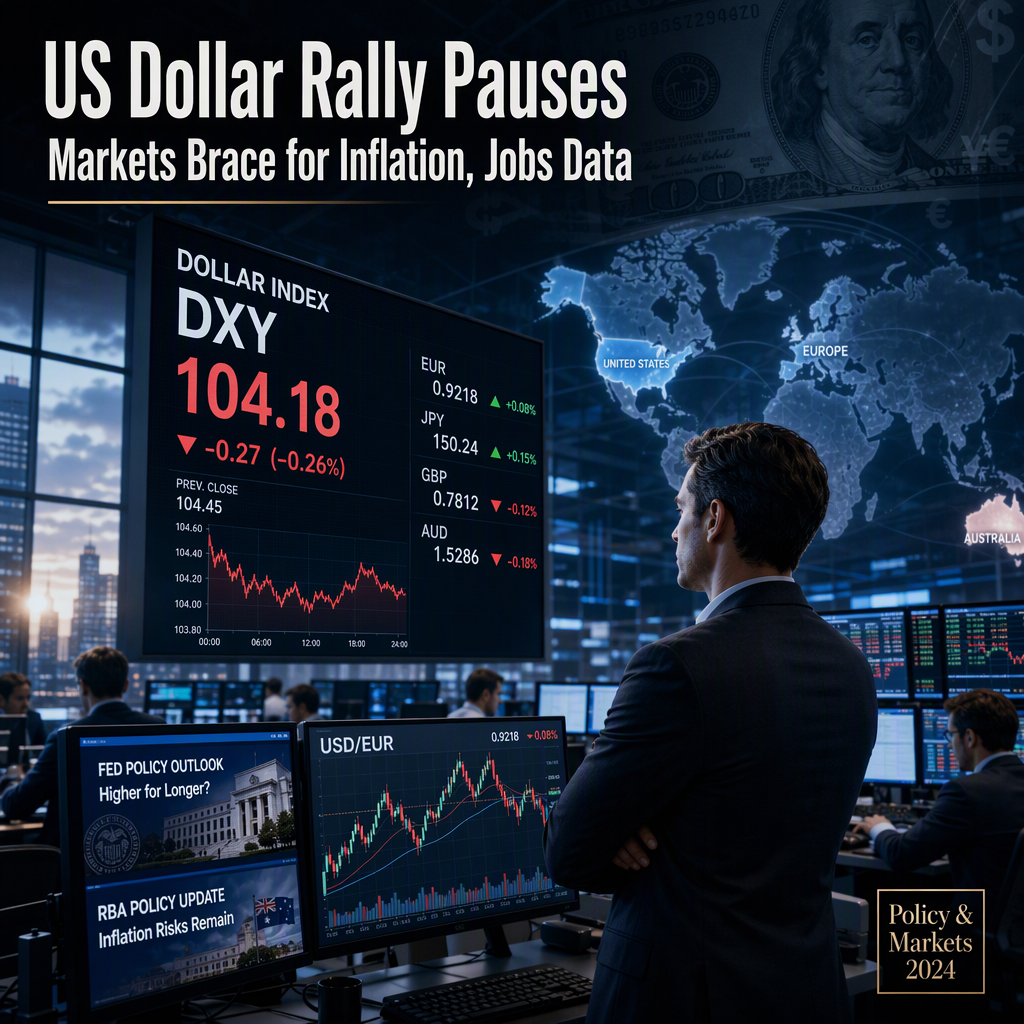
The US Dollar (USD) has experienced a modest pullback from recent highs, with the Dollar Index (DXY) retreating to 101.20 from above 101.60, though it remains on track for a 1.8% monthly gain [2]. This softening is attributed to a decline in US Treasury yields and dovish comments from New York Fed President John Williams, who stated there is 'no rush after September’s rate hike' and that the biggest inflation shocks have largely played out [7]. As a result, market expectations for an October Fed rate hike have dropped to a 44% chance from 70% the previous day, according to the CME FedWatch Tool [7].
Despite this pause, analysts from major banks such as ING, OCBC, and Rabobank maintain that the fundamental backdrop—including high US Treasury yields, rising oil prices, and the Fed’s commitment to fighting inflation—supports further USD appreciation into year-end [2]. Brown Brothers Harriman (BBH) expects upcoming US data, specifically the August PCE Price Index and September ADP payrolls, to show persistent inflation and resilient labor demand, reinforcing the Fed’s hawkish stance and underpinning the USD [3]. The market is bracing for steady headline inflation at a 3.6% yearly rate and a core reading of 3.3% year-on-year [7].
TD Securities, however, argues that the USD rally is stretched and unlikely to break to new highs in the current Fed hiking cycle unless the Fed outpaces global central banks or global growth falters [5]. They cite month-end equity rebalancing flows and expectations for weaker-than-consensus US payrolls as factors that could support a bearish Dollar regime [5].
The Australian Dollar (AUD) has held onto early recovery gains near 0.6970 against the USD, despite being down 0.19% on the day [1]. The AUD attracted bids after the release of hot August CPI data, which showed inflation accelerating to 4% YoY from 3.5% in July [1]. This has reinforced expectations for further RBA rate hikes, with market pricing in 1.5 additional hikes after a cumulative 100bps increase to 4.6% this year [1]. However, Commerzbank analysts see limited likelihood of further RBA tightening, noting that inflation remains too high and will take time to return to target [1].
In Europe, the Euro (EUR) has weakened as ECB President Lagarde pushed back against expectations for another rate hike, emphasizing the need for a measured response and noting the absence of second-round inflation effects [4]. ING reports that EUR/USD broke below summer lows, trading near 1.1350, and sees further downside risk toward 1.10 if the Fed remains hawkish and US data surprises to the upside [6]. The Swiss Franc (CHF) edged up from yearly lows as the USD/CHF pair pulled back to 0.8330, despite tepid Swiss economic expectations data and the broader USD retreat [7].
CONCLUSION
The US Dollar's rally has paused amid softer Treasury yields and dovish Fed commentary, but the underlying trend remains bullish as markets await key US inflation and jobs data. While some analysts see the rally as stretched, persistent inflation and resilient labor markets could reinforce the Fed’s hawkish stance and support further USD strength. Meanwhile, the Australian Dollar is buoyed by strong CPI data, and the Euro remains under pressure from dovish ECB signals.