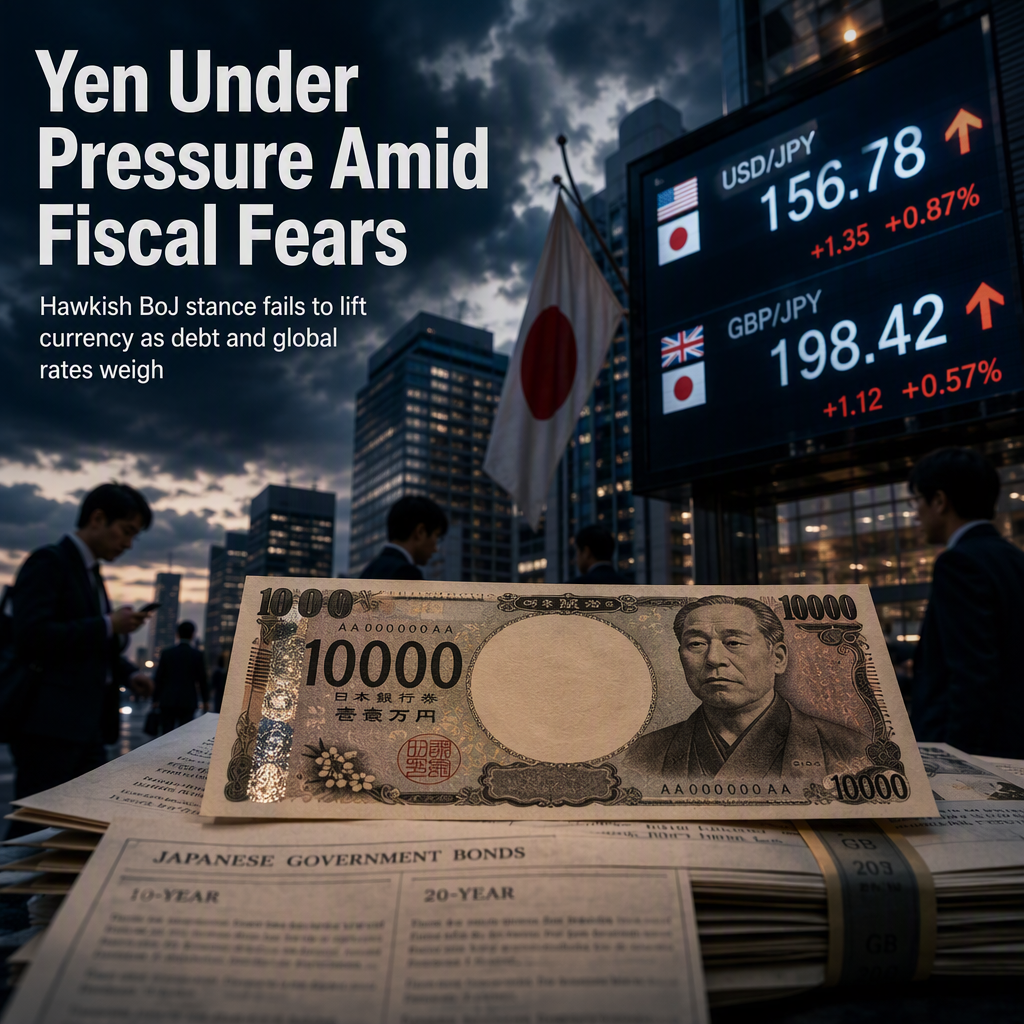
The Japanese Yen (JPY) has come under renewed pressure, with both Rabobank and FXStreet analysts highlighting the impact of fiscal concerns and global rate differentials on the currency's outlook [1][2]. Rabobank's Senior FX Strategist Jane Foley notes that government spending plans, shifting demand for long-dated debt, and the US Treasury Secretary Bessent’s buyback plan have all influenced the USD/JPY pair. Following news of Bessent’s buyback plans, the USD/JPY moved further away from the psychologically important 160 level, with Rabobank maintaining a 3-month forecast of 158, though warning of potential near-term upside attempts [1]. Foley also points to Japan’s upcoming 2027 budget talks as a potential catalyst for market sentiment later this year [1].
FXStreet reports that GBP/JPY edged higher on Thursday, reversing previous losses and trading around 216.33, up 0.53% on the day, largely due to broad Yen weakness rather than any significant positive developments for the British Pound (GBP) [2]. Despite expectations that the Bank of Japan (BoJ) could raise interest rates next month, the Yen remains under pressure, with higher oil prices linked to the US-Iran standoff and Japan’s reliance on imported energy cited as key near-term headwinds [2]. Broader concerns over government spending and high public debt are also weighing on the currency [2].
The wide interest rate gap between the Bank of England’s 3.75% policy rate and the BoJ’s 1% rate continues to favor the higher-yielding GBP, supporting further upside in GBP/JPY [2]. Technical analysis indicates that GBP/JPY has recovered about half of the losses from the recent US-Japan FX intervention, with the pair climbing above key moving averages and technical indicators such as the RSI and MACD suggesting a constructive near-term bias [2].
Looking ahead, traders are awaiting Japan’s National Consumer Price Index (CPI), UK Retail Sales, and the preliminary S&P Global Purchasing Managers’ Index (PMI) reports for August, all due on Friday [2]. Rabobank also notes that firmer BoJ policy rates, structural reforms, and a resilient economy could provide support for the Yen in the coming months, though the dominant position of the USD in the global payment system is expected to continue underpinning the Dollar’s safe haven status [1].
CONCLUSION
The Japanese Yen remains under pressure due to fiscal concerns, high public debt, and unfavorable rate differentials, despite expectations of a more hawkish BoJ. While technical and fundamental factors suggest possible support for the Yen in the medium term, near-term risks and market sentiment continue to favor other major currencies such as the USD and GBP.