
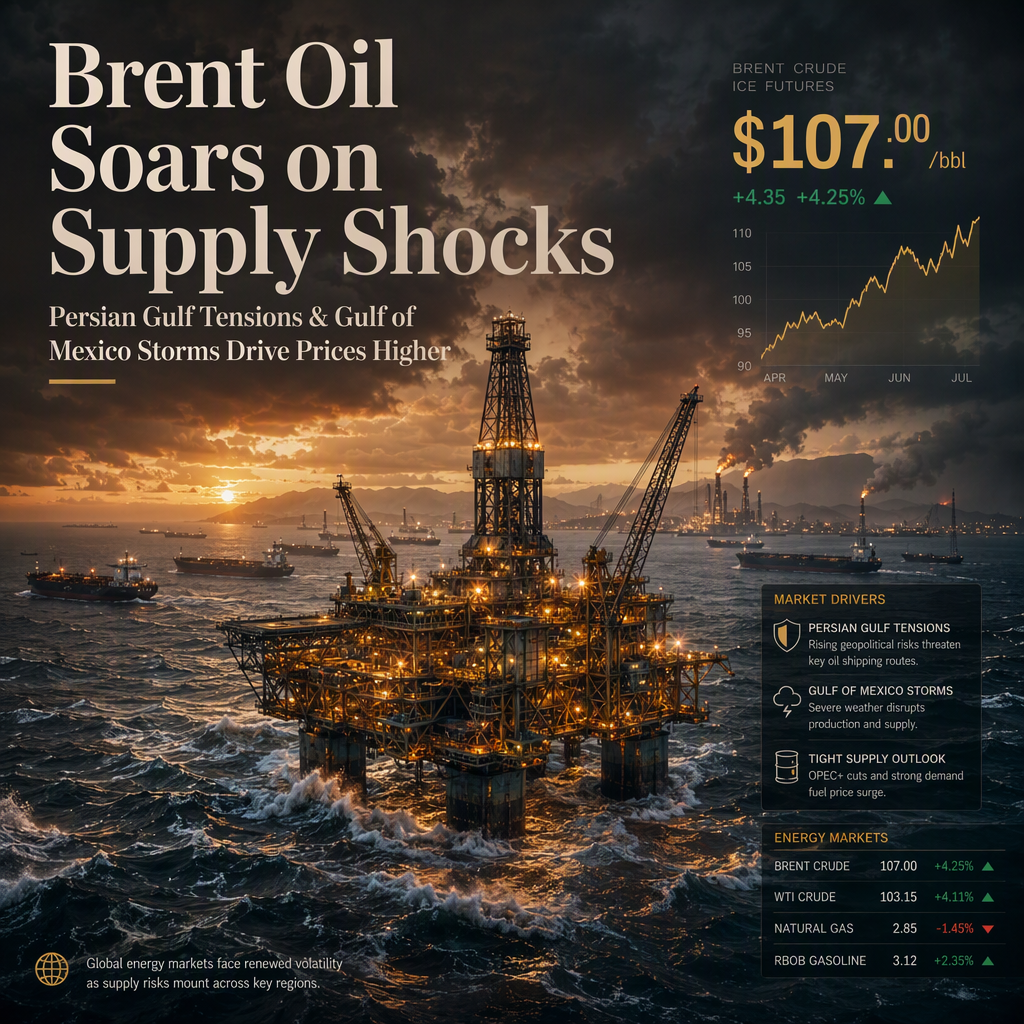
Oil prices have remained elevated as traders focus on supply risks stemming from the Middle East and the Persian Gulf, according to ING strategists Warren Patterson and Ewa Manthey [1]. Brent crude settled 1.8% higher, closing just shy of $107 per barrel yesterday, marking its highest close since mid-September [1]. The market's attention has shifted away from the recent energy ceasefire announcement between Russia and Ukraine, as well as the US-Russia diesel export deal, both of which had only a brief impact on oil market weakness [1].
Recent Houthi attacks on Saudi Arabia and ongoing risks to oil flows from the Persian Gulf have heightened concerns, supporting Brent prices [1]. Saudi Arabia's Energy Minister has announced plans to expand the country's pipeline export capacity to 10 million barrels per day, up from the current 7 million barrels per day, which could lead to further bypass volumes in the region in a relatively short time period [1].
In addition to Middle Eastern supply risks, hurricane activity in the Gulf of Mexico has disrupted offshore operations for US producers. Nearly 605,000 barrels per day of oil production have been shut in, representing almost 30% of total US production in the Gulf of Mexico, according to the Marine Minerals Administration [1].
While diesel prices initially weakened following the US-Russia deal, strength has returned as the volumes involved are insufficient to alleviate the tightness in the global middle distillate market [1].
CONCLUSION
Brent oil prices have surged due to heightened supply risks in the Persian Gulf and disruptions in the Gulf of Mexico, overshadowing recent developments involving Russia and Ukraine. With Saudi Arabia planning to expand pipeline capacity and significant US production shut-ins, the market remains focused on supply-side complexities, supporting elevated oil prices.