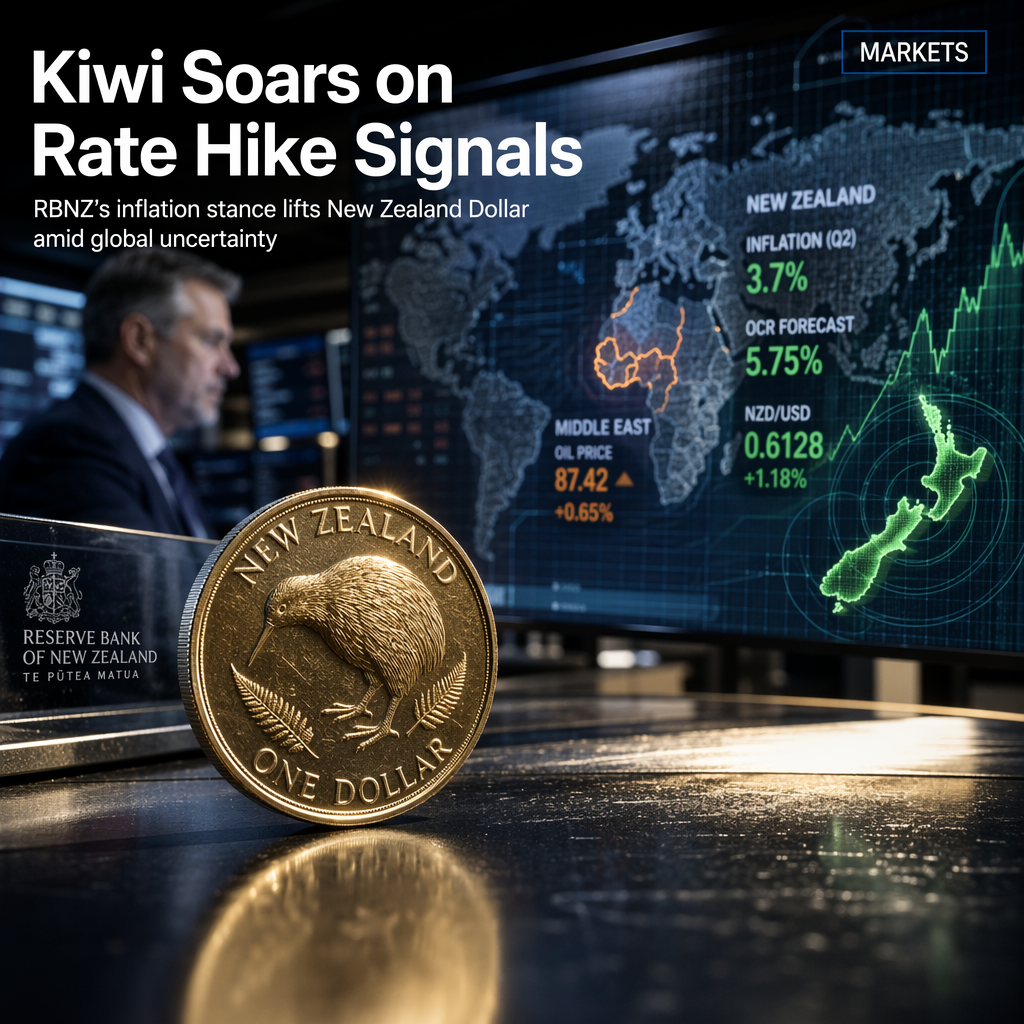
The New Zealand Dollar emerged as the top-performing G10 currency overnight, driven by a hawkish shift in market expectations regarding the Reserve Bank of New Zealand's (RBNZ) monetary policy stance [1]. This movement follows the RBNZ's recent rate hike, which was its first in the current cycle [1]. RBNZ Chief Economist Paul Conway highlighted that recent developments in the Middle East present upside risks to the central bank's September quarter inflation forecast [1]. Conway stated, 'if inflation pressures stemming from the Middle East conflict prove to be more persistent than expected, we will respond,' signaling the RBNZ's readiness to act if inflation remains elevated [1].
These comments have reinforced market expectations that the RBNZ could deliver a back-to-back rate hike at its next policy meeting in September [1]. The anticipation of further tightening has provided significant support to the New Zealand Dollar, reflecting increased investor confidence in the currency's outlook [1]. The latest unfavorable developments in the Middle East have also shifted market focus toward the potential for higher global inflation, further underpinning the Kiwi's strength [1].
No specific analyst forecasts or additional market reactions were provided beyond the MUFG commentary and the observed overnight performance of the New Zealand Dollar [1].
CONCLUSION
The New Zealand Dollar's strong performance is attributed to the RBNZ's hawkish signals and the market's anticipation of consecutive rate hikes in response to inflation risks. Ongoing geopolitical developments and the central bank's proactive stance are likely to keep the Kiwi supported in the near term.