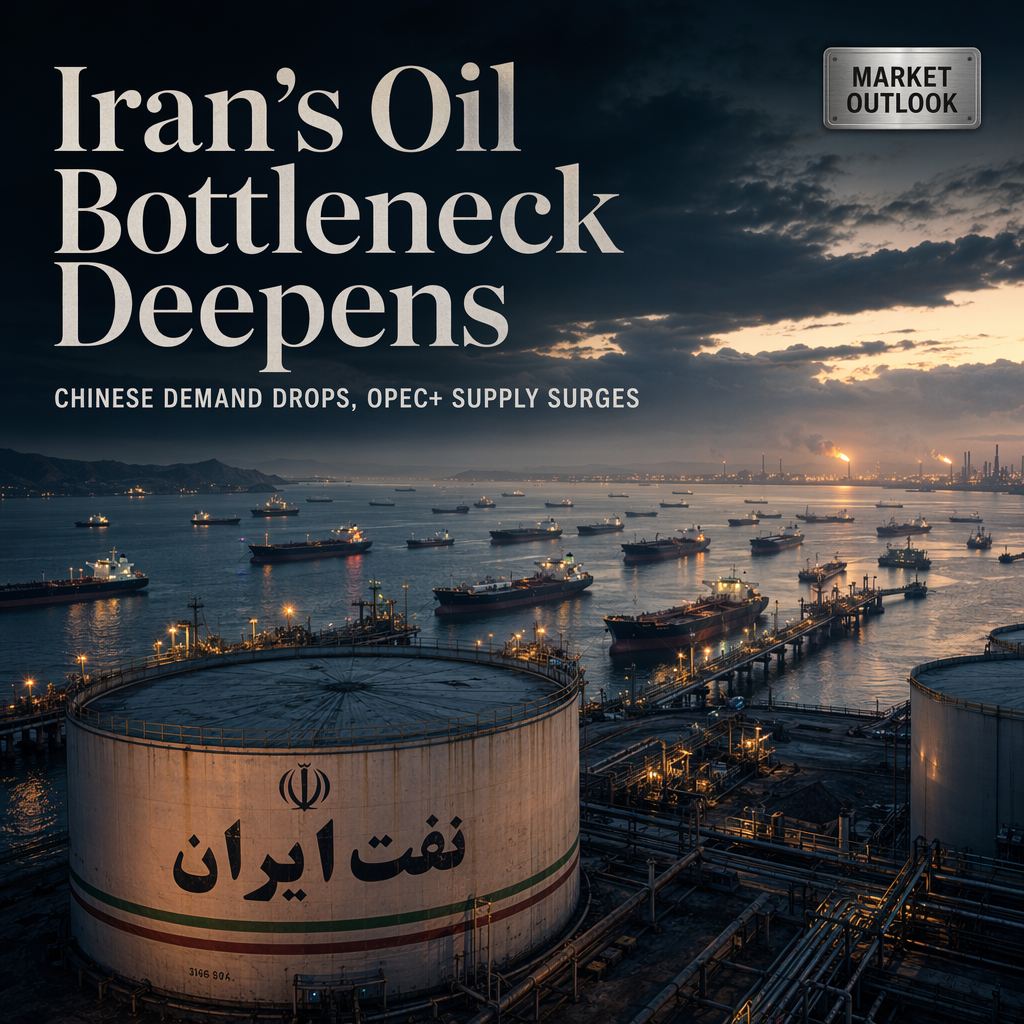
Iran is expected to encounter significant difficulties in clearing its oil inventories even if sanctions on its energy exports are lifted, due to changing dynamics in the global oil market and evolving strategies from key buyers such as China [1]. China, historically Iran's largest crude customer, has shown reduced interest in purchasing Iranian oil. Fereidun Fesharaki, chairman emeritus at FGE NexantECA, noted that 'the Chinese do not show any enthusiasm to buy much oil from anybody' [1]. Since the onset of the Iran war in late February, China's crude imports have declined, with May imports dropping 29% year-over-year to 7.82 million barrels per day, the lowest since February 2018, according to Wind Information [1]. Specifically, Chinese imports of Iranian crude more than halved in June to about 654,000 barrels per day compared to the previous month, as reported by Bloomberg [1].
This reduction in Chinese demand is partly attributed to the Middle East conflict, which has intensified China's focus on its green energy transition. The Stockholm-based Institute for Security and Development Policy highlighted that Chinese Premier Li Qiang has reiterated the need to expand non-fossil energy and accelerate energy system reforms [1].
On the supply side, OPEC+ has agreed to increase its output target by 188,000 barrels per day for August, as part of a broader plan to reverse previous output curbs. This adjustment means OPEC+ has added a total of 940,000 barrels per day to quotas since the war began, according to a United Overseas Bank report [1]. Tiago Lacerda, a market analyst at Axi, emphasized the 'real' supply surge, noting a sharp buildup at sea with Iran shipping more than 40 million barrels since the U.S. lifted its naval blockade, while Russian exports have also reached record levels [1].
Despite the increased supply, there remains a potential risk of disruptions to oil flows through the Strait of Hormuz. Iran has announced that the current 'free' passage in the Strait will only last for 60 days, after which tiered tolls will be imposed based on diplomatic relations, potentially restricting access for certain countries [1].
CONCLUSION
Iran's ability to clear its oil inventories is challenged by declining Chinese demand and increased global supply from OPEC+ and Russia. While the lifting of sanctions and naval blockades has allowed Iran to ship more oil, market conditions and geopolitical risks, particularly regarding the Strait of Hormuz, continue to pose uncertainties for the country's energy exports.