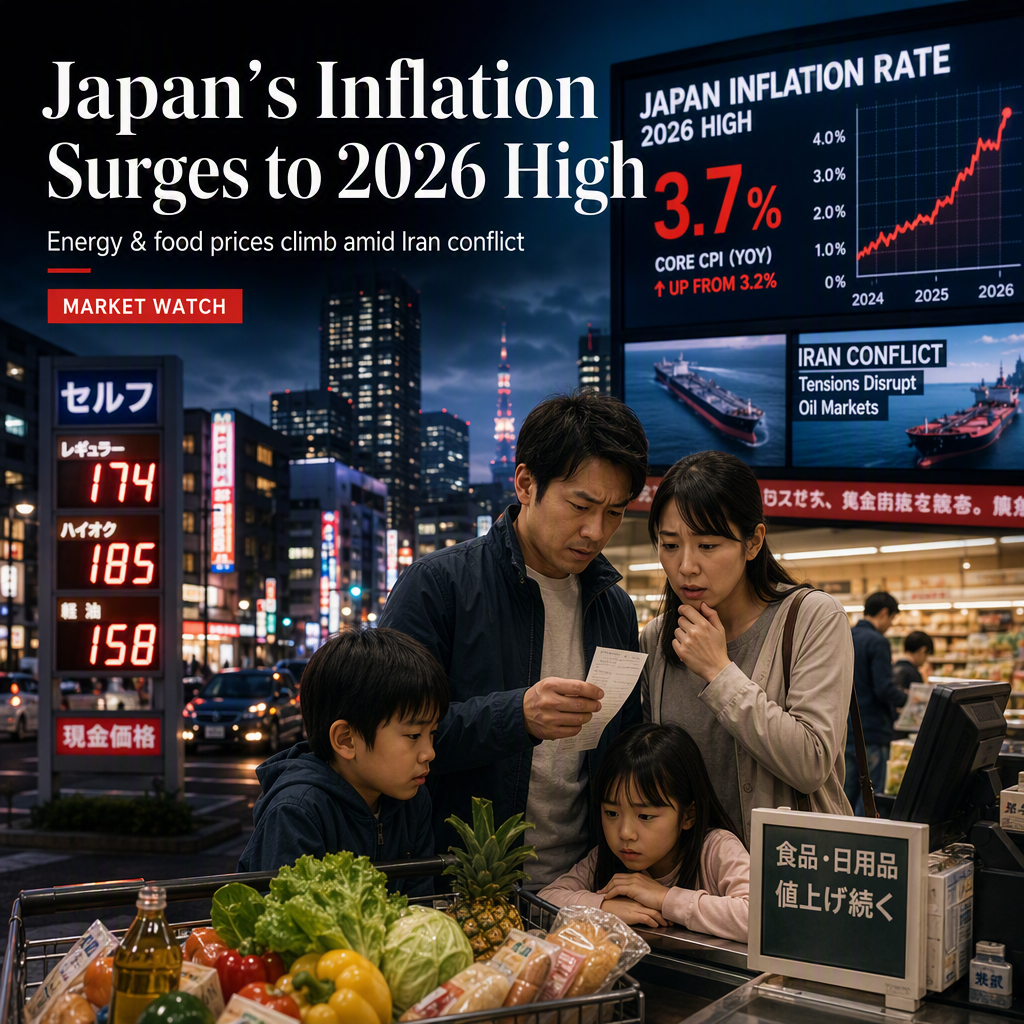
Japan's headline inflation rate reached 1.9% in July 2026, marking the highest level this year as energy prices surged due to the ongoing Iran war and rising oil costs in the Middle East [1]. Core inflation, which excludes fresh food but includes energy, was reported at 1.8%, aligning with market expectations [1]. Energy prices increased for the first time since November 2025, despite government subsidies, with wholesale inflation climbing to 7.2% in July. Electricity charges were identified as the largest contributor to this wholesale inflation spike [1].
Fresh food prices experienced a sharp rise, jumping 7% in July compared to a 3.9% increase in June [1]. Analysts attributed the relatively low consumer inflation to subsidies implemented by Prime Minister Sanae Takaichi's administration, aimed at shielding consumers from higher energy costs [1]. The "core-core" inflation rate, which excludes both fresh food and energy, also stood at 1.9% [1].
The Bank of Japan, in its outlook report last month, warned that core inflation is likely to accelerate to a level "clearly above" 2% from the second half of its 2026 fiscal year (September to March), citing factors such as wage increases, rising crude oil prices, and the recent depreciation of the yen. The central bank expects inflation to moderate toward 2% as oil prices decline [1].
Krishna Bhimavarapu, APAC economist at State Street Investment Management, stated that the rise in headline inflation strengthens the conviction that the Bank of Japan's next move is likely to be a rate hike in September. He also noted that food prices warrant closer attention due to their significant weight in Japan's CPI basket and highlighted potential El Nino-related disruptions to global agricultural supply [1].
CONCLUSION
Japan's inflation has reached its highest point in 2026, driven by rising energy and food prices amid geopolitical tensions. Analysts expect the Bank of Japan to consider a rate hike in September, with inflation likely to accelerate further before moderating. Market participants should monitor food price trends and potential supply disruptions closely.