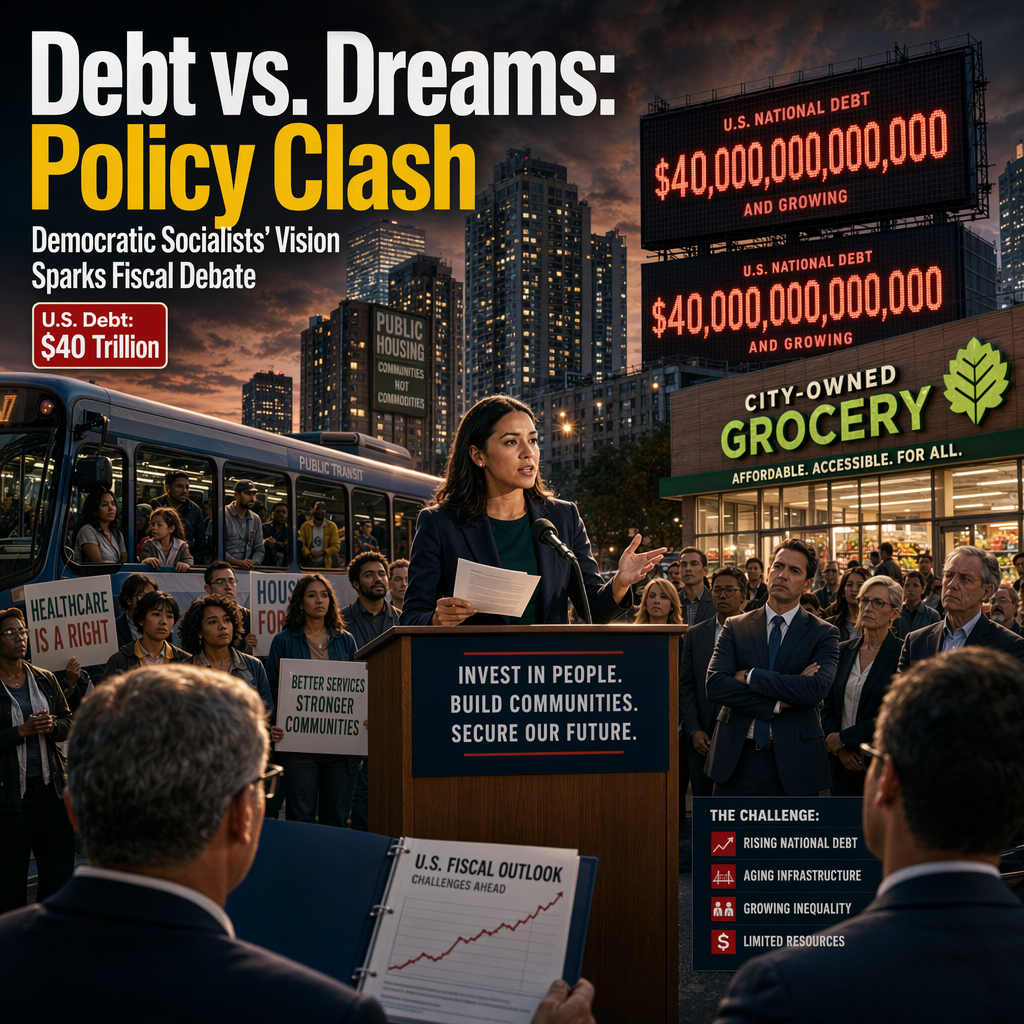
Democratic Socialist candidates have recently gained national attention with a range of policy proposals, including government-funded childcare, free public transit, city-owned grocery stores, tuition-free college, universal healthcare, rent freezes, expanded public housing, and significantly higher taxes on wealthy Americans [1]. These proposals are seen by supporters as measures to make life more affordable and address real societal problems, while critics argue they could increase long-term financial obligations, discourage business investment, and create budget pressures for future taxpayers [1].
The article highlights that the United States is already carrying nearly $40 trillion in national debt and continues to run trillion-dollar annual deficits [1]. Interest payments on this debt are now one of the fastest-growing expenses in the federal budget, with taxpayers spending hundreds of billions of dollars annually on interest alone, rather than on infrastructure, education, or defense [1]. This raises concerns about the sustainability of additional government spending proposed by Democratic Socialists.
Specific examples from New York City include proposals for city-owned grocery stores, free buses, expanded public housing, and government-funded childcare. In Seattle, policymakers have pursued higher business taxes, expanded tenant protections, and broader public spending to address housing affordability and inequality [1]. The article underscores the fundamental question of how these policies will be funded, given the existing fiscal challenges.
The author, a Certified Financial Planner, emphasizes that while these ideas may be compassionate and potentially solve real problems, good intentions alone do not balance budgets. The core worry expressed is that increasing government promises without sustainable funding could undermine America's prosperity, which has historically been driven by rewarding value creation and entrepreneurship [1].
CONCLUSION
The surge in Democratic Socialist policy proposals has sparked a debate over their financial viability, especially in light of the United States' mounting national debt and budget deficits. While supporters see these measures as solutions to affordability and inequality, critics warn of increased financial burdens and potential negative impacts on business investment. The market takeaway is cautious, with concerns about fiscal sustainability and future taxpayer obligations.