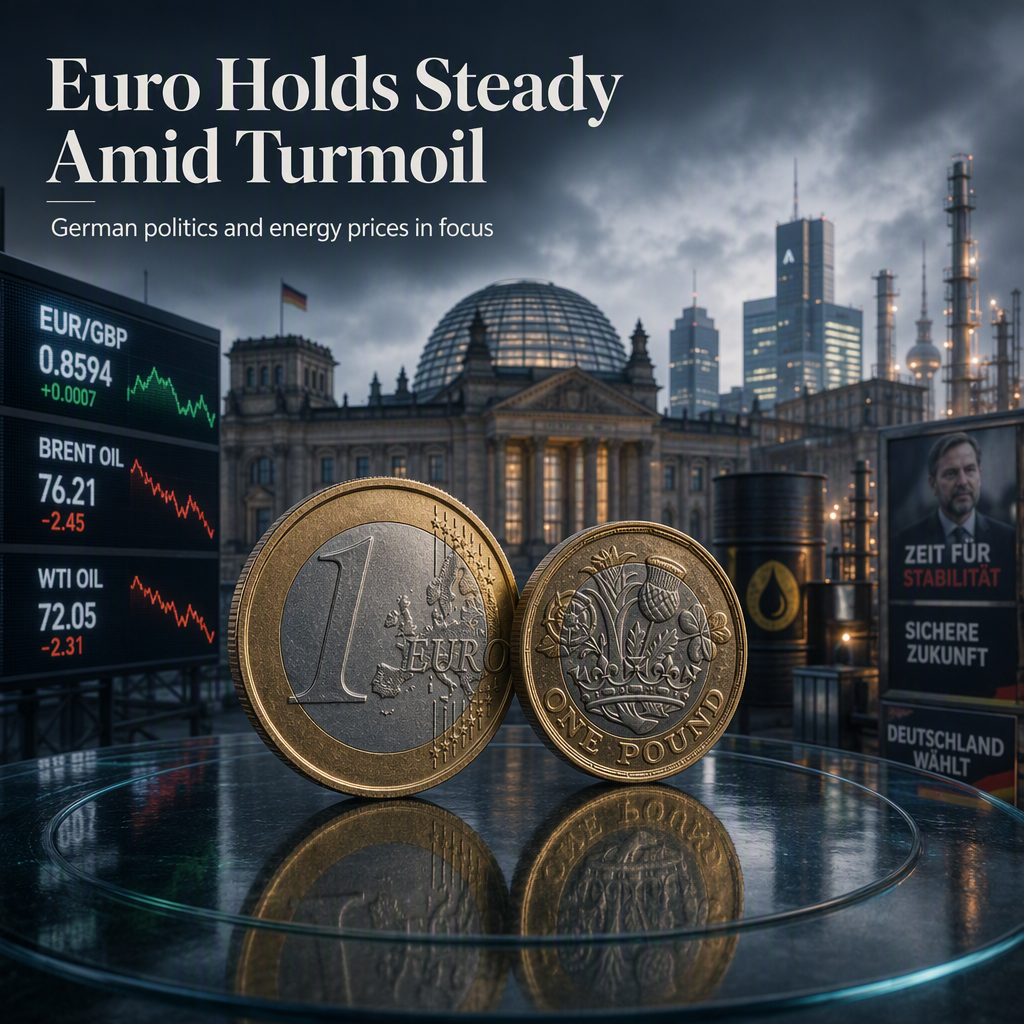
The Euro (EUR) remained stable against the British Pound (GBP) on Monday, trading around 0.8575 and showing little change on the day. This stability comes as investors weigh renewed political uncertainty in Germany against the positive impact of falling oil prices on the Eurozone economy [1]. German Chancellor Friedrich Merz’s party experienced a significant setback in regional elections over the weekend, which Merz described as a 'disaster.' Despite this, he reaffirmed his commitment to remain in office and continue with ongoing economic reforms. The political situation has contributed to investor caution towards the Euro at the start of the week [1].
On the economic front, Brent crude prices have dropped below $100, marking a decline of more than 8% from last week’s highs. Lower energy costs are generally seen as supportive for the Eurozone, which relies heavily on energy imports, as they help ease cost pressures on businesses and consumers [1].
Monetary policy outlooks for both the European Central Bank (ECB) and the Bank of England (BoE) are also in focus. ECB President Christine Lagarde emphasized that future interest-rate decisions will be data-dependent and made on a meeting-by-meeting basis. Meanwhile, BoE Governor Andrew Bailey indicated that further monetary tightening could still be necessary, which has helped the British Pound maintain some support [1].
Strategists at Rabobank now expect the ECB to raise the deposit facility rate by 25 basis points in December, to 2.75%, citing new energy price forecasts and the need to counter an additional energy shock impacting inflation. However, Rabobank stresses that this is not the beginning of a sustained tightening cycle, forecasting only one additional hike and noting that energy prices are expected to abate by March. They caution that persistent high energy prices could increase the risk of second-round inflation effects, but believe the ECB’s recent and upcoming actions are aimed at mitigating these risks [1].
CONCLUSION
The Euro's stability against the Pound reflects a balance between German political uncertainty and the positive effects of lower oil prices. While Rabobank anticipates a likely but temporary ECB rate hike in December, the overall outlook remains cautious, with both central banks closely monitoring economic data and inflation risks.