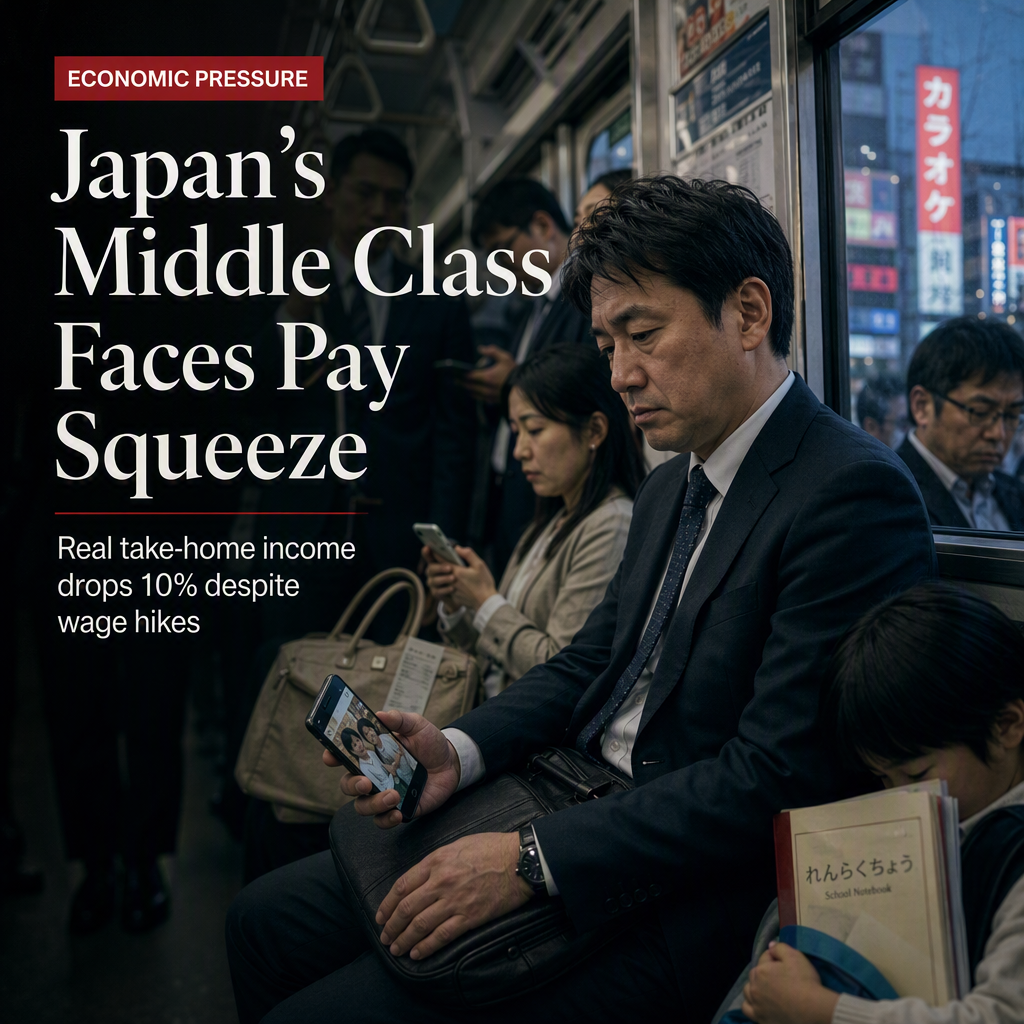
Japan's middle class has experienced a substantial decline in purchasing power, despite several years of nominal pay raises, according to recent analysis. Real take-home pay has fallen by 10% since the COVID pandemic, primarily due to higher taxes and increased social security payments, which have not been adjusted to account for inflation [1]. This erosion in disposable income has led households to cut back on non-essential spending, including education, hobbies, and entertainment, as they prioritize essentials [1].
A senior economist attributed the decline in real take-home pay to the failure of Japan's tax code to adjust brackets for inflation, noting that while headline wage growth has been positive, mandatory deductions have resulted in a net negative effect for most workers [1]. Chart analysis confirms a 10% decrease in real disposable income since the pandemic, with inflation-adjusted wage growth lagging behind rising living costs [1]. Technical indicators suggest continued pressure on the middle class, as neither wage increases nor current tax policies are expected to offset inflationary effects in the short term [1].
Market analysts believe this trend is likely to persist unless fiscal reforms are enacted, and financial advisors warn that without meaningful tax or social security adjustments, the middle class may see further declines in purchasing power. This could negatively impact consumer sentiment and Japan's broader economic growth prospects [1].
CONCLUSION
Japan's middle class is facing a significant squeeze, with real take-home pay down 10% since the pandemic due to unadjusted taxes and rising social security costs. Unless fiscal reforms are implemented, analysts expect continued pressure on disposable income and consumer sentiment, posing risks to economic growth.