
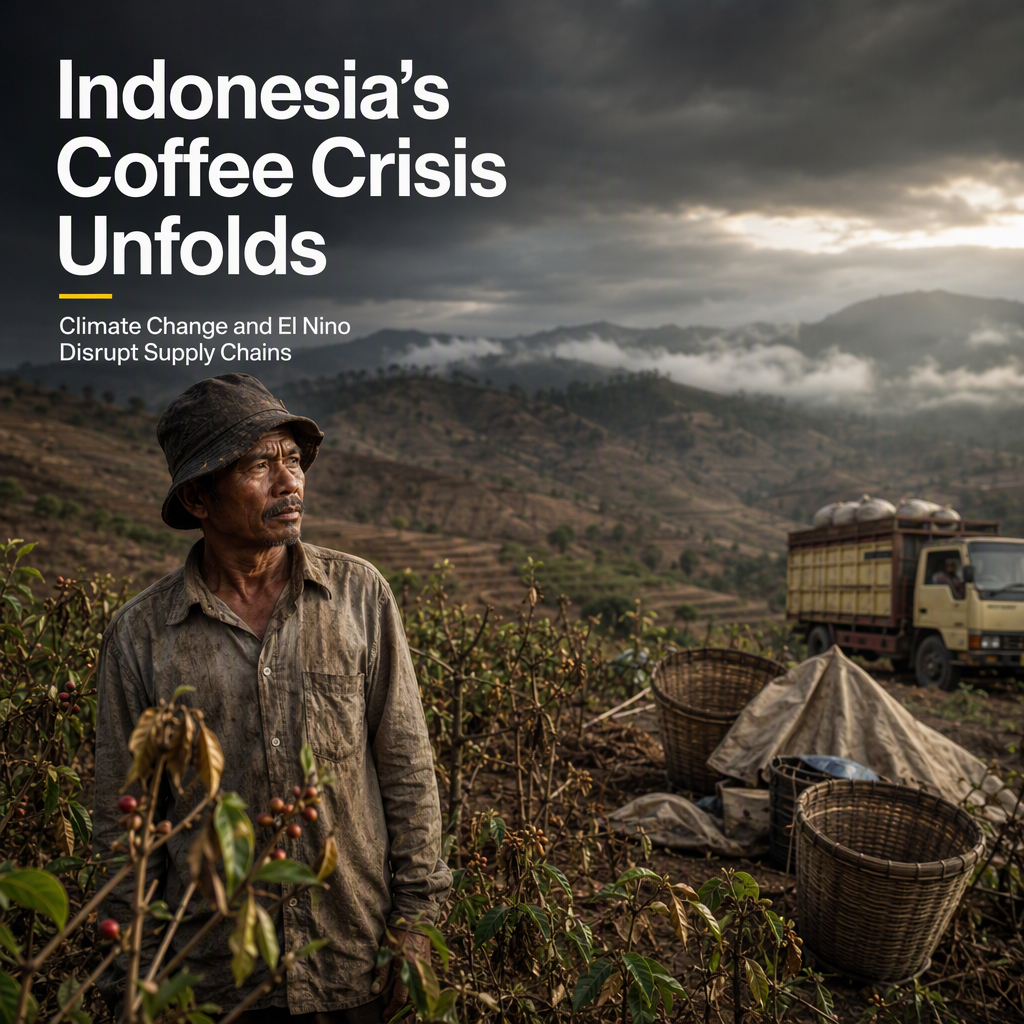
Indonesia, the world's fifth-largest coffee producer, is experiencing significant supply chain disruptions due to the effects of climate change, according to a report from Nikkei Asia [1]. Farmers in southern Sumatra are witnessing stunted growth and reduced yields on their coffee farms, a situation exacerbated by the ongoing El Nino phenomenon [1]. Exporters are struggling to maintain consistent shipments to both domestic and international markets, while cafes and consumers are facing higher prices and reduced availability of coffee [1].
Experts cited in the article warn that the El Nino event is intensifying these challenges, leading to further declines in production and increased volatility in the coming months [1]. The prevailing market sentiment is cautious, as stakeholders assess the impact of prolonged droughts and unpredictable rainfall patterns on Indonesia's coffee sector [1].
Market observers believe that unless significant adaptation measures are implemented, Indonesia's coffee industry will continue to face pressure from climate-related disruptions [1]. While no specific price levels or technical indicators are mentioned, the article notes that support levels for coffee prices may shift upward as supply tightens, and resistance could be tested if global demand remains robust [1]. Near-term volatility is expected in Indonesia's coffee market as a result of these ongoing challenges [1].
CONCLUSION
Indonesia's coffee sector is under considerable strain from climate change and El Nino, resulting in reduced yields, supply chain disruptions, and higher prices. Market sentiment is cautious, with expectations of continued volatility and upward pressure on prices unless adaptation measures are taken. The sustainability of Indonesia's coffee trade remains in question as stakeholders monitor the evolving situation.