
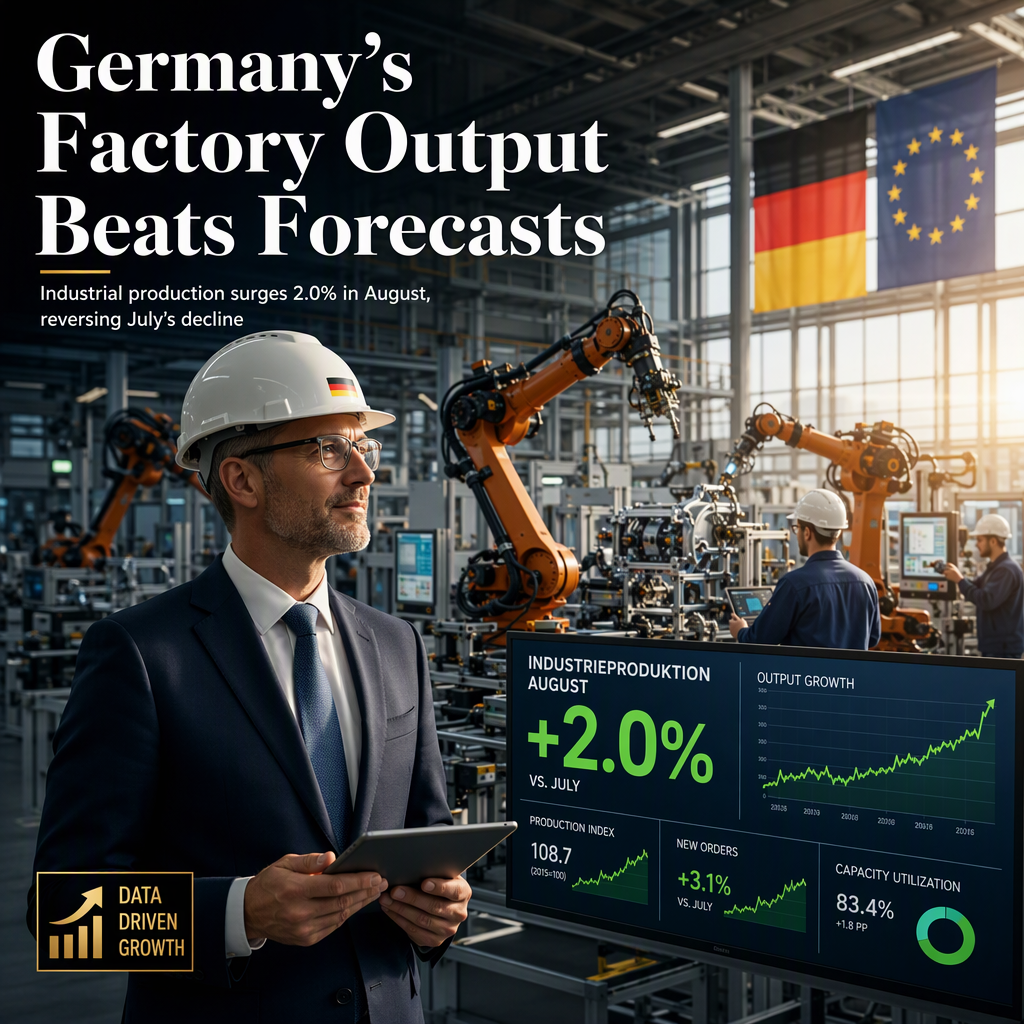
Germany's industrial production rose by 2.0% in August, according to data released by the federal statistics authority Destatis. This increase was adjusted for seasonal and calendar effects and marked a significant rebound from the 1.1% decline recorded in July. The August figure also surpassed market expectations, which had forecast a more modest 0.5% growth in industrial output [1].
As the largest economy in the Eurozone, Germany's stronger-than-expected industrial production is a key indicator for the region's economic health. The data suggests a potential improvement in the manufacturing sector, which is closely watched by investors and policymakers for signs of broader economic momentum [1].
While the article does not provide specific market reactions or analyst commentary, it highlights the importance of such economic data in influencing the value of the Euro. Stronger economic performance in Germany can attract foreign investment and may impact expectations regarding future European Central Bank (ECB) monetary policy decisions [1].
No forward-looking statements or explicit analyst opinions are included in the source article.
CONCLUSION
Germany's industrial production growth of 2.0% in August exceeded expectations and reversed the previous month's decline. This positive data point may bolster confidence in the Eurozone's economic outlook, though the article does not detail immediate market reactions or forecasts.