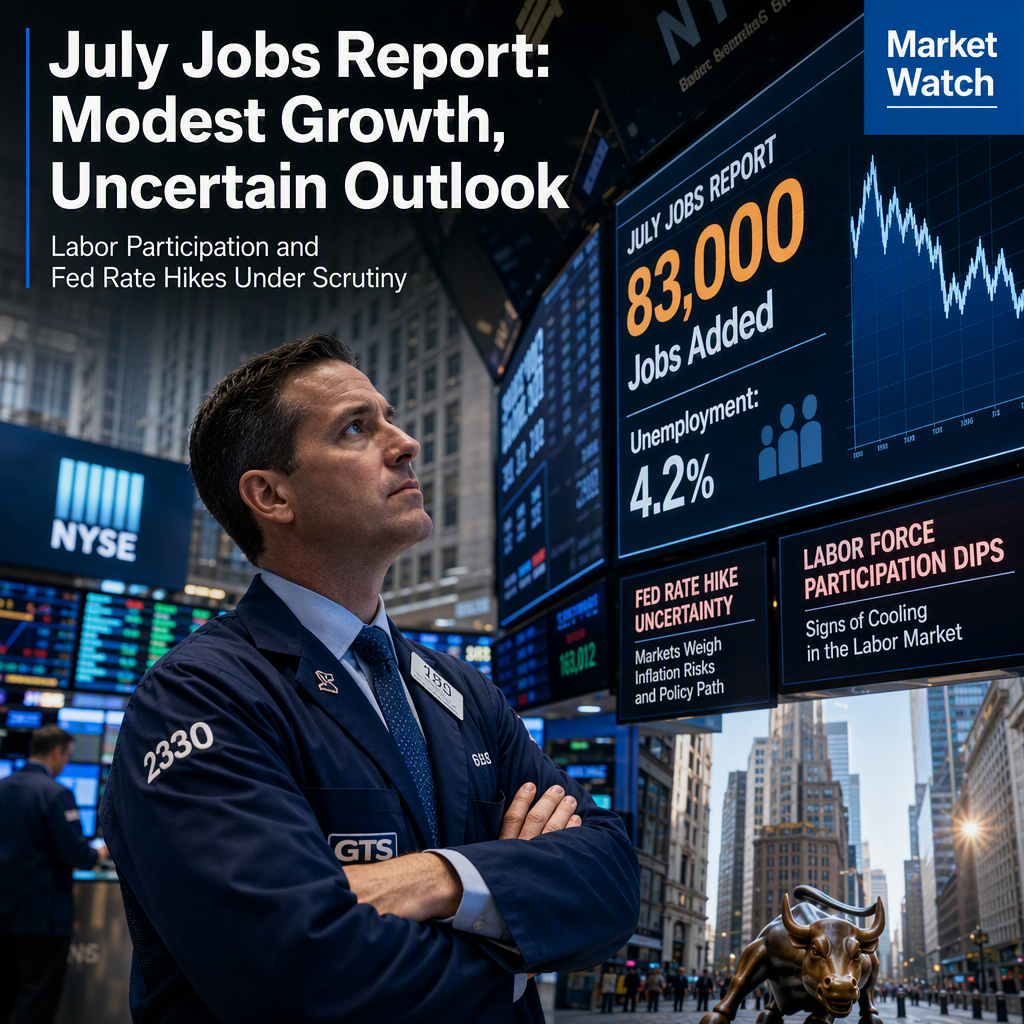
The Bureau of Labor Statistics is set to release its nonfarm payrolls report for July, with Wall Street anticipating a modest gain of 83,000 jobs and the unemployment rate expected to remain steady at 4.2% [1]. This follows a sluggish June, which saw only 57,000 jobs added [1]. Economists are closely monitoring not just the headline numbers, but also labor force participation, wage growth, and the composition of job gains for deeper insights into the labor market's health [1].
A key concern highlighted from the June report was a sharp decline in the labor force participation rate, which fell to 61.5%—its lowest since March 2021 and, outside the pandemic era, the lowest since June 1976 [1]. The prime age participation rate (workers aged 25-54) also saw its largest monthly drop outside of April 2020, raising questions about whether these declines are statistical anomalies or signs of more serious labor market weakness [1].
Federal Reserve officials remain focused on inflation, with some expressing willingness to support interest rate hikes if inflation does not improve [1]. Fed Governor Lisa Cook noted that the current 'low-hire, low-fire' equilibrium—where both hiring and layoffs are subdued—may particularly impact new entrants to the workforce and could restrain worker sentiment [1]. Average hourly earnings are projected to rise by 0.3% in July, translating to a 3.5% annual increase [1].
Economists and policymakers are watching these labor market indicators closely, as they will inform the Federal Reserve's next steps on monetary policy. The outcome of the July jobs report could influence the timing and likelihood of future rate hikes, especially if wage growth and participation rates show unexpected trends [1].
CONCLUSION
The July jobs report is expected to show only modest improvement, with key indicators like labor force participation and wage growth under scrutiny. The Federal Reserve's focus on inflation and potential rate hikes adds to market uncertainty, making the upcoming data release a pivotal moment for economic outlook.