
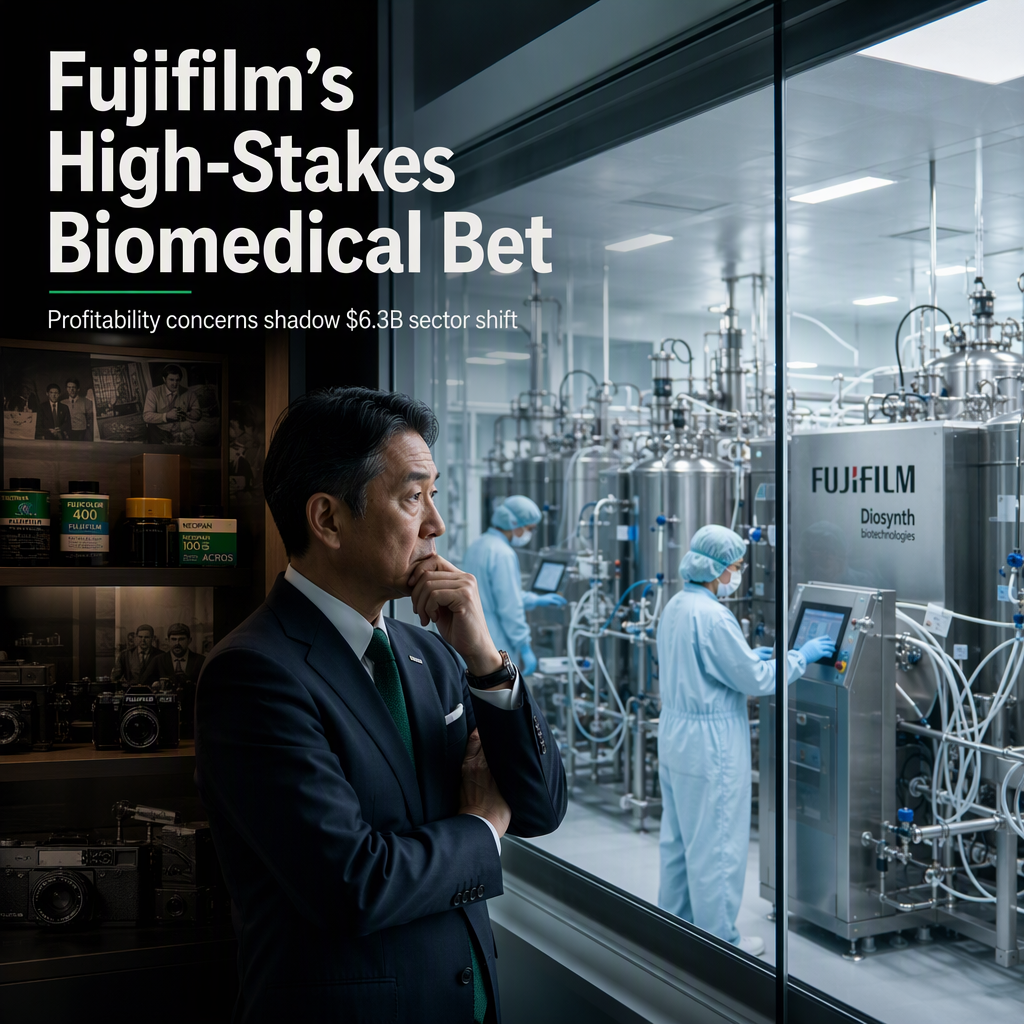
Fujifilm Holdings is under scrutiny as it pursues a major transformation into the biomedical sector, investing 1 trillion yen ($6.31 billion) in its bio-CDMO (contract development and manufacturing organization) business [1]. The company has shifted focus from its traditional photography and electronics operations to become a significant player in biomedical contract manufacturing, acquiring overseas facilities and making substantial capital expenditures [1].
Despite these aggressive expansion efforts, Fujifilm is experiencing declining profitability, raising concerns among analysts and investors about the viability of its biomedical strategy [1]. The global CDMO market is projected to grow, but the sector is facing increased competition and downward price pressures, resulting in lower contract prices and squeezed profit margins for all participants, including Fujifilm [1].
Market analysts describe Fujifilm's spending and expansion as a double-edged sword: while these moves have elevated the company's profile in the biomedical field, they have also led to thinner margins and a slower-than-expected path to profitability [1]. Some analysts warn that unless Fujifilm can distinguish itself through technological innovation or operational efficiency, its substantial investment in biomedicine could negatively impact overall financial performance in the coming years [1].
A market strategist commented, "Fujifilm's transformation is bold, but the biomedical market is unforgiving when it comes to execution and profitability" [1].
CONCLUSION
Fujifilm's ambitious push into the biomedical sector has positioned it as a major contender but has also exposed the company to intense competition and profitability challenges. Analysts caution that without clear differentiation, the company's significant investment may weigh on future financial results. The market remains watchful as Fujifilm navigates these headwinds.