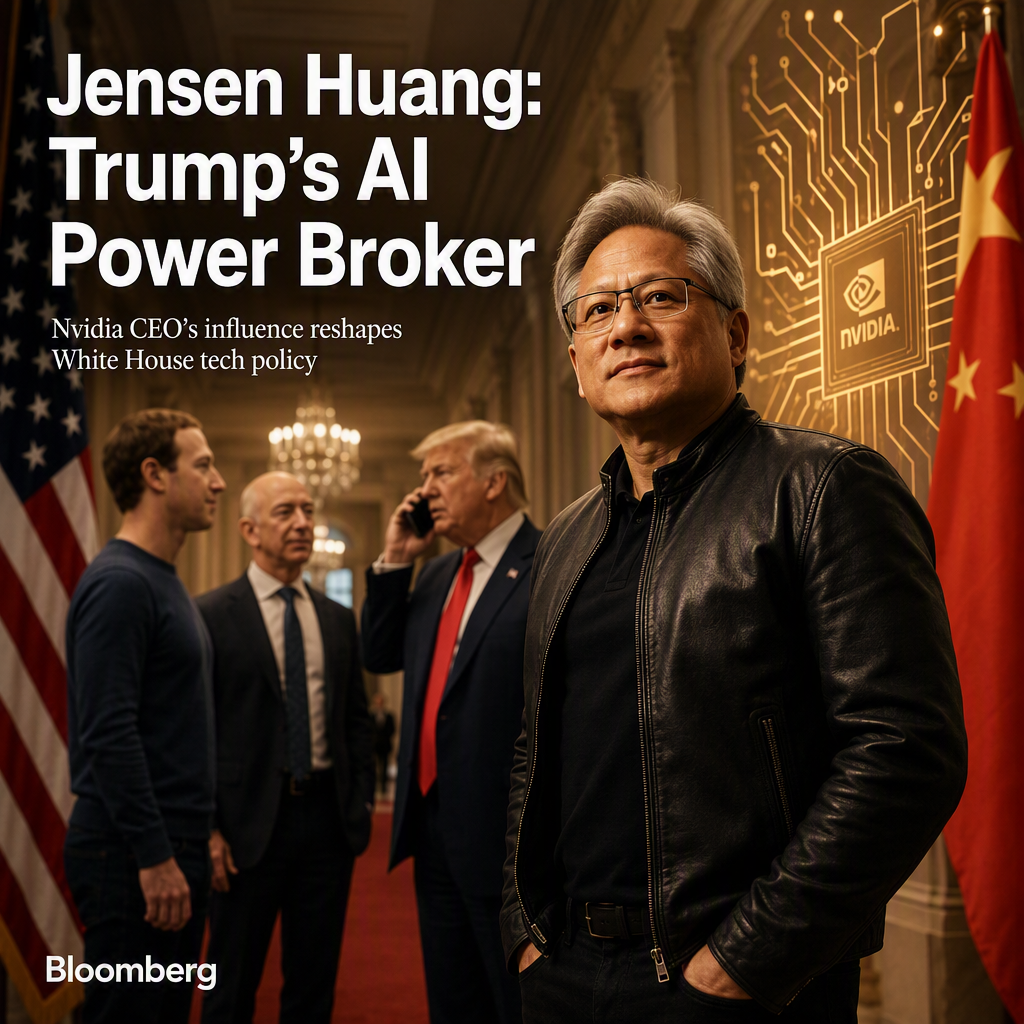
Nvidia CEO Jensen Huang has become a central figure in the ongoing debate over artificial intelligence (AI) regulation in Washington, emerging as President Donald Trump's top ally on AI safety issues. As the leader of Nvidia, now the world's most valuable company, Huang's influence has grown significantly, with Trump increasingly adopting Huang's policy stances on AI. This week, during the All-In Summit in Los Angeles, Trump called Huang on speakerphone, reiterating his view that concerns about AI and data centers are a 'hoax' and stating, 'the robots are not going to be taking over the world' [1].
While other tech leaders such as Meta CEO Mark Zuckerberg and Amazon Chairman Jeff Bezos have also engaged with Trump during his second term, experts cited by CNBC emphasize that Huang wields outsized influence in the White House. Huang is scheduled to attend a high-profile state dinner for Chinese President Xi Jinping next week, highlighting his prominent role in U.S.-China tech relations [1].
Nvidia's pivotal role in the AI boom is underscored by its financial performance, with revenue surging to $215 billion in the latest fiscal year, up from $17 billion in 2021. The company supplies graphics processing units to leading AI firms like OpenAI and Anthropic, which rely on Nvidia's technology to train their models and handle large workloads [1].
Huang is advocating for the U.S. to accelerate AI development, even as some of Nvidia's major customers, including OpenAI and Anthropic, are urging governments to implement stricter regulations due to growing concerns about AI's potential risks. Despite his close relationship with the administration, Nvidia declined to comment on the matter, and White House representatives did not respond to requests for comment [1].
CONCLUSION
Jensen Huang's growing influence in the Trump administration marks a significant shift in the AI policy landscape, with Nvidia positioned at the center of both technological advancement and regulatory debate. The company's surging revenues and Huang's close ties to the White House suggest continued momentum for U.S. AI leadership, though calls for regulation from industry players indicate ongoing tensions in the sector.