
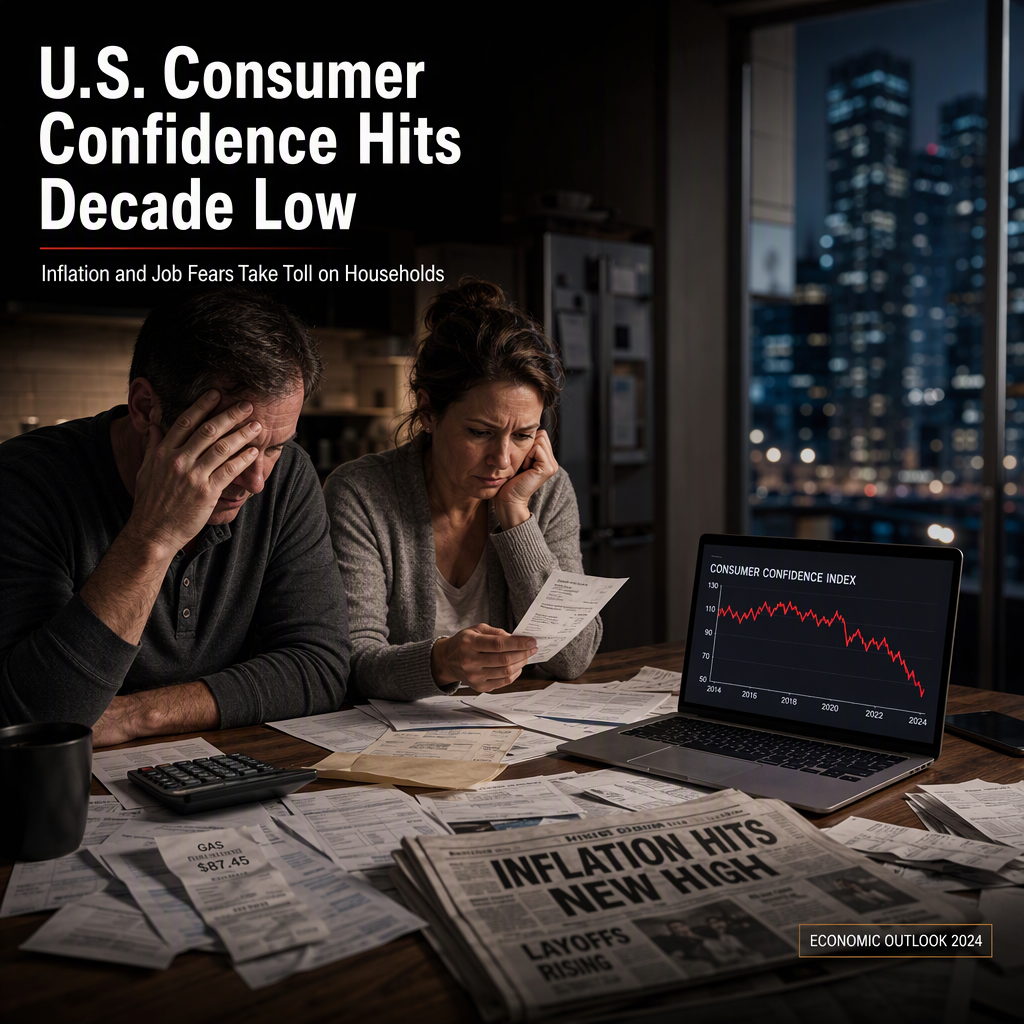
The Conference Board's Consumer Confidence Index dropped sharply in September, falling to 81.9—a decline of 6.7 points and well below the Dow Jones consensus forecast of 89—marking the lowest level since 2014 as consumers expressed heightened concerns over inflation and the labor market [1]. For the first time in the four-year history of the survey question, more respondents reported their personal finances as bad rather than good, highlighting the growing financial strain felt by households [1].
Dana Peterson, the Conference Board's chief economist, noted that consumer appraisals of current business conditions turned negative for the first time since September 2024, with pessimistic write-in responses focusing on the high cost of goods and services, especially oil and gas, which surged in September [1]. The Present Situation Index fell 7.9 points to 109.3, while the Expectations Index, which measures the six-month outlook, slipped 5.9 points to 63.6 [1].
Labor market sentiment also deteriorated, as the differential between those saying jobs are "plentiful" versus "hard to get" narrowed by 2.5 percentage points to just 1.7%, signaling increased uncertainty about employment prospects [1]. Inflation expectations rose, with respondents on average anticipating a 6.1% inflation rate—up 0.3 percentage points from August—and the median expectation also increasing to 5.1% [1].
The report aligns with other surveys, such as the University of Michigan's, which showed a 7% drop in consumer sentiment in September to its second-lowest reading on record [1]. In related economic data, job openings in August declined to 7.08 million, down 256,000 from the previous month and below Wall Street's expectation of 7.2 million, particularly due to sharp declines in professional, business services, and health care jobs. Hires edged higher, quits were little changed, and layoffs fell slightly [1].
The Conference Board attributed the negative sentiment and rising inflation expectations in part to ongoing uncertainty over the Iran war, which has contributed to surging Treasury yields and mortgage rates in financial markets [1].
CONCLUSION
Consumer confidence in the U.S. has fallen to its lowest point in over a decade, driven by escalating concerns about inflation and job security. The sharp decline in sentiment, coupled with lower job openings and rising inflation expectations, signals significant headwinds for the economy and could impact market performance in the near term.