
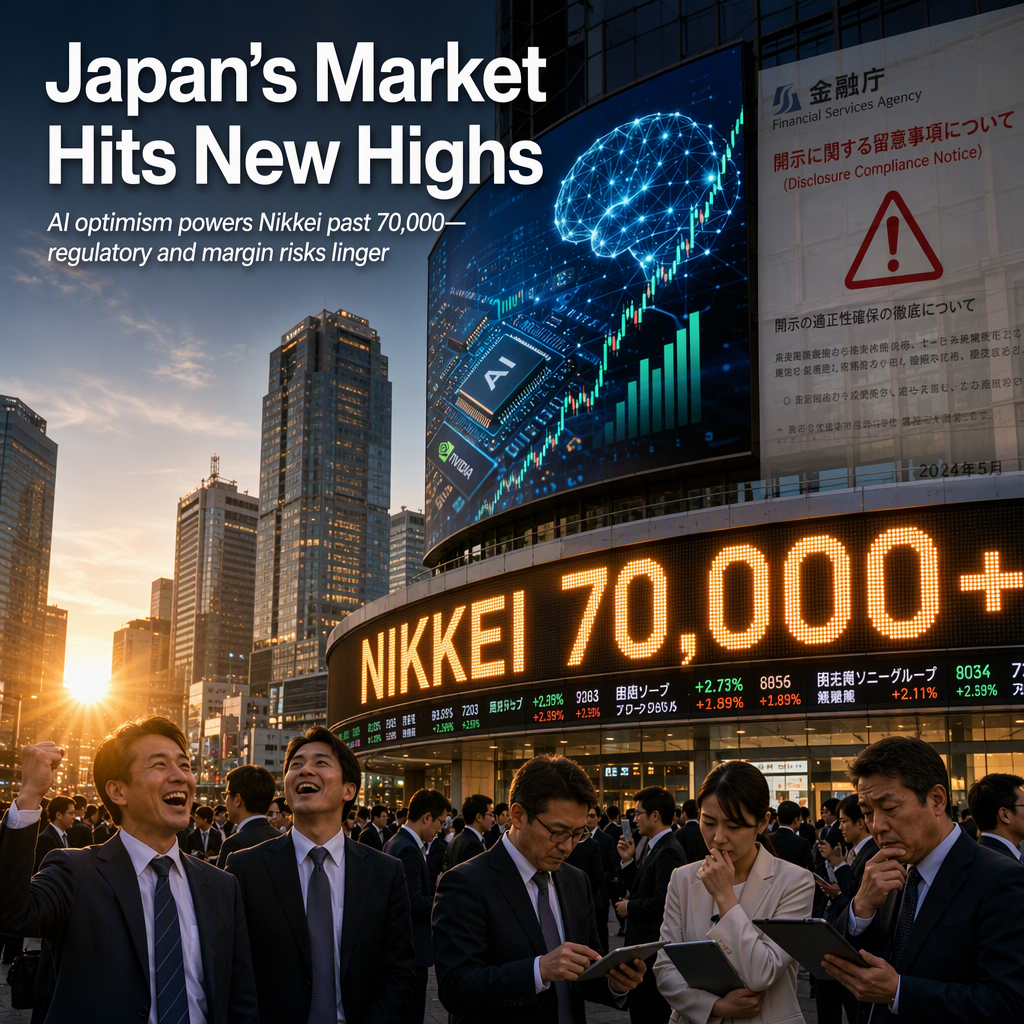
Japanese equities experienced a significant rally, with the Nikkei Stock Average briefly surpassing the 70,000 mark during intraday trading for the first time in three months, driven by renewed optimism in artificial intelligence-related stocks and expectations of continued accommodative monetary policy globally [3]. The rally was fueled by weaker-than-expected U.S. labor data, which led investors to scale back expectations for a Federal Reserve rate hike, further boosting sentiment for growth and technology shares, particularly chipmakers [3]. Market analysts identified support levels near 69,000 and noted that sustained closes above 70,000 could trigger additional momentum buying, with resistance at the previous all-time high [3].
However, the market's positive momentum is tempered by underlying structural and regulatory concerns. The U.S. hedge fund Situational Awareness was found to have increased its stake in Japanese electronic components maker Taiyo Yuden beyond 5% by June 29 but failed to report the holding on time, filing more than a month late [1]. This incident is one of approximately 1,500 annual shareholder reporting violations in Japan, highlighting gaps in the country's disclosure rules for equity holdings [1]. The late filing has raised concerns about transparency and market integrity, prompting calls from regulators and investors for reforms such as tighter disclosure timelines, automated reporting systems, and stricter penalties [1]. These measures are seen as essential to maintaining confidence in the Japanese market, especially as foreign ownership reaches new highs amid the AI-driven rally [1].
Meanwhile, retail investors who bought shares of chipmaker Kioxia Holdings on margin during the recent boom are facing mounting pressure as the stock loses momentum [2]. Many of these investors will need to close out their positions by year-end, and the sharp decline in Kioxia's share price has resulted in significant paper losses [2]. The looming sell date for margin investors raises the risk of forced selling, which could further impact share prices and overall market sentiment [2]. Technical analysts are closely monitoring support levels for Kioxia and related equities, as the recent loss of momentum clouds the near-term outlook [2].
Market participants are keeping a close watch on upcoming U.S. earnings reports and central bank commentary for further direction, while Tokyo-based strategists emphasize that stable global yields and sustained AI enthusiasm could propel the Nikkei to new highs in the coming weeks [3].
CONCLUSION
Japan's stock market is experiencing strong upward momentum driven by AI optimism and favorable global monetary conditions, but faces challenges from regulatory gaps in shareholding disclosures and risks associated with margin trading in high-flying stocks like Kioxia. The interplay of these factors will be crucial for investors as they navigate both the opportunities and vulnerabilities in the Japanese equity market.