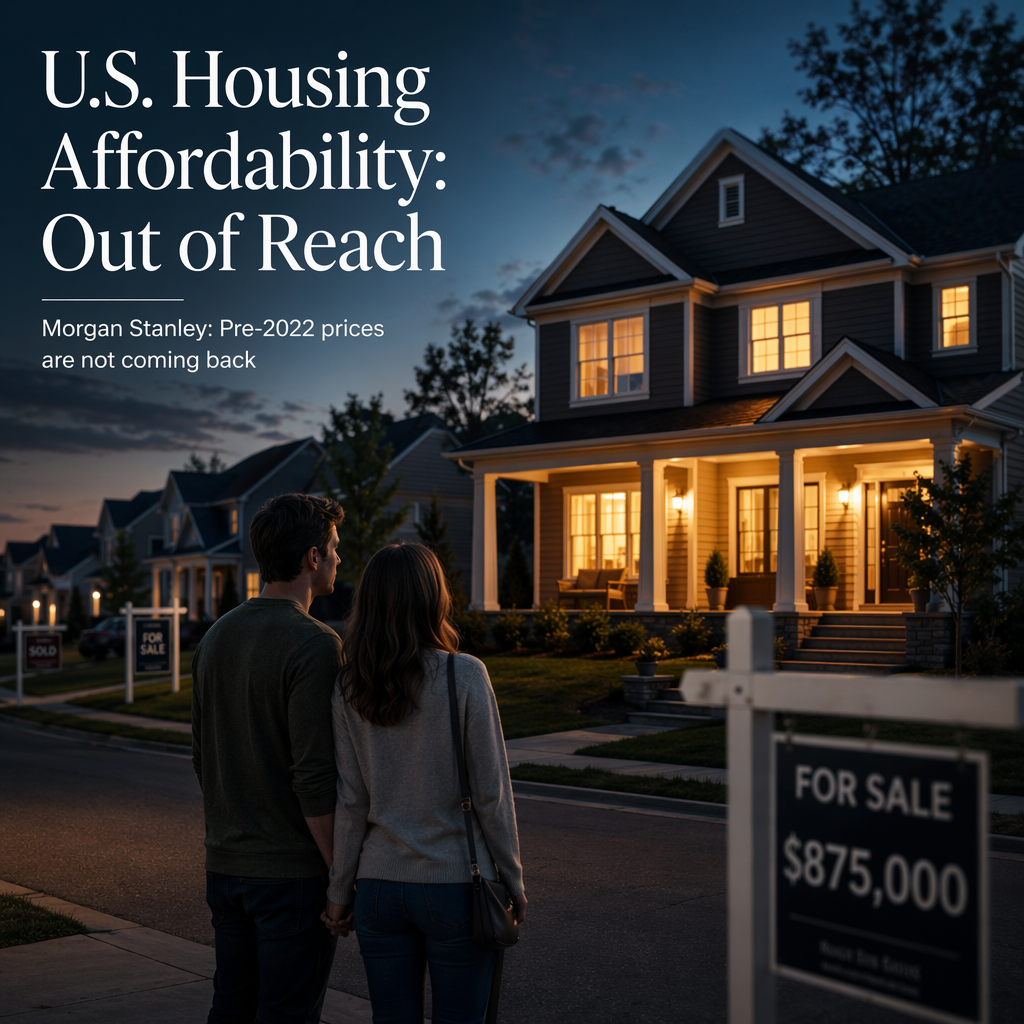
A new report from Morgan Stanley, highlighted by senior economist and strategist Sarah Wolfe, indicates that U.S. housing affordability is unlikely to return to the more favorable levels seen before 2022. Wolfe stated that while there may be modest improvements over time, the market is adjusting to a higher-cost, tighter-supply environment, making significant gains in affordability improbable for would-be homebuyers [1].
The report notes that a brief period of optimism occurred in February when mortgage rates dipped below 6%, but this was short-lived as rates quickly returned to around 6.5% and have remained above 6% since then. This rate sensitivity has had an outsized effect on affordability, which remains historically strained. Morgan Stanley estimates that the buyer of a median-priced home now faces a monthly payment of about $2,000, roughly double the carrying cost from five years ago [1].
Housing turnover has slowed significantly amid higher mortgage rates. Wolfe points out that about 70% of existing homeowners have mortgage rates below 5%, and half have rates below 4%, making it too costly for many to move and take on new mortgages at current higher rates. This has resulted in a collapse in housing turnover to the lowest level in roughly 40 years [1].
Due to the lack of turnover in the market for existing homes, new construction has become increasingly important for supply. However, the pace of price appreciation has slowed in some areas, and scarcity persists in others, with supply not improving fast enough to meaningfully lower the barrier to entry. The affordability challenges have also changed the characteristics of first-time homebuyers, with the average credit score rising to 734 from 718 in 2019, and buyers carrying larger mortgage balances [1].
CONCLUSION
Morgan Stanley's analysis suggests that U.S. housing affordability will remain tight, with little chance of returning to pre-2022 levels. Persistently high mortgage rates and low housing turnover are expected to continue straining affordability, impacting both existing and first-time homebuyers.