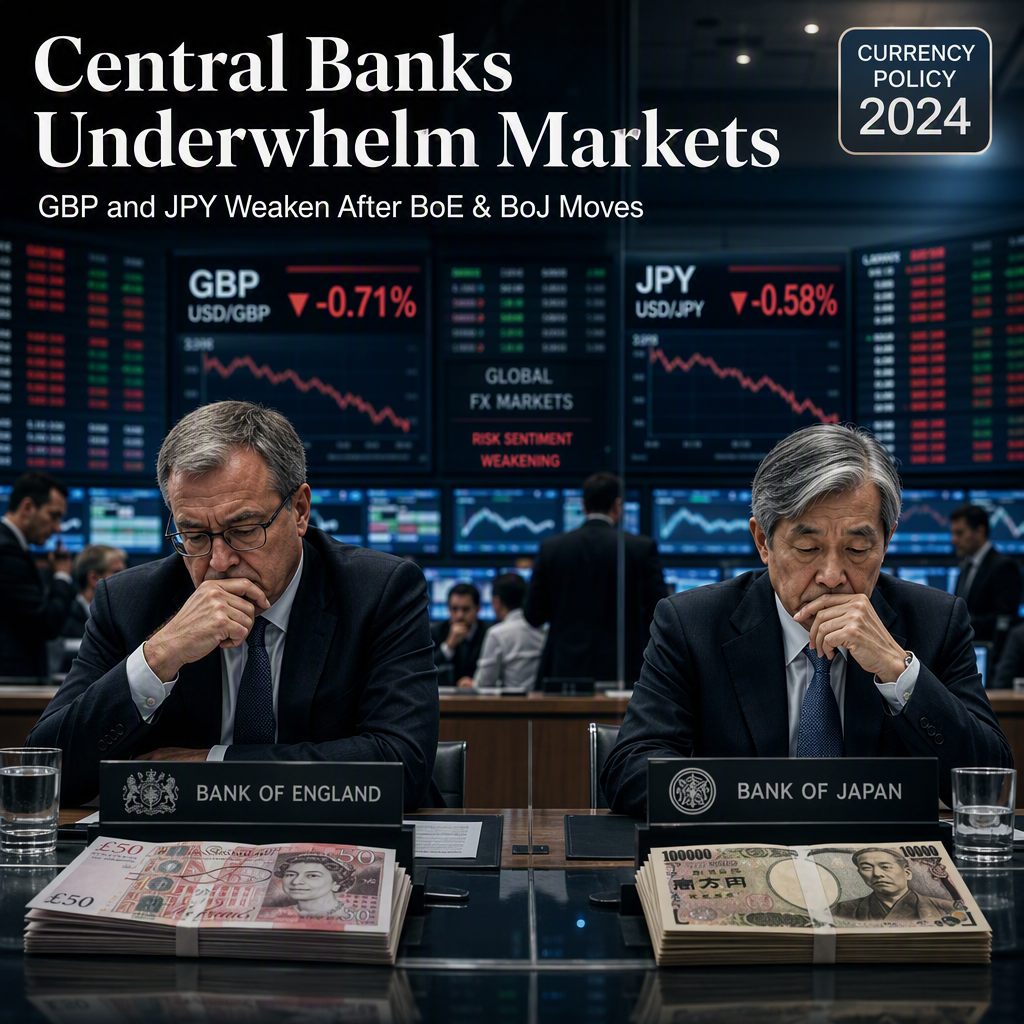
The Bank of England (BoE) kept its Bank Rate unchanged at 3.75% with a 6-3 vote, as Pill, Greene, and Mann supported a hike, but the majority opted for a pause. This decision was broadly in line with expectations, yet hawkish market pricing ahead of the meeting led to disappointment and triggered weakness in the British Pound (GBP) and lower rates. The BoE's quantitative tightening plans matched previous guidance, with remaining stocks set to be unwound at an annual average pace of GBP 46bn by the end of 2034. The Monetary Policy Committee (MPC) acknowledged increased upside risks to inflation since July but emphasized that uncertainty remains high. Danske Bank maintains its forecast for no change in the Bank Rate this year and a rate cut in June, though the risk of a hike in Q4 is rising [1].
Similarly, the Bank of Japan (BoJ) implemented a 25 basis point hike to 1.25%, which fell short of hawkish market expectations for nearly 100bps of tightening over the coming twelve months. This underwhelming move triggered an initial sell-off in the Japanese Yen (JPY), as market participants had anticipated more aggressive action. The BoJ altered its language regarding real interest rates from 'negative' to 'low,' reflecting the notable increase in front-end rates, with the 2-year JGB yield rising 35bps since the last meeting. Despite this, the BoJ maintained its guidance for accommodative financial conditions and signaled further gradual tightening, stating that the 'stage for policy conduct has changed,' but clarified that there is no particular pace in mind for future hikes. MUFG suggests that if US dollar sentiment remains favorable, USD/JPY could grind higher in the short term [2].
Both central banks' decisions failed to meet hawkish market expectations, resulting in currency weakness for GBP and JPY. The BoE and BoJ acknowledged inflation risks and signaled ongoing uncertainty and gradual policy adjustments, but neither committed to aggressive tightening. Analysts from Danske Bank and MUFG highlight the potential for further rate moves later in the year, but caution that the pace and timing remain uncertain [1][2].
CONCLUSION
The BoE and BoJ both disappointed hawkish market expectations, leading to weakness in the British Pound and Japanese Yen. While both central banks signaled ongoing inflation risks and gradual policy adjustments, the lack of aggressive tightening has increased uncertainty in currency markets. Analysts expect further developments later in the year, but the timing and magnitude of future moves remain unclear.