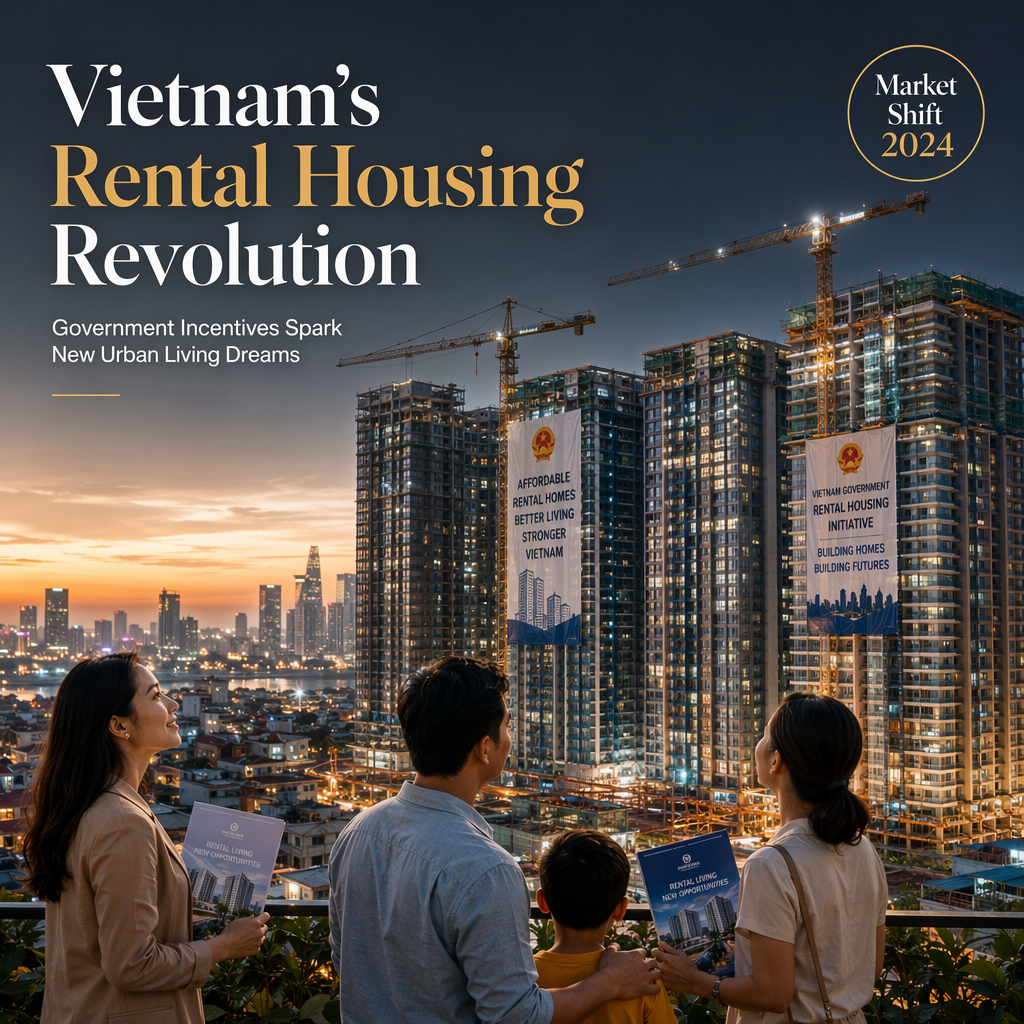
Vietnam is actively promoting rental housing as home ownership becomes increasingly unattainable for many urban residents due to rapidly rising property prices in major cities such as Ho Chi Minh City and Hanoi [1]. The government has introduced pilot projects and incentives to make renting more attractive and accessible, targeting workers and low-income families with subsidized rental housing developments and offering tax incentives to developers who build and manage rental properties [1].
Market analysts report that apartment prices in Ho Chi Minh City and Hanoi have surged over 20% in the past two years, with entry-level units now often priced above 2 billion dong (approximately $80,000 USD), pushing home ownership out of reach for many, especially young professionals and migrant workers [1]. Technical analysis indicates that property prices have reached historic highs, with no signs of a near-term correction. The limited supply of affordable housing and rental units has led to increased competition and steady rises in rental rates, particularly in key business districts [1].
Government officials acknowledge the evolving 'Vietnamese Dream,' noting a shift in sentiment toward renting as affordability challenges mount [1]. Market experts advise investors to focus on rental property developments, which are expected to see continued growth and stable returns amid shifting consumer preferences and strong government support [1]. Analysts anticipate that new supply from government-backed projects will gradually ease price pressures, but rental demand will remain robust [1].
Overall, Vietnam's push for rental housing represents a significant transformation in the country's real estate landscape, with ownership losing its traditional appeal due to affordability concerns and government intervention. The market remains bullish on rental housing, supported by demographic trends and policy initiatives [1].
CONCLUSION
Vietnam's real estate market is undergoing a major shift as government-backed rental housing initiatives respond to surging property prices and affordability challenges. Analysts and officials expect rental demand to remain strong, making rental property developments a resilient investment opportunity. The market outlook is positive, with continued government support and demographic trends sustaining high demand for rental housing.