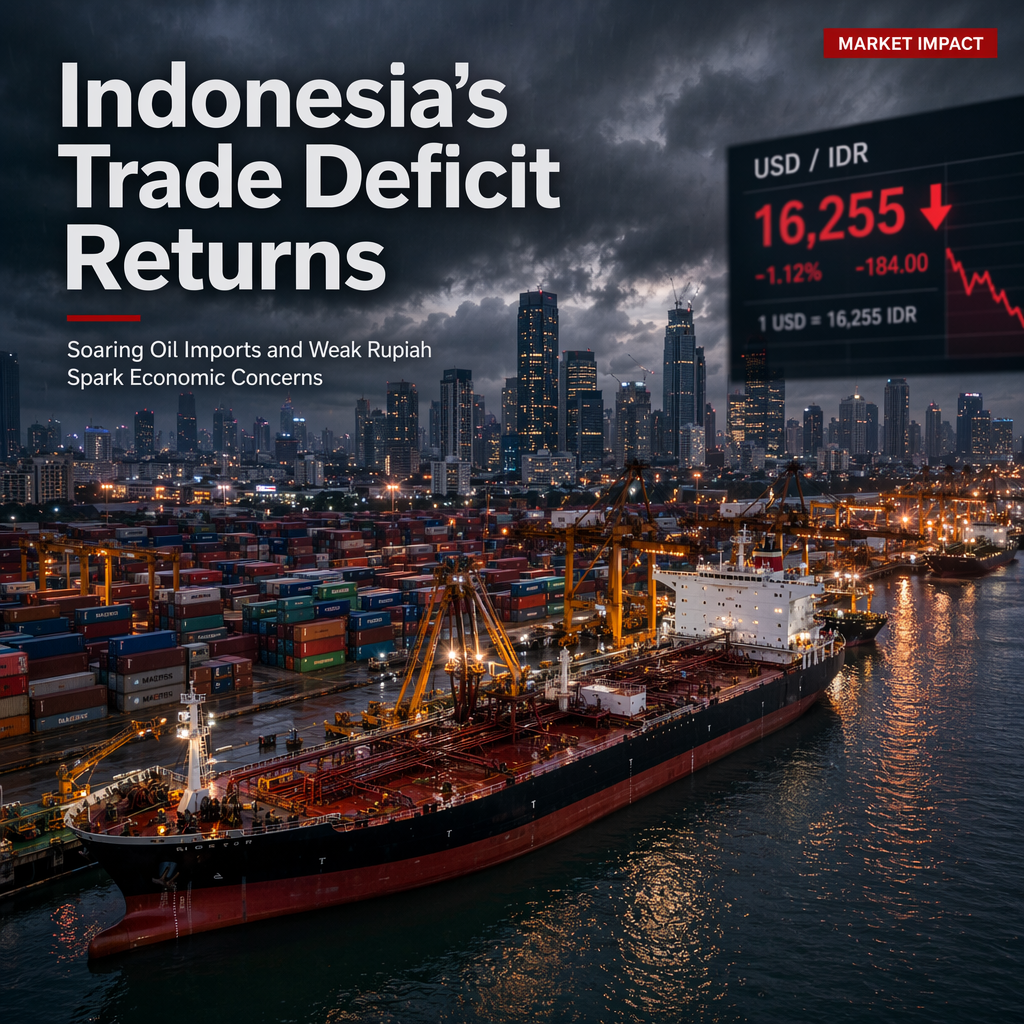
Indonesia experienced its first trade deficit in six years in May, driven by a surge in imports, particularly oil, whose prices have risen sharply due to the Iran war and a weakening rupiah [1]. As Southeast Asia's largest economy, Indonesia is heavily dependent on imported oil, and the increased energy import bill has significantly impacted the country's trade balance and economic outlook [1]. The weakening rupiah has further exacerbated import costs, especially for energy commodities [1].
Exports of key commodities such as palm oil, coal, and rubber declined both in demand and pricing, contributing to the negative trade balance for the month [1]. This combination of higher import costs and lower export revenues has raised concerns among market watchers regarding the sustainability of Indonesia's current account and the potential effects on its currency and broader economy [1].
Analysts have warned that unless global energy prices stabilize and the rupiah strengthens, Indonesia may continue to face trade deficits in the coming months [1]. In response, the government is reportedly considering new measures to bolster exports and reduce reliance on imported fuels in an effort to restore trade balance stability [1].
CONCLUSION
Indonesia's first trade deficit in six years signals significant economic challenges, primarily due to soaring oil import costs and a weakening currency. Market observers are concerned about ongoing deficits unless energy prices and the rupiah recover, prompting the government to consider policy interventions. The event has high market impact, reflecting heightened uncertainty for Indonesia's trade and currency outlook.