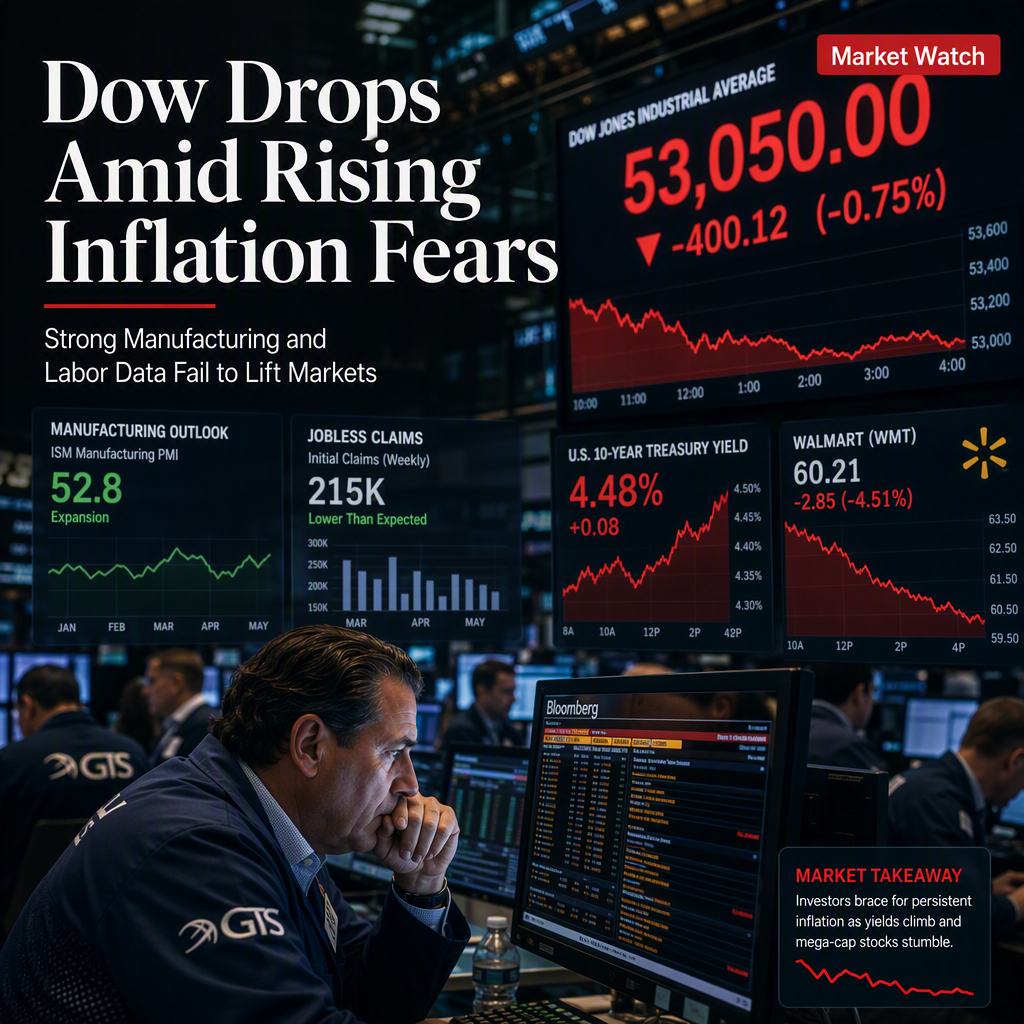
The Dow Jones Industrial Average traded near 53,050, falling more than 400 points during the session after two robust American economic data releases at 12:30 GMT were met with selling pressure [1]. The Philadelphia Fed's current activity index surged to 47.4 in August from 41.4, far exceeding the consensus of 25, marking the largest surprise among recent releases. The six-month general activity outlook jumped 39 points to 73.6, the highest since August 1983, with future new orders at 66.0 and future shipments at 63.5, both at five-year highs [1]. Weekly jobless claims came in at 206,000, beating the 210,000 consensus and the previous 212,000 figure, indicating continued labor market strength [1].
Despite these positive indicators, the market reacted negatively due to rising inflation expectations. Future prices paid increased by 6 points to 62.9, and future prices received rose by 18 points to 59.8, both above their long-run averages. This suggests that firms anticipating their best half-year in decades also expect higher costs and prices, which poses challenges for bonds and equity earnings [1].
Bond yields climbed, with the thirty-year yield above 5.25% and the ten-year near 4.70%, each rising more than five basis points. This reversed the previous day's relief following the Treasury's announcement to double its longer-dated buyback operations to $4 billion from $2 billion. Despite Treasury Secretary assurances that operations could expand further, yields rose, reflecting skepticism about the impact of the buybacks against a federal debt surpassing $40 trillion. The first larger purchase is scheduled for September 9 [1].
Walmart (WMT), a Dow index member, traded nearly 9% lower after reporting U.S. comparable sales growth of 2.6%, missing the 3.8% estimate—the first such shortfall in over five years. Third-quarter and full-year adjusted earnings guidance also fell short, although profit and revenue exceeded expectations. The sales miss was attributed to reduced traffic, which management linked to financially strained households and higher fuel costs. Walmart's decline accounted for about 60 index points, roughly one-seventh of the session's drop [1].
CONCLUSION
Despite strong manufacturing and labor market data, the Dow Jones declined sharply as rising inflation expectations and higher bond yields weighed on sentiment. Walmart's disappointing sales figures and guidance further contributed to the index's drop. The market remains cautious, with optimism tempered by concerns over inflation and debt levels.