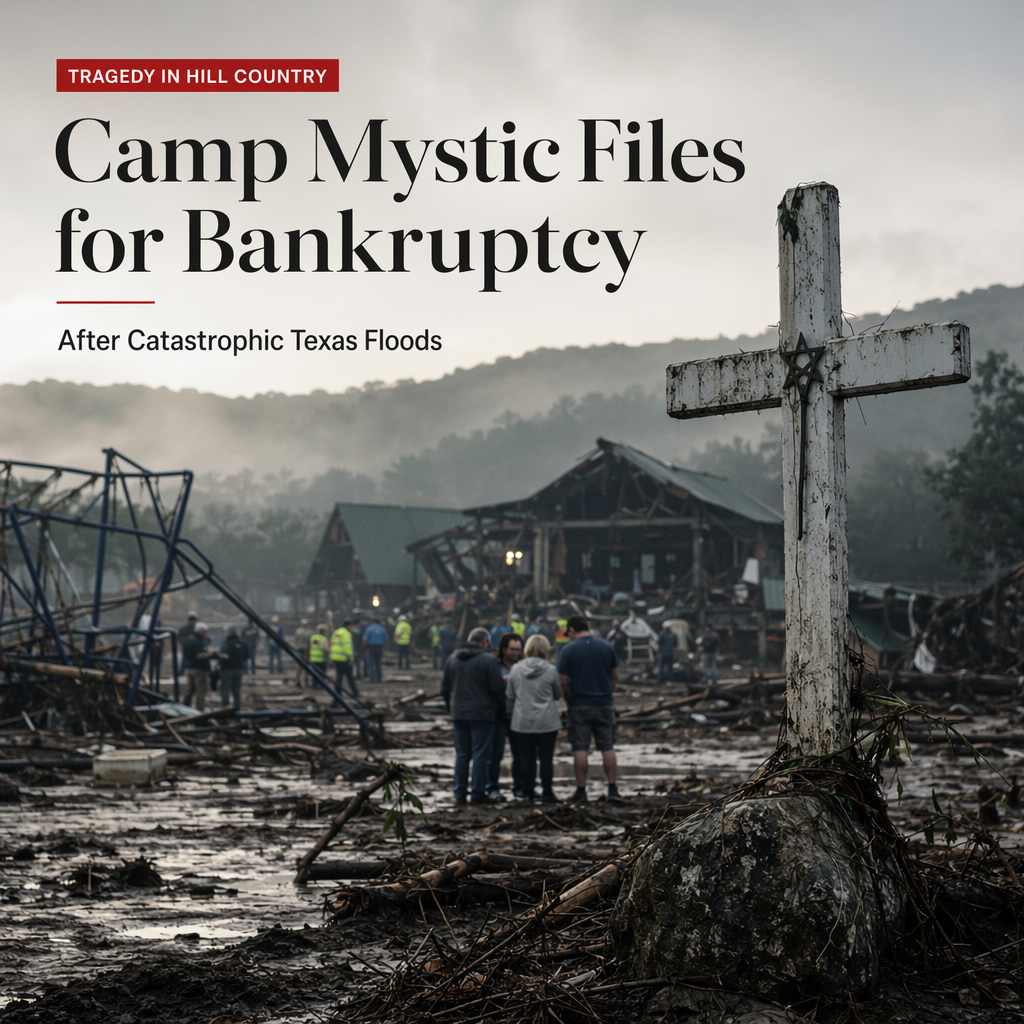
Camp Mystic, an all-girls Christian summer camp in Texas Hill Country, has filed for Chapter 11 bankruptcy protection nearly a year after devastating floods on July 4 resulted in the deaths of 25 girls, two teenage counselors, and the camp’s longtime director, totaling 28 fatalities at the camp itself [1]. The bankruptcy filing, submitted in the U.S. Bankruptcy Court in the Southern District of Texas in Houston, states that Camp Mystic’s total debts are estimated between $10 million and $50 million, while its assets are valued between $1 million and $10 million [1].
The camp’s owners and operators have faced significant scrutiny regarding their emergency response to the disaster. A state investigative report released earlier in June criticized Camp Mystic for inadequate emergency planning, storm preparation, evacuation procedures, and incident management. The report highlighted that the evacuation efforts during the flood were managed solely by the camp’s co-owner, his son, and a security guard, with the co-owner, Richard “Dick” Eastland, among those who died in the floods [1].
In late April, Camp Mystic officials withdrew their application to reopen for the summer, a decision made one day after a legislative hearing attended by parents of the deceased. In a public statement, the camp acknowledged the loss of life and indicated that the withdrawal was intended to show respect for the concerns of grieving families, legislative committees, and the broader Texas community [1].
The bankruptcy filing was signed by four members of the Eastland family, who own the nearly century-old camp. The court documents do not provide further detailed financial information, and the camp’s attorney did not respond to requests for comment as of Wednesday morning. The catastrophic flooding event last July resulted in at least 136 deaths along the Guadalupe River in Texas Hill Country, underscoring the broader impact of the disaster [1].
CONCLUSION
Camp Mystic’s bankruptcy filing follows intense scrutiny and financial strain after the tragic loss of 28 lives during last year’s Texas floods. The camp’s decision to withdraw its reopening application and the findings of inadequate emergency planning have significant reputational and operational implications. The event highlights the critical importance of disaster preparedness for similar organizations.