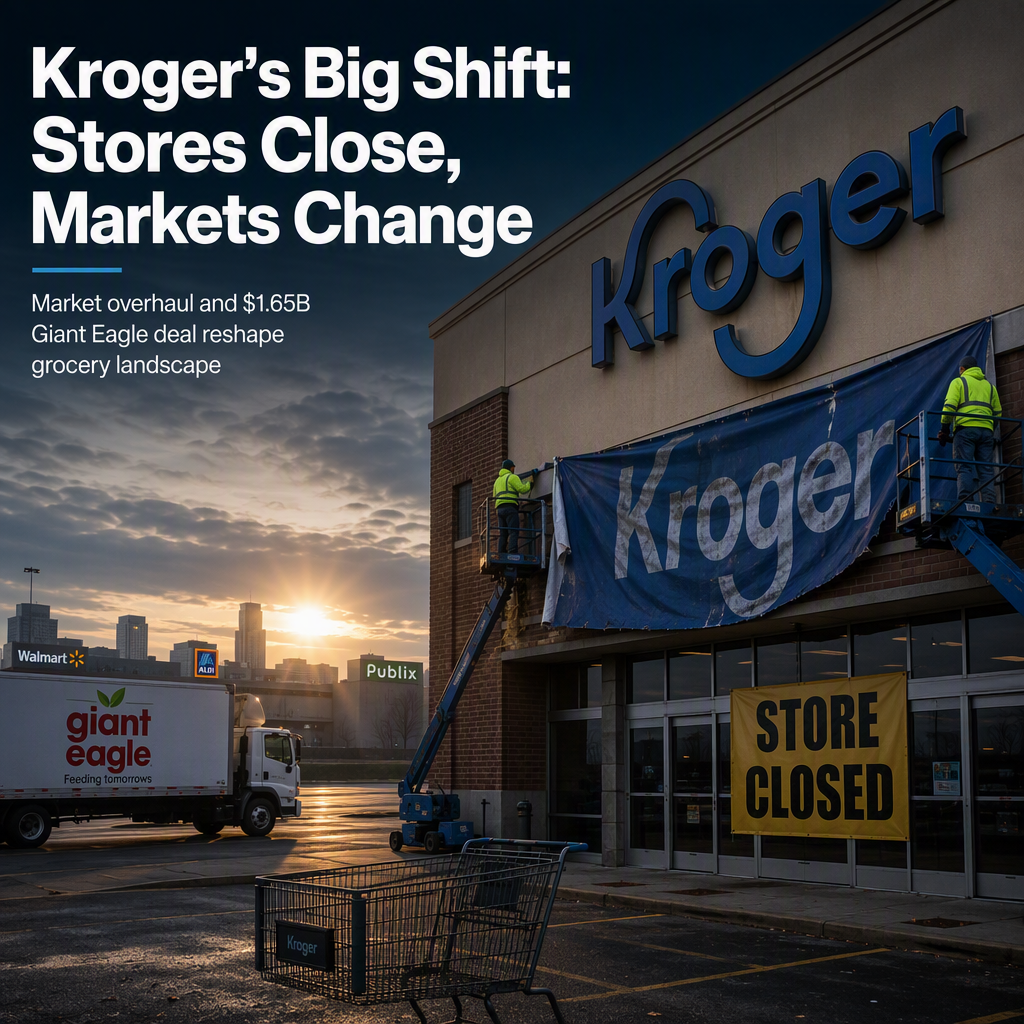
Kroger, the Cincinnati-based supermarket giant, has closed at least 39 stores across nine of its banners as part of a nationwide overhaul announced last year, which aims to shutter 60 underperforming locations by the end of 2026 [1]. The company did not provide a comprehensive list of closures, but online searches and local reports have confirmed the shutdowns, including specific locations in Georgia, Illinois, Indiana, Kentucky, Louisiana, Tennessee, Texas, Virginia, West Virginia, Washington, and Arizona [1]. As of January 2026, Kroger operated 2,697 supermarkets in 35 states under approximately 20 banners, such as Fred Meyer, Fry’s Food and Drug, Harris Teeter, Jay C, King Soopers, Mariano’s, Pick ’n Save, QFC, and Ralphs, according to a Securities and Exchange Commission filing [1].
The company stated that these closures are intended to help Kroger 'run more efficiently and ensure the long-term health of our business,' with some locations being consolidated into larger Kroger Marketplace stores that offer an expanded selection of non-grocery merchandise [1]. For example, the South Charleston and Dunbar, West Virginia stores were consolidated last June into a new Kroger Marketplace at 3060 Ray Park Blvd., and a new store is planned to replace the McKinney, Texas location in 2027 [1].
In addition to the closures, Kroger announced last month its plan to acquire regional grocery chain Giant Eagle for $1.65 billion. This acquisition would add 197 supermarkets and 11 standalone pharmacies across northern Ohio, western Pennsylvania, West Virginia, Maryland, and Indiana, strengthening Kroger’s presence in several Midwestern and Mid-Atlantic markets [1].
The market implications of these moves are significant, as the closures and consolidation efforts are designed to improve operational efficiency and long-term business health, while the Giant Eagle acquisition is expected to expand Kroger’s market reach and competitive positioning [1]. No analyst opinions or forward-looking statements beyond the company’s own rationale for the closures and acquisition were provided in the article [1].
CONCLUSION
Kroger is executing a major strategic overhaul by closing underperforming stores and consolidating operations, while simultaneously expanding through the $1.65 billion acquisition of Giant Eagle. These actions are intended to enhance efficiency and strengthen Kroger’s market position in key regions. The market impact is high, reflecting significant changes in the company’s footprint and competitive landscape.