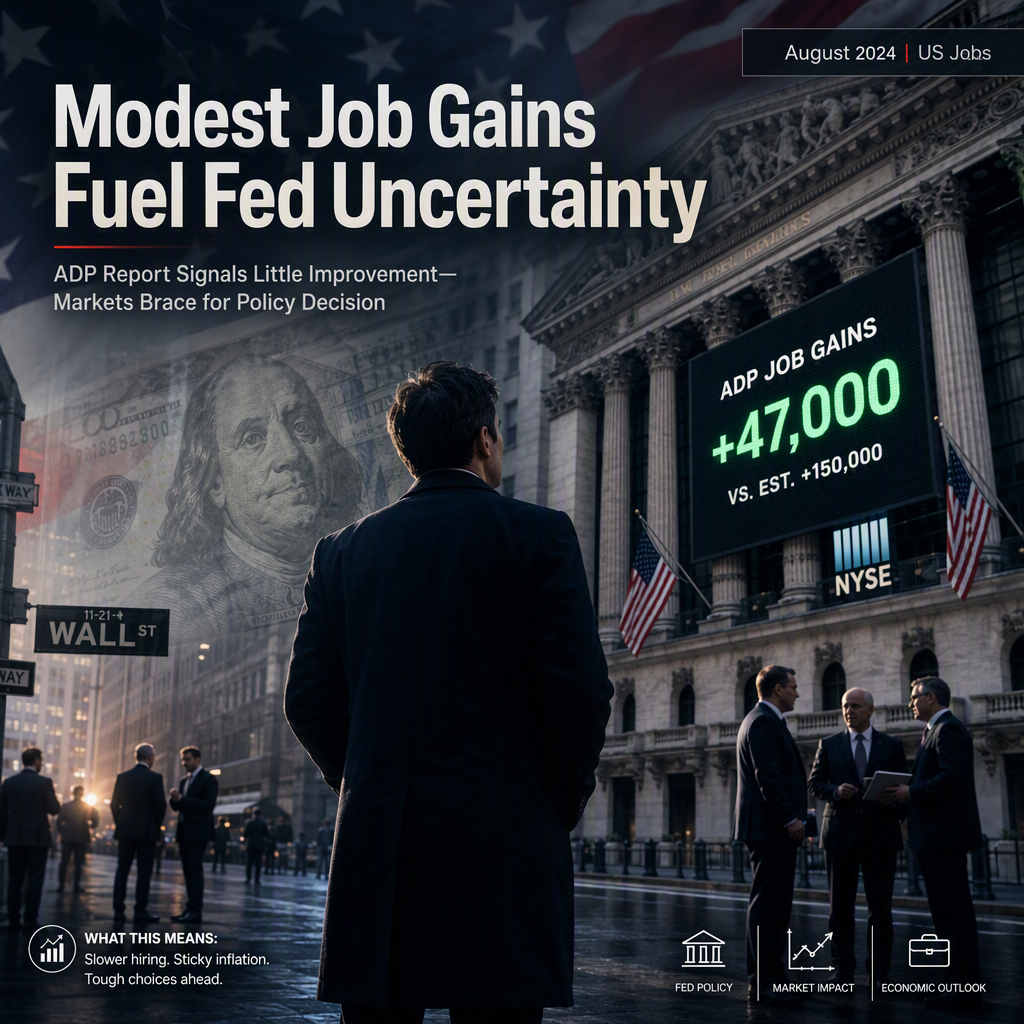
The ADP Employment Change report, set for release next Wednesday by the Automatic Data Processing (ADP) Research Institute, is anticipated to show that the US private sector added 47,000 new jobs in August, a slight increase from the 44,000 positions reported in July [1]. This modest gain follows July's weakest job creation since January and suggests little improvement in the labor market [1]. The ADP report precedes the official Nonfarm Payrolls (NFP) report from the US Bureau of Labor Statistics, which is closely watched by markets and the Federal Reserve (Fed) [1].
While the ADP report is not considered a leading indicator for the NFP, it often sets the tone for market expectations and can trigger significant US Dollar volatility if the data surprises [1]. The release comes at a time of heightened focus on Fed policy, as Chairman Kevin Warsh faces pressure from President Donald Trump to cut interest rates, ongoing inflation concerns, and a divided Federal Open Market Committee (FOMC) [1].
In addition, US Treasury Secretary Scott Bessent has announced plans to double buybacks of long-term government bonds, signaling the government's intent to avoid tighter monetary policy through unconventional means rather than fiscal discipline [1]. Commerzbank analysts note that these actions indicate growing political resistance to monetary tightening ahead of the September Fed meeting, and caution that further Fed rate hikes could undermine the Treasury's efforts to cap yields [1].
Given the expected 47,000 increase in ADP employment, analysts suggest this figure is insufficient to justify a Fed rate hike in September, especially with inflation still elevated and political pressures mounting [1]. Unless the ADP reading significantly exceeds market consensus, August data is unlikely to indicate a meaningful improvement in job creation [1]. The ADP report will be released at 12:15 GMT on Wednesday, with the US Dollar struggling to extend its recovery from mid-August lows [1].
CONCLUSION
The upcoming ADP Employment Change report is expected to show only a modest increase in US private-sector jobs for August, reinforcing the case for Federal Reserve policy restraint. With political resistance to tightening and Treasury actions to cap yields, the data is unlikely to shift market expectations for a September rate hike.