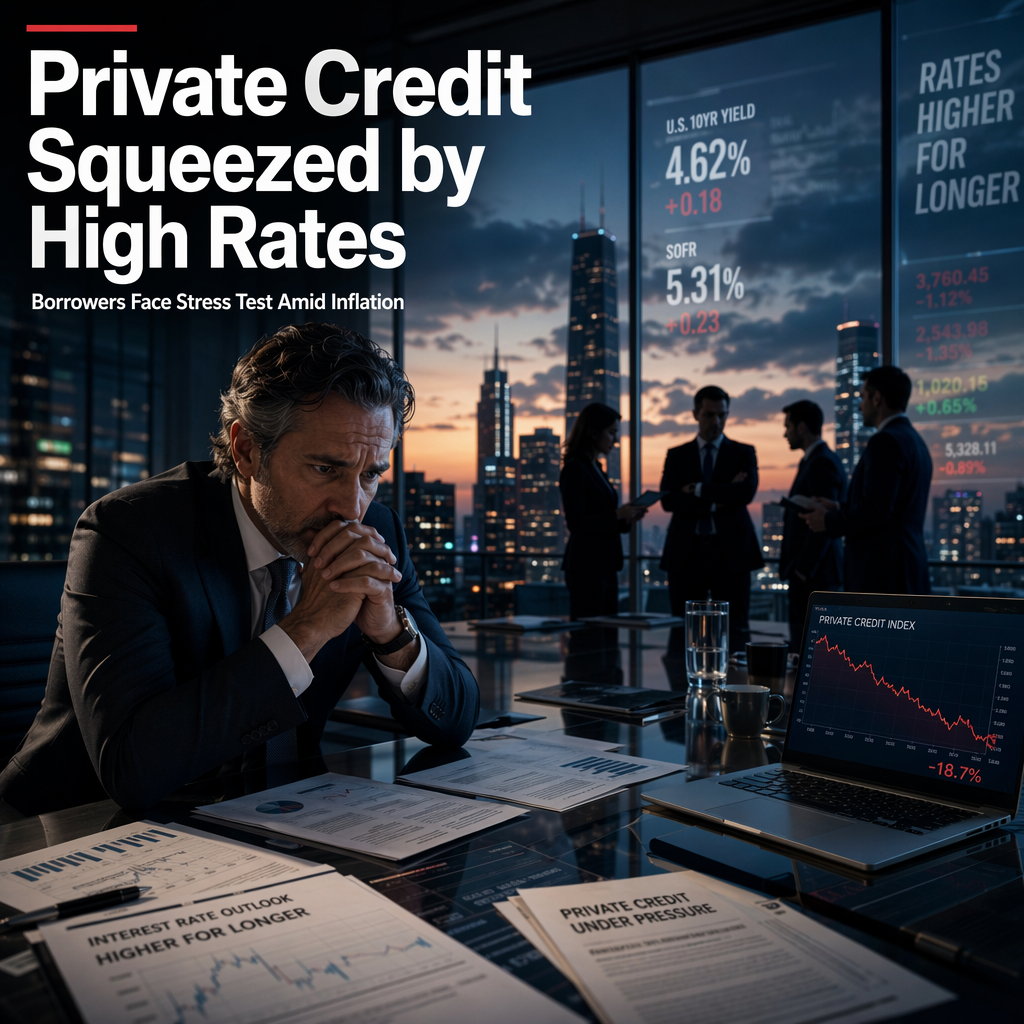
The private credit market is undergoing a significant stress test as persistent inflation and the prospect of higher-for-longer interest rates put pressure on borrowers, according to industry professionals cited by CNBC World [1]. The ongoing Middle East conflict has contributed to renewed inflation pressures, particularly through an energy squeeze, prompting global central banks to consider further rate hikes. This is problematic for the $2 trillion private credit sector, where debt is typically floating-rate, resulting in sustained high debt-servicing costs for borrowers and forcing lenders to distinguish between temporary flexibility and deeper credit stress [1].
Borrowers are still paying near-peak coupons, with hopes for rate cuts fading and the market now pricing in potential hikes rather than reductions. Anant Kumar, managing director and global investment strategist at Benefit Street Partners, noted that the lending landscape was built on the assumption that the interest rate spike of 2022 and 2023 would quickly decline, but three years later, borrowers remain under pressure. Kumar stated, "Nobody underwrote for that," highlighting the unexpected persistence of high rates [1].
Core annual U.S. inflation, excluding food and energy, rose to 2.9% year-on-year in May, its highest since September 2025, and is expected to remain at similar levels for June, according to consensus forecasts. The Federal Reserve's latest meeting minutes under Chairman Kevin Warsh revealed officials were split on the direction of rates, with the dot-plot grid tilting toward one rate hike this year [1].
The sector is also facing redemption pressures in retail-focused business development companies, concerns about an AI-driven 'SaaSpocalypse' affecting software-heavy portfolios, and individual corporate blow-ups. Kumar warned that if rates increase further, many leveraged companies may not survive in their current capital structures, leading to restructurings rather than business failures. Signs of borrower stress are already evident through maturity extensions and payment-in-kind (PIK) arrangements [1].
CONCLUSION
The private credit sector is facing heightened stress as persistent inflation and higher-for-longer interest rates squeeze borrowers, with industry professionals warning of potential restructurings for leveraged companies. Market sentiment is negative, and the impact is high, as lenders and borrowers navigate an environment of sustained monetary tightening and increased credit risk.