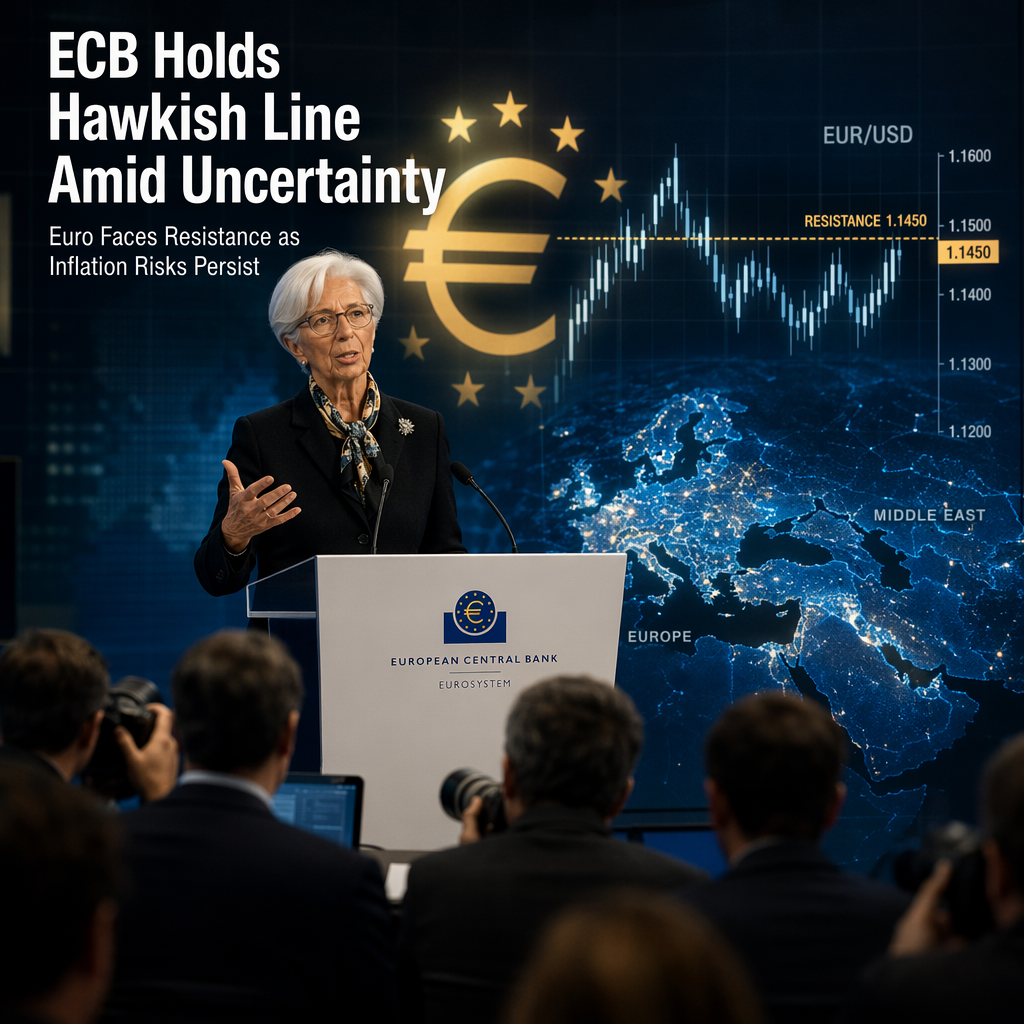
The European Central Bank (ECB) is maintaining a hawkish bias, with ING analysts Michiel Tukker and Benjamin Schroeder stating that the narrative of at least one more rate hike is likely to be retained for risk management purposes, despite reduced oil sensitivity in rates and ongoing uncertainty. ECB President Christine Lagarde has highlighted risks stemming from the Middle East and emphasized the need to assess shocks before making policy changes [1]. Some ECB officials, such as Mārtiņš Kazāks, have suggested there is more room for a wait-and-see approach, which could reduce the likelihood of a rate hike in July. However, ING does not expect the ECB to abandon the possibility of at least one more hike, given the current environment of high uncertainty [1].
Scotiabank’s FX strategists report that the EUR/USD pair remains soft, as regional inflation data indicate downside risks for the national Consumer Price Index (CPI), even as President Lagarde signals that further tightening could occur. Lagarde stated that the Iran war has generated “significant” inflationary pressure and clarified that the June rate move should not be seen as an “insurance” hike, implying that additional tightening is possible [2]. Market swaps are currently pricing in approximately 15-16 basis points of tightening risk by September [2].
Technically, Scotiabank describes the EUR/USD outlook as neutral to bullish, with resistance at 1.1450 and support at 1.1300/25. A break above 1.15 is seen as necessary to generate more positive momentum for the Euro, but gains have struggled to extend beyond the 1.1450 resistance, keeping trends relatively flat [2].
Regional state inflation data released earlier in the day showed decelerating inflation over the June year, suggesting a downside risk to the preliminary June national CPI data. The market consensus had expected prices to remain flat on the month and steady at 2.6% over the year [2].
CONCLUSION
The ECB is sustaining a hawkish stance amid persistent uncertainty, with at least one more rate hike remaining on the table for risk management. While inflation data point to potential downside risks, market pricing and technical analysis suggest the Euro faces resistance and lacks strong upward momentum. Investors are likely to remain cautious as the ECB assesses evolving inflation and geopolitical risks.