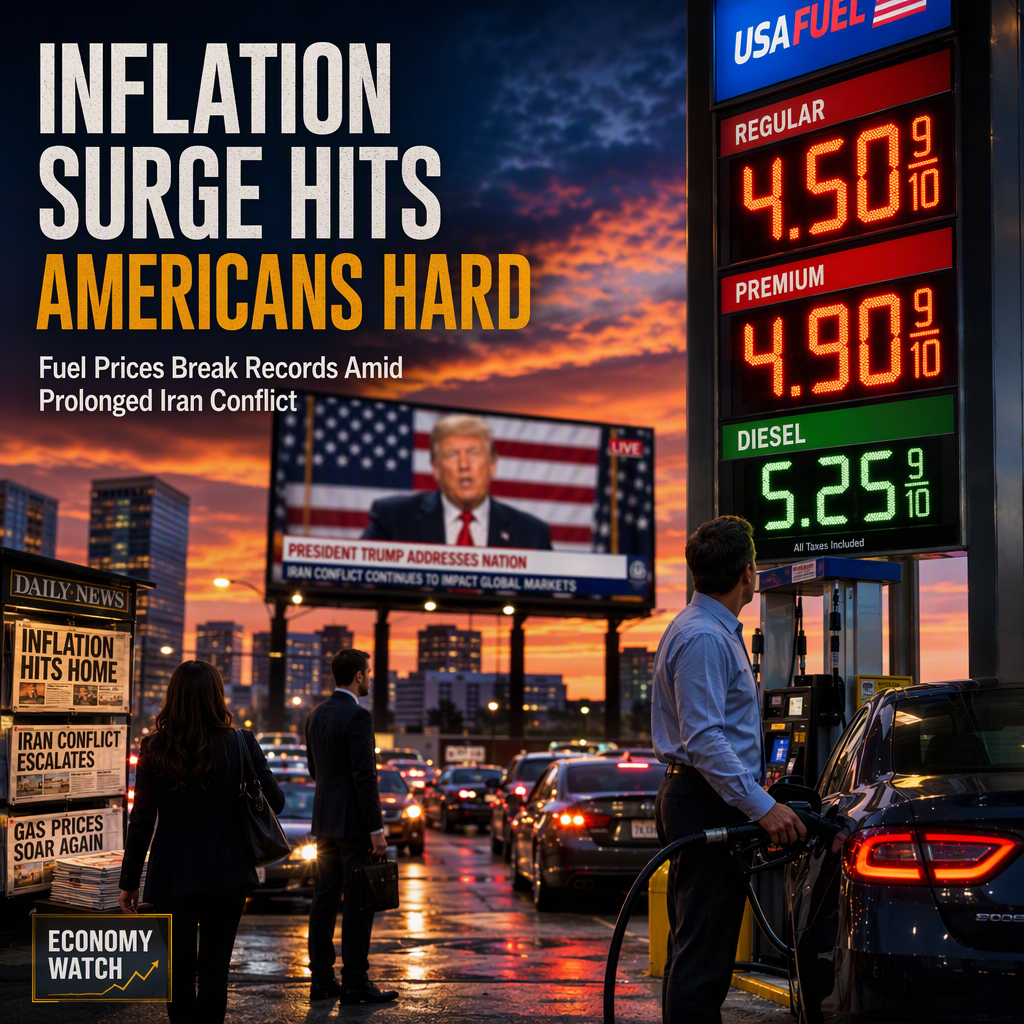
The U.S. economy has experienced significant changes since the onset of the Iran war, which began after the U.S. and Israel attacked Iran on February 28, 2026. Prior to the conflict, the economy was on a positive trajectory, with declining inflation, increasing buying power, cheap gas, and falling interest rates. However, these trends have reversed in the months following the start of the war, which is now approaching its seventh month despite President Donald Trump's early assurances in March that it would be a 'short-term excursion.' On Tuesday, President Trump indicated that a deal could be reached after the November midterm elections [1].
The conflict has overshadowed otherwise positive economic developments during Trump's second term. According to the Census Bureau, the median U.S. household income reached an all-time high in 2025, and the percentage of Americans living in poverty fell to its lowest level on record. The stock market has performed well in 2026, and unemployment remains low. Nevertheless, these gains have been eclipsed by the negative effects of the war, particularly for consumers. Gas prices have surged from just under $3 per gallon before the war to approximately $4.50 on average, marking the highest level ever for late September. Diesel prices have also soared, rising from $3.75 on February 28 to a record high of $6.52 [1].
These increases in energy costs have triggered a domino effect, pushing up inflation, borrowing costs, and mortgage rates. Consumer sentiment and presidential approval ratings have declined, with an NBC News poll showing that the percentage of respondents who believe Trump has helped the economy fell from 35% in March to 26% in September. Despite these challenges, household spending on discretionary items like travel and dining out has remained steady [1].
The White House has defended President Trump's economic record, emphasizing that the administration remains focused on long-term economic goals and describing the disruptions caused by the Iran conflict as temporary. However, the ongoing volatility in oil prices has made it difficult to forecast future trends, and the economic challenges persist as the midterm elections approach [1].
CONCLUSION
The Iran war has led to a sharp rise in fuel prices and inflation, overshadowing otherwise strong economic indicators such as record household income and low unemployment. With consumer sentiment declining and energy costs at record highs, the White House faces significant economic and political challenges heading into the midterm elections.